


Engraved Silver Caddy Scoop
An engraved silver caddy scoop is a small, tactile tea accessory designed to measure dry leaves, offering precise craftsmanship from the Georgian and Victorian eras.
Engraved Silver Caddy Scoop
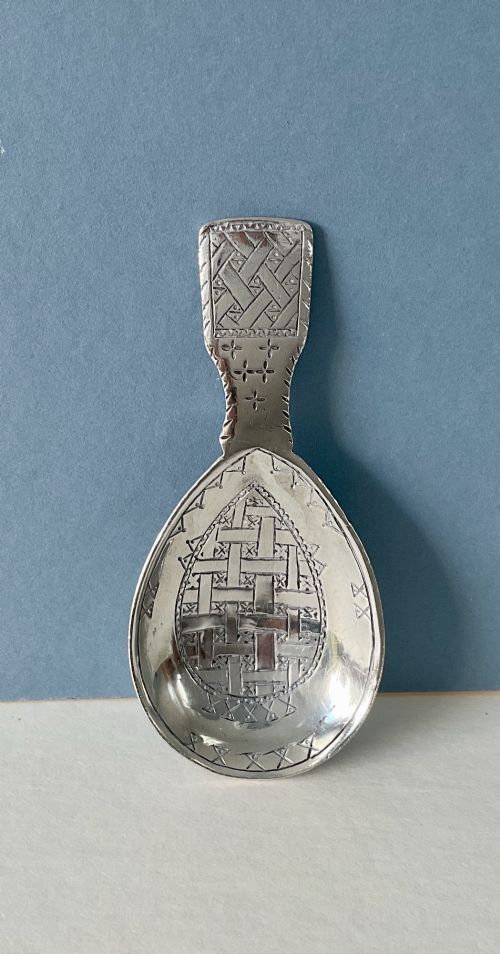
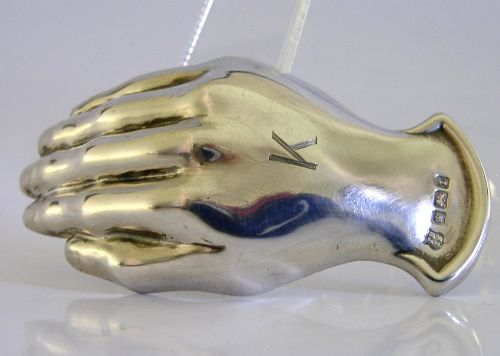
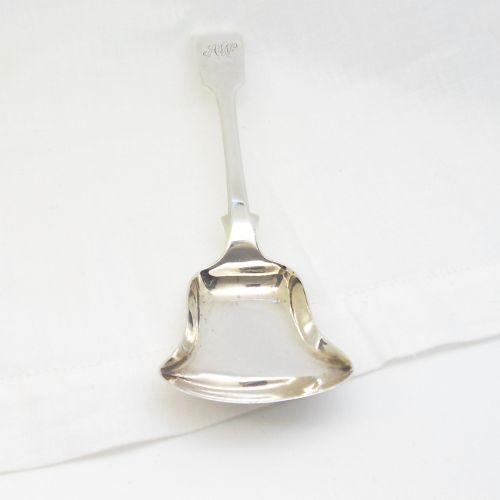
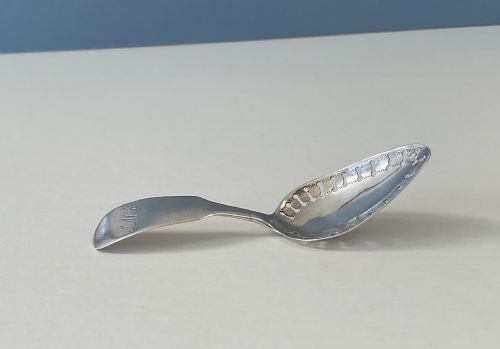
The pieces on this page appear in various forms, including traditional shell-shaped bowls, rectangular bowls with foliate engraving, and novelty shapes such as jockey caps and hand motifs. Origins span London, Birmingham, Sheffield, Newcastle, Glasgow, and Ireland.
Makers often embellished the handles and bowls with intricate line work and floral patterns. Collectors find these spoons both as utilitarian survivals and as decorative examples of historic silversmithing.
Materials and technique
Every piece listed here utilises sterling silver as the sole medium. Silversmiths shaped the metal through hammering, casting, and stamping to form the distinctive shallow bowls and decorative handles.
Engraving was applied by hand using sharp gravers to cut geometric patterns, foliage, or feathers directly into the silver surface. Punch marks and hallmarks were subsequently stamped to indicate the assay office, date, and maker.
Silversmiths once shaped solid silver into tiny riding caps complete with peaks, letting tea drinkers measure leaves with miniature equestrian flair.
Evaluating the pieces
Quality rests upon the crispness of the hand engraving and the structural integrity of the silver bowl. Sharply defined leaf motifs and deep chasing elevate a piece above worn or shallowly pressed examples.
Novelty forms demonstrate superior quality when the proportions closely mirror the real object, such as the peak and button of a jockey cap. Maker attribution also plays a role, with established provincial and London silversmiths commanding attention for their refined execution.
John Walton·William Neale·George Unite·George Wintle·Liberty
The Engraved Silver Caddy Scoop Glossary
- Hallmark
- Official marks stamped into silver to guarantee the metal standard and trace the origin. These stamps identify the assay office, the maker, and the year of manufacture.
- Caddy spoon
- A specialised small spoon designed for measuring tea leaves. They emerged in the eighteenth century alongside the rise of imported tea.
- Foliate engraving
- Decorative surface carving shaped like leaves and foliage. This technique is frequently seen on Georgian and Victorian silver handles.
- Novelty silver
- Silver items shaped to resemble everyday objects, animals, or clothing. Examples in this category include jockey caps and hands.
- Assay office
- An official organisation that tested precious metals for purity and applied the statutory hallmarks. Towns such as London, Birmingham, and Sheffield operated prominent offices.
Engraved Silver Caddy Scoop: Frequently Asked Questions
What is a caddy scoop used for?
These pieces were designed to scoop loose tea leaves from a storage caddy into a teapot during the eighteenth and nineteenth centuries.
Today, collectors appreciate them as cabinet display pieces or utilise them for measuring dry goods like tea and coffee.
How do I date a silver caddy scoop?
Dating relies upon reading the hallmarks stamped into the silver, which indicate the specific assay year letter and the reigning monarch's duty mark.
Stylistic cues such as Arts and Crafts influences or Victorian foliate engraving also help narrow the period.
Are these spoons made of sterling silver?
Every piece recorded in this collection is formed from sterling silver. Assay offices regulated this standard to ensure the metal purity.
Makers stamped standard marks, including the lion passant in British silver, to confirm the alloy quality.
Why are some caddy spoons shaped like caps?
Silversmiths occasionally produced novelty items modelled after contemporary clothing and sporting gear to display their technical skill. Jockey caps became a popular form for tea spoons during the late Georgian period.
These pieces combine functional scooping design with playful sculptural novelty.