

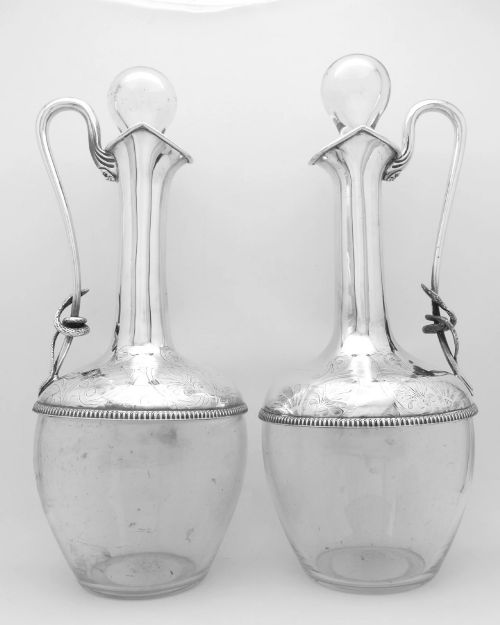


Engraved Glass Pitcher
An engraved glass pitcher brings weight and ceremony to the table, combining clear crystal with detailed wheel work and bright metal mounts.
Engraved Glass Pitcher
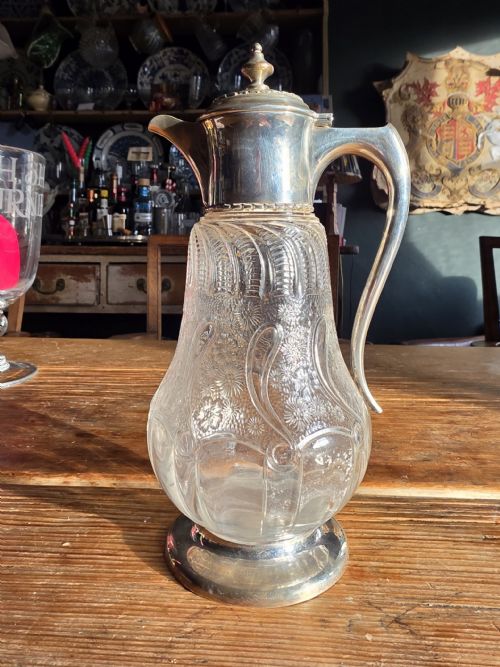
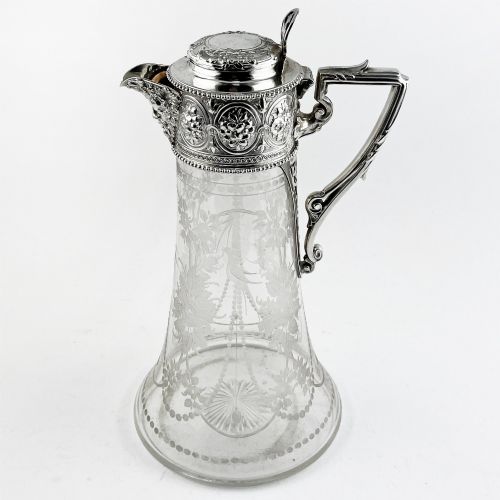
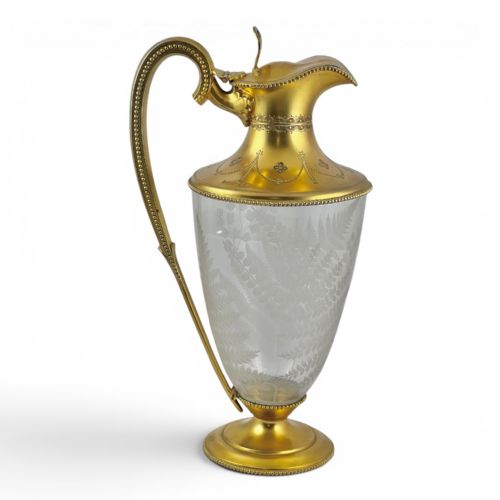
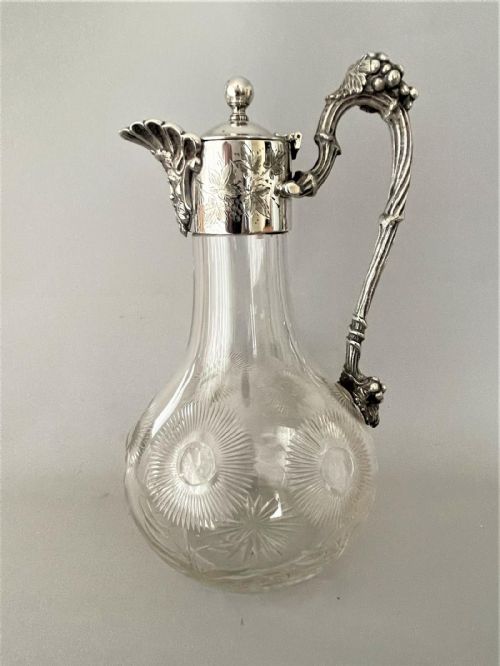
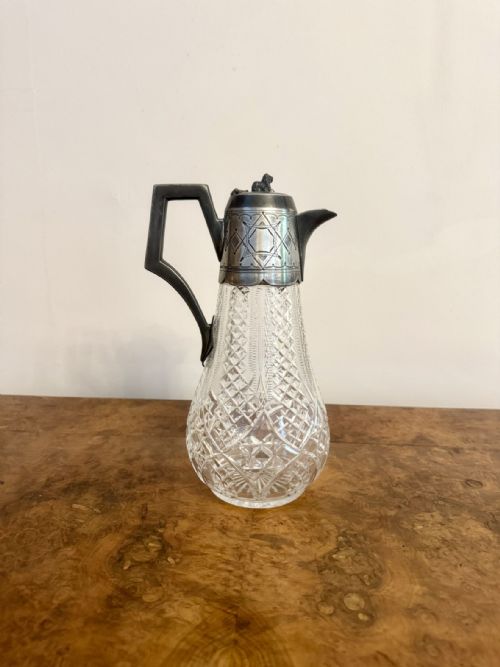
When searching for an engraved glass pitcher, buyers encounter an array of serving vessels designed primarily for wine, claret, lemonade and water. These pieces span the nineteenth and twentieth centuries, originating from English houses, continental makers and Scottish workshops. The most common form on this page is the claret jug, marrying a blown or cut glass body with a metal collar, handle and hinged lid.
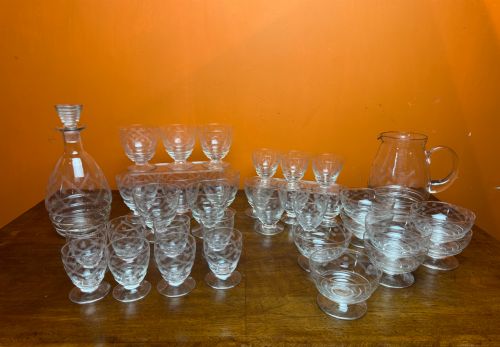
Makers produced these vessels for formal dining and drawing room hospitality, employing decorative motifs ranging from naturalistic foliage to heraldic crests. Pieces emerge from distinct periods including the Victorian era, Edwardian years and the Art Deco movement. Alongside dedicated wine ewers, the selection includes tall lemonade jugs and drinking services featuring matching glass pitchers.
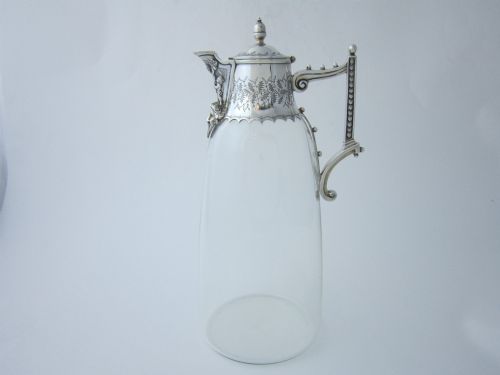
The combination of glass and metal creates a distinct visual balance where transparency meets the heavy polish of sterling silver or silver plate. Formats vary from bulbous ewers with serpent handles to slender decanters etched with birds, vines and geometric patterns. Each vessel reflects the dining habits of its period, serving practical functions alongside decorative display.
Materials and Working Methods
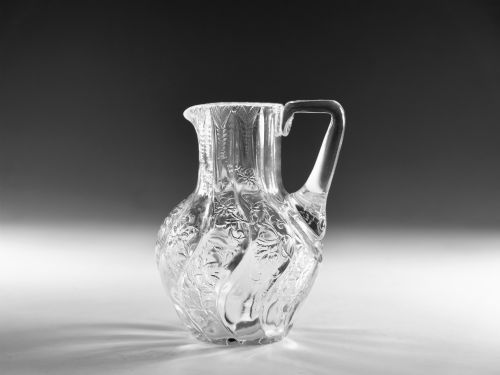
The bodies of these vessels rely on lead crystal or clear glass, often shaped by blowing into moulds or forming freehand at the furnace. Craftsmen then applied wheel engraving, intaglio cutting or acid etching to decorate the surface with floral sprays, dolphins or fruiting vines. This cutting requires steady control, as the wheel carves directly into the glass body to create frosted or polished recesses.
Mounts and handles utilise sterling silver, silver gilt or silver plate, secured firmly to the glass neck with collars and spouts. Silversmiths cast and chased details such as Bacchus masks, scrolling handles and hinged lids to complement the refractive quality of the crystal. Artisans combined these two contrasting mediums to produce balanced jugs capable of holding liquids securely during service.
Listings feature vessels in clear glass, red crystal, cranberry glass and teal glass, accompanied by sterling silver, silver gilt and silver-plated mounts.
Distinctions in Quality
Quality rests in the depth and clarity of the glass cutting, alongside the crispness of the engraved details upon the surface. Superior vessels display sharp, deliberate wheel work where motifs like flowers or crests possess dimensionality and clean edges. Thicker lead crystal provides a heavier, resonant body that holds intricate cuts without distorting the interior transparency.
The standard of the metal mountings further differentiates the tier of the piece, particularly in the weight of the silver and the precision of the hinge. Maker attribution through hallmarks or signatures adds historical substance, showing the work of established firms such as Stevens & Williams, Richardsons or William Comyns. The harmony between the metal collar and the glass vessel dictates the overall success of the design.
William Comyns·Asprey and Co. Ltd·Stevens and Williams·Webb Corbett·Richardsons·William Davenport·Lobmeyr
The Engraved Glass Pitcher Glossary
- Claret jug
- A pouring vessel specifically intended for serving red wine at the dining table, typically fitted with a silver or silver-plated handle, collar and hinged lid.
- Intaglio
- A technique where the design is sunken below the surface of the glass rather than carved in relief, creating a smooth outer wall with internal depth.
- Silver plate
- A base metal foundation coated with a thin layer of silver, widely used on nineteenth-century vessels to provide the appearance of solid silver at a lower cost.
- Stourbridge
- An English region renowned for glass production, home to skilled cutters and manufacturers who produced high-grade crystal vessels during the Victorian period.
- Wheel engraving
- A method of decorating glass by holding the vessel against a rotating abrasive wheel of stone or copper to grind away material and form detailed patterns.
Engraved Glass Pitcher: Frequently Asked Questions
What is a claret jug?
A claret jug is a specialised vessel designed to hold and pour red wine at the table. These pieces combine a glass body with a metal pouring spout and handle.
They became central to formal dining during the nineteenth century, often remaining on the sideboard until the conclusion of the meal.
How do I date these jugs?
Dating relies on a combination of metal hallmarks, glass manufacturing techniques and prevailing stylistic periods. Silver mounts carry date letters and assay office marks that pinpoint the exact year of manufacture.
Stylistic cues such as Victorian floral engraving or Art Deco geometry further narrow down the production era.
Can I use these for serving drinks?
These vessels remain entirely functional for serving wine, water or lemonade during meals. The glass and metal materials are robust enough for regular table use when handled with care.
Hand washing protects both the delicate engraved surfaces and the vintage silver-plated or sterling mounts.