
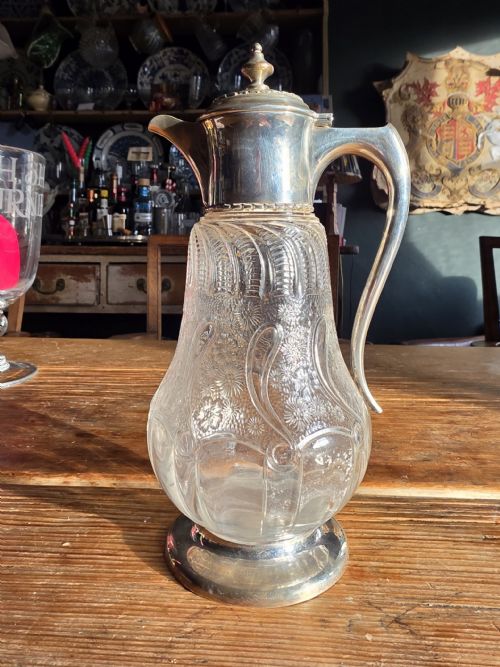

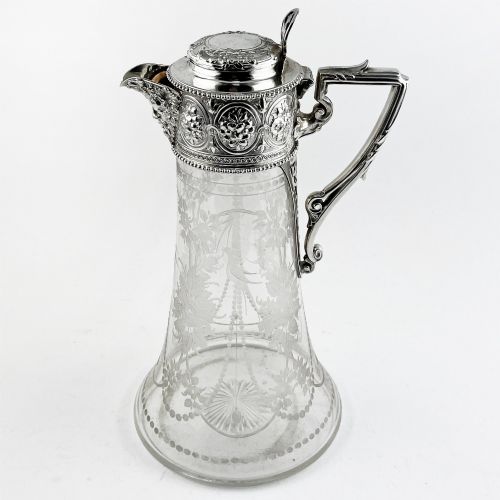
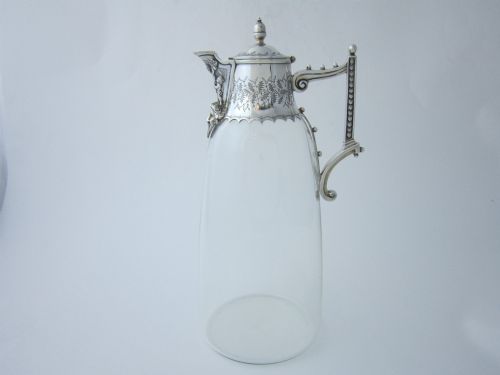
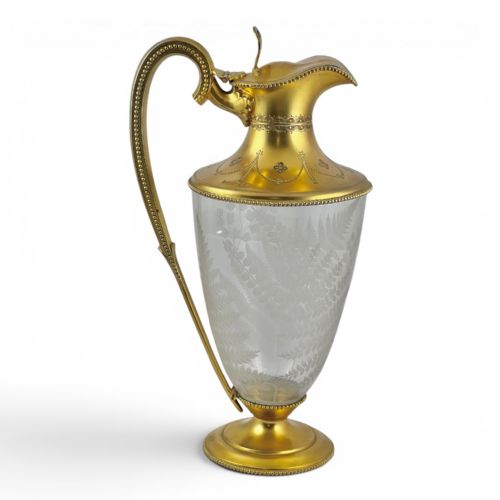


Engraved Glass Decanter Silver
An engraved glass decanter silver brings together cut crystal, cranberry glass, and sterling silver mounts for pouring wine with period character.
Engraved Glass Decanter Silver
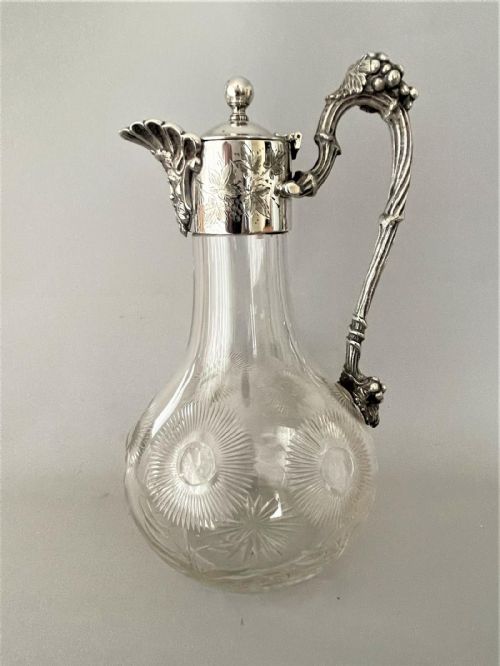
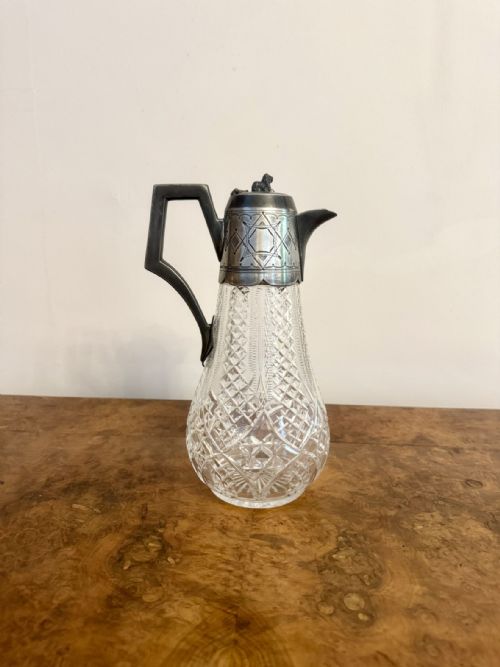
These pieces combine glass vessels with silver mounts, collars, and handles, appearing as claret jugs, scent bottles, and wine decanters. The form functions as a serving ewer or table bottle, designed for wine, claret, and spirits during dining or entertaining.
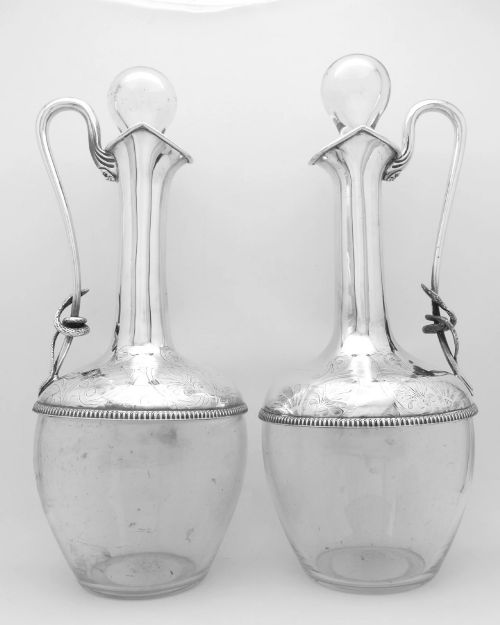
Victorian and Edwardian examples dominate the selection, spanning periods from the mid-nineteenth century through to nineteen sixty. Makers shape these objects into floral patterns, Bacchus masks, and serpent handles, drawing on styles such as French Art Nouveau and Victorian Rococo Revival.
Buyers encounter items ranging from large spirit flasks with silver gilt to small scent bottles with silver collars. The inventory includes matched pairs in dark amber glass and single vessels in amethyst and cranberry glass.
Assessing Quality
The relationship between the glass body and the silver mount determines the merit of a piece, requiring clean joins and secure fittings. Weight indicates the substance of the metal and the thickness of the crystal, separating substantial table pieces from lighter domestic wares.
The clarity of the glass and the crispness of the engraving dictate visual distinction, where deep wheel cuts contrast with shallow surface etchings. Hallmarks on the silver components provide clear attribution to specific assay offices and makers, adding documentary weight to the physical manufacture.
Several Victorian claret jugs feature the grinning face of Bacchus serving as the spout, watching every pour.
William Comyns·Asprey and Co. Ltd·William Davenport
The Engraved Glass Decanter Silver Glossary
- Claret jug
- A specialised pouring vessel designed for red wine, typically featuring a handle and a hinged silver lid. These jugs combine glass bodies with metal mounts for formal dining.
- Silver gilt
- Silver that has been coated with a thin layer of gold on its surface, providing a rich yellow tone. This technique appears on interior collars and mounts of high-status vessels.
- Silver plate
- A base metal coated with a thin layer of silver, offering the appearance of solid silver at a different cost. This material frequently supports Victorian and Edwardian glass jugs.
- Cut crystal
- High-clarity glass containing lead oxide, shaped with deep geometric or floral facets by a cutting wheel. The process creates sharp edges that catch and reflect light.
- Bacchus mask
- A decorative motif depicting the face of the Roman god of wine, wreathed in grape leaves. This sculptural element often forms the spout or handle terminal on claret jugs.
Engraved Glass Decanter Silver: Frequently Asked Questions
What is a claret jug?
A claret jug is a pouring vessel specifically used for serving red wine at the dining table. These pieces combine a decorative glass body with a metal handle, spout, and hinged lid.
Most examples date from the Victorian and Edwardian periods, utilising silver plate or sterling silver mounts. They range from simple cut glass designs to elaborate pieces with figural masks.
How do I date a silver mounted decanter?
Dating relies heavily on the hallmarks stamped into the silver mounts, which indicate the assay office, year letter, and maker. Stylistic details such as Art Nouveau curves or Victorian Rococo revival motifs also point to specific decades.
Glass manufacturing techniques and colour preferences, such as cranberry or amethyst glass, provide additional clues. Comparing the cut patterns with documented periods helps narrow the timeline further.
Can I use these decanters for daily dining?
These vessels function well for serving wine and spirits during meals, provided they receive careful handling. The silver mounts require gentle cleaning to preserve the metal surface without damaging the glass.
Hand washing protects both the engraved glass and the antique silver plate or sterling silver. Storing them safely prevents chipping on the delicate rims and handles.
What is the difference between crystal and glass?
Crystal contains lead oxide, which adds weight, brilliance, and clarity to the material compared to standard glass. This composition allows for deeper and sharper facet cutting on the vessel body.
Both materials appear in nineteenth-century decanters, with crystal often reserved for higher quality serving pieces. The presence of cut facets usually indicates the heavier crystal medium.