
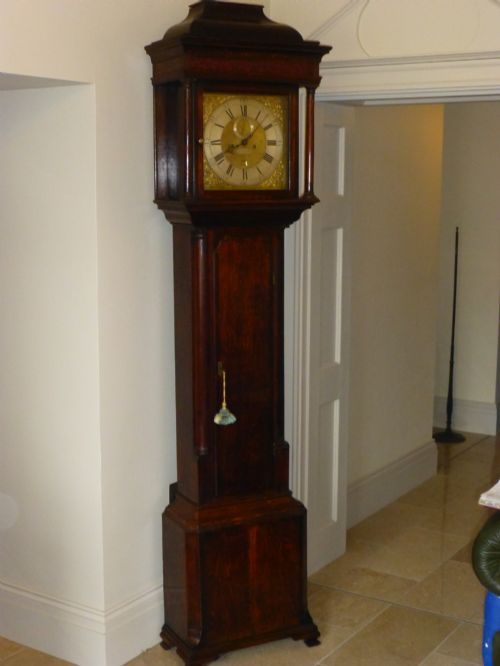
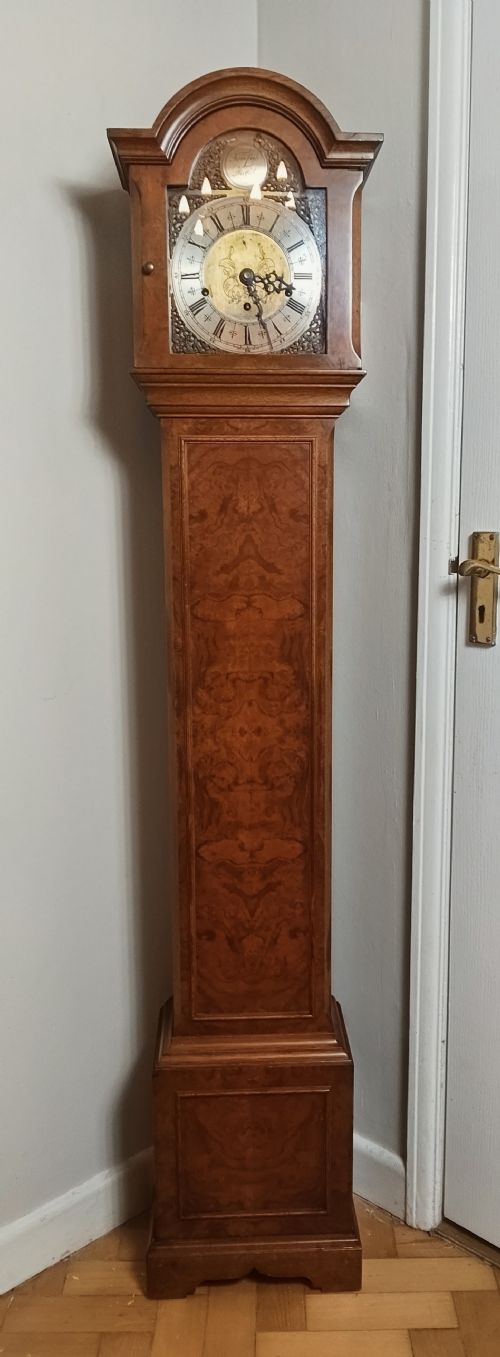


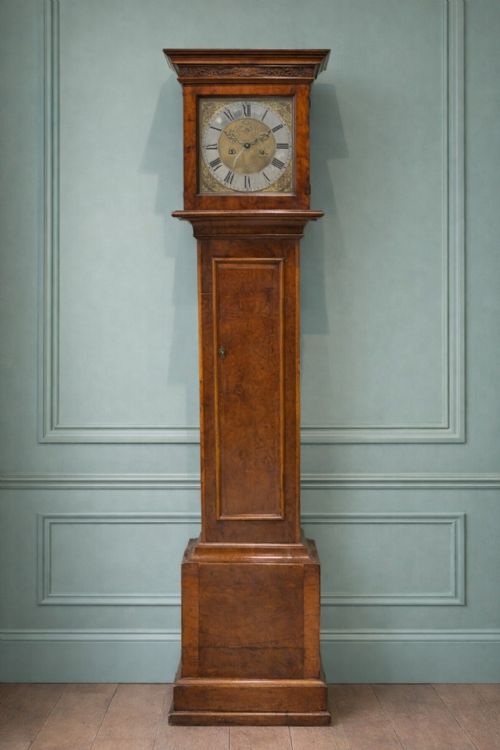


English Walnut Longcase Clock
An English walnut longcase clock brings architectural presence and precision engineering into a room, spanning periods from the late seventeenth century through the eighteenth.
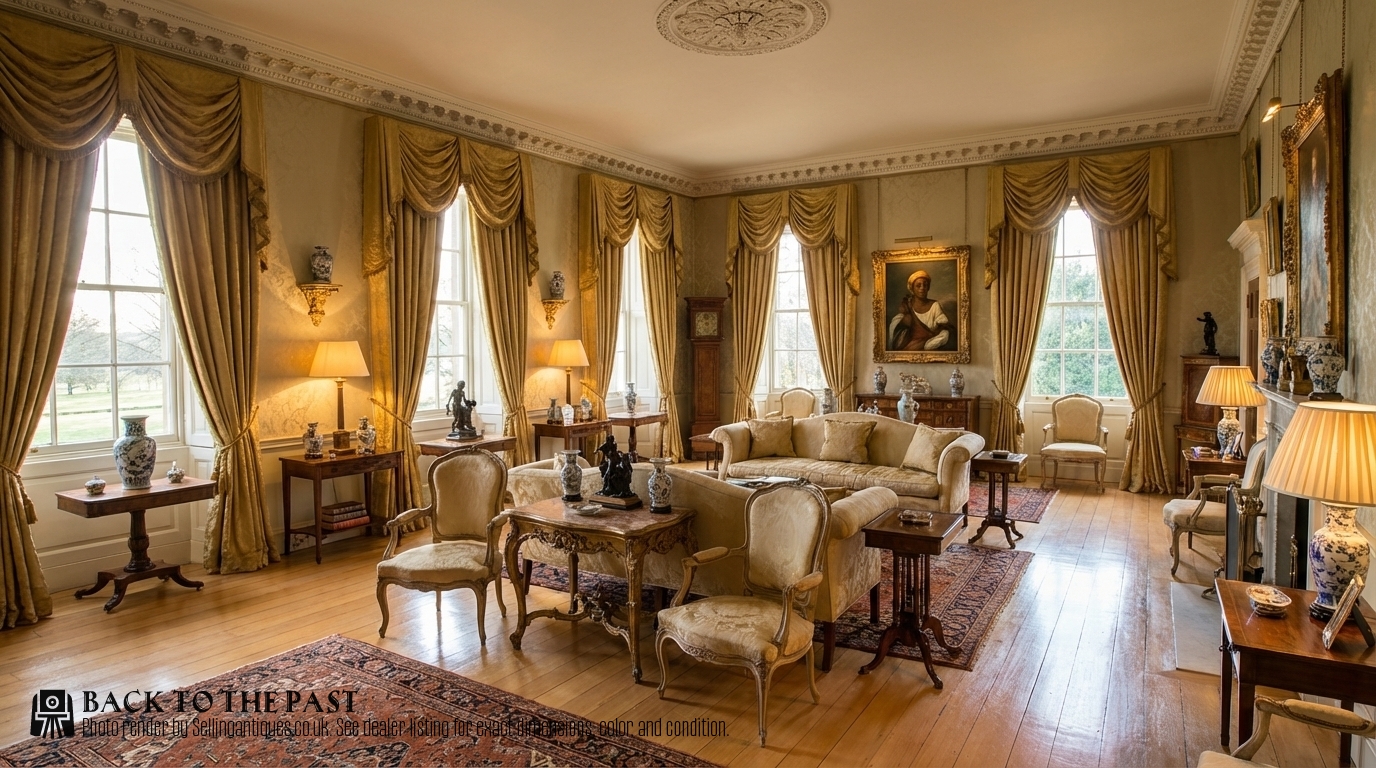
English Walnut Longcase Clock
An English walnut longcase clock appears in several distinct regional and stylistic iterations, stretching from the late seventeenth century through the Georgian era. Collectors frequently encounter pieces originating from London workshops as well as provincial makers, each displaying characteristic proportions and dial configurations.
The materials utilised across these centuries range from straight-grained timber to highly figured veneers, often accompanied by marquetry inlay or contrasting secondary woods such as oak. Early examples often reflect the ornate tastes of the William and Mary or Queen Anne periods, while mid-eighteenth-century pieces transition towards the cleaner lines associated with George II.
Dial work is integral to the form, with brass chapter rings and subsidiary seconds or calendar displays appearing regularly within the evidence. Whether housing an eight-day movement or a smaller twentieth-century Elliott grandmother clock, these floor-standing timepieces anchor a domestic interior with traditional craftsmanship.
Markers of excellence
The distinction between ordinary and exceptional examples rests upon the intricacy of the veneer selection and the depth of the cabinetwork. Richly figured burr walnut and masterfully executed marquetry inlay elevate the visual impact of the hood and trunk.
The stature of the maker inscribed upon the brass dial also defines the standing of the piece. London makers and noted provincial horologists working during the seventeenth and eighteenth centuries command attention through superior engraving and movement longevity.
Listings feature walnut, burr walnut, red walnut, and burr elm alongside oak and glass.
Richard Corless of Stockport·Thomas Vernon London·Henry Massy·Nathaniel Pyne·Edin Burgis of London·Edward Upjohn Exon·Edward East·Joseph Knibb·Joseph Saer of London·Jonathan Marsh London·Peter Wise London·James Drury of London·Richard Baker London·Joseph Oxley Norwich·Matthew Vines London
The English Walnut Longcase Clock Glossary
- Longcase clock
- A weight-driven pendulum clock housed in a tall wooden case designed to stand directly on the floor. This term supersedes the colloquial description grandfather clock.
- Marquetry
- The art of applying decorative pieces of veneer to a structural structure to form intricate pictorial designs. Floral patterns appear frequently on late seventeenth-century examples.
- Chapter ring
- The metal ring fixed to the dial face that bears the numerals indicating the hours. These are typically engraved brass with distinct minute markings.
- Movement
- The internal mechanical mechanism of the clock, comprising gears, springs or weights, and an escapement. Eight-day movements require winding considerably less often than thirty-hour variants.
- Burr walnut
- Timber taken from an excrescence on a walnut tree, yielding highly figured and swirling grain patterns. Cabinetmakers utilised this timber on prominent surfaces of high-status cases.
English Walnut Longcase Clock: Frequently Asked Questions
How do I wind an eight day longcase clock?
Winding involves inserting a key into the winding holes on the dial face and turning it slowly until the weight rises to its upper limit. Care must be taken not to overwind the movement.
Ensure the weights are allowed to descend fully over their scheduled cycle without obstruction from the inside of the trunk door.
Where should I place a longcase clock in my home?
Position the case against an interior wall away from direct sunlight, heating vents, and damp environments. Stable temperature and humidity protect the wooden veneers and internal brass components.
The floor beneath the clock must be level to ensure the pendulum swings evenly and the escapement maintains accurate timekeeping.
How do I distinguish a seventeenth century case from a Georgian one?
Early cases from the seventeenth century often feature flatter architectural hoods, spiral twisted columns, and dense marquetry or olive wood parquetry. Proportions tend to be slender and austere.
Georgian examples from the mid-eighteenth century frequently incorporate architectural pediments, red walnut timbers, and more restrained surface decoration focusing on figured grain rather than inlay.
What is the difference between walnut and burr walnut?
Standard walnut timber displays a relatively straight grain with subtle figuring, used extensively for structural carcases and mouldings. It provides a subdued and uniform dark brown tone.
Burr walnut comes from irregular tree growths, producing swirling, knotty patterns that catch the light. Cabinetmakers reserved this decorative veneer for the most prominent display areas of the trunk and hood.