


English Walnut Chest Stand
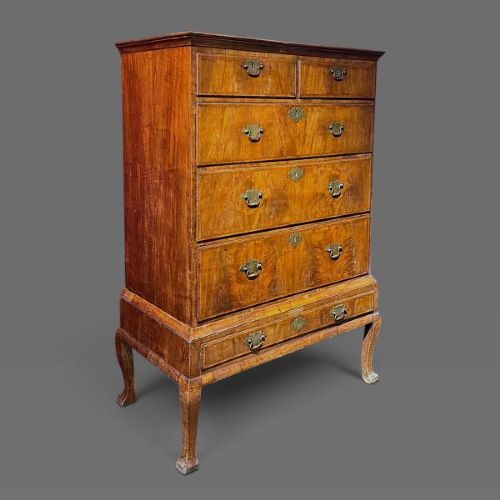
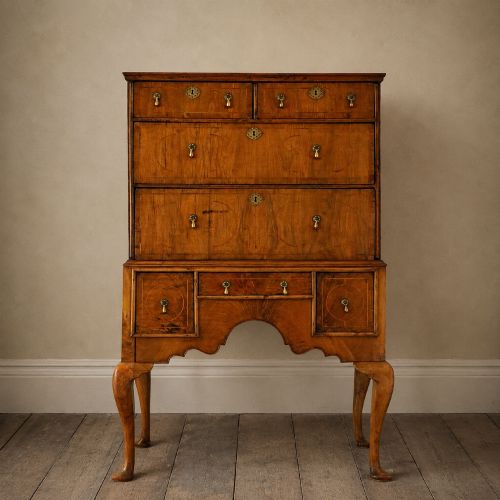
An english walnut chest stand combines practical drawer storage with an elevated timber base, offering striking figured grain surfaces for the home.
English Walnut Chest Stand
An english walnut chest stand typically comprises a lower supporting frame carrying an upper chest of drawers, appearing in periods from the late seventeenth century through the Georgian era. Buyers frequently encounter William and Mary and Queen Anne examples alongside later Georgian interpretations and revival pieces.
The layout adapts across decades, shifting from early walnut and burr walnut veneered constructions on slender legs to later cabinet and cellarette variations. Surviving pieces often display associated stands or later adaptations matching the primary walnut timber of the upper section.
Materials and construction
Cabinetmakers utilised solid walnut, oak, and pine carcasses embellished with decorative burr walnut veneer, crossbanding, and boxwood stringing. Artisans frequently employed oyster veneer cutting techniques to create circular patterns across drawer fronts and surfaces.
Hardware incorporates brass drop handles, escutcheons, and drawer pulls secured to timber frames. Stands integrate structural stretchers, cabriole legs, or simpler turned supports to elevate the heavy drawer units.
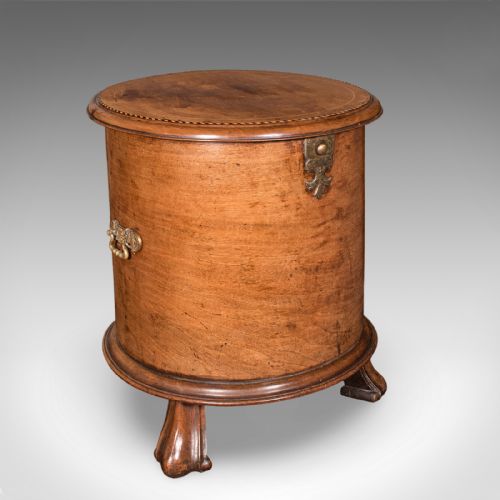
Some stands double as wine coolers, proving that past generations took their portable cellars very seriously indeed.
Assessing quality
Timber selection dictates visual impact, with richly figured burr walnut and symmetrical grain matching commanding greater interest than plain surfaces. The harmony between the upper chest and its stand determines structural integrity, particularly where stands are associated or of a later period.
Surface patination and the preservation of original veneering reveal the history of the piece. Crisp crossbanding, intact stringing details, and period brassware reflect the skill invested by the original maker.
The English Walnut Chest Stand Glossary
- Oyster veneer
- Slices of branch wood cut transversely to produce small, circular grain patterns resembling oyster shells. This technique flourished during the late seventeenth century on walnut furniture.
- Crossbanding
- A narrow strip of veneer laid perpendicularly to the surrounding grain to frame drawer fronts or tops. It creates a defined border that accentuates the primary timber.
- Associated stand
- A base added to a chest at a later date, often matching the period style. This occurs frequently with antique case furniture where original lower sections did not survive.
- Cellarette
- A lockable container designed for storing bottles, often raised on a stand. Examples in walnut appear within nineteenth-century contexts.
- Stringing
- Inlaid lines of contrasting wood, such as boxwood, set into the surface of furniture. It outlines panels and drawers to add decorative contrast.
English Walnut Chest Stand: Frequently Asked Questions
What is an english walnut chest stand?
These pieces consist of a timber chest containing multiple drawers mounted upon an elevated frame or stand. They provide compact storage while lifting the main body off the floor.
Craftsmen built them primarily during the late seventeenth and eighteenth centuries, using figured walnut veneers to create decorative exterior surfaces.
How do I date an english walnut chest stand?
Dating relies upon examining leg styles, drawer construction methods, and timber treatments. William and Mary examples feature flat stretchers and turned legs, while Queen Anne pieces introduce cabriole supports.
Secondary woods like oak inside the drawers and the presence of crossbanding or oyster veneer provide additional chronological clues pointing to specific decades.
Are stands usually original?
Many surviving examples feature stands that are associated with the upper chest from a slightly different time. Cabinet and chest sections often became separated over centuries of domestic use.
Dealers note when a stand is later or associated, allowing buyers to appreciate how timber matching maintains the visual unity of the combined piece.
Where should I place a chest stand at home?
Their compact footprint makes them suitable for hallways, drawing rooms, or bedrooms as statement storage items. Placing them away from direct sunlight protects vulnerable walnut veneers from fading.
Leaving the top surface uncluttered allows the natural grain patterns and crossbanded borders to remain fully visible within the room.