


English Village Landscape Painting
When choosing an english village landscape painting, you select a window into rural history captured through watercolour or oil.
English Village Landscape Painting
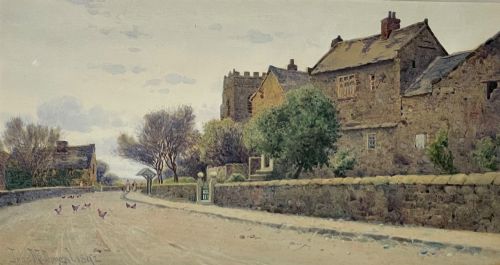
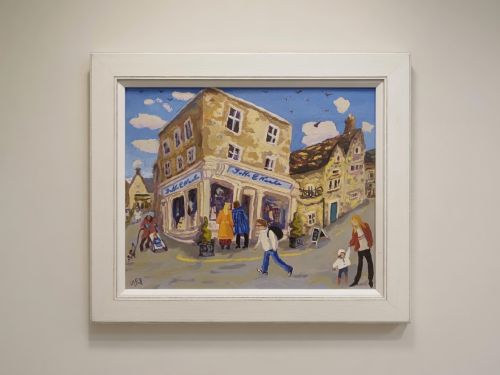
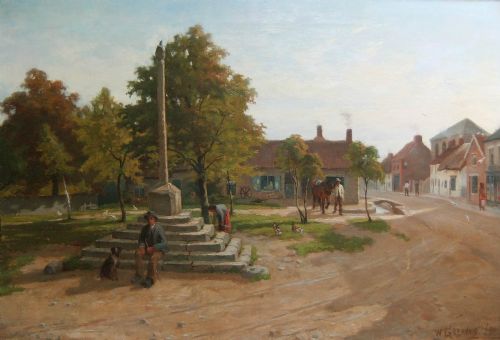
An english village landscape painting depicts rural settlements, country lanes, and village churches across Britain, often executed during the nineteenth and twentieth centuries. These artworks capture specific locations from Yorkshire to Sussex, ranging from quiet rural ponds to bustling village streets.
You will encounter works by named regional artists alongside pieces produced by the broader English School. The subjects typically record vernacular architecture, local inns, and agricultural communities before modern suburban development altered the countryside.
Most examples originate from the Victorian era up to the mid-twentieth century, utilising traditional media to document both named hamlets and unrecorded rural views. Their appeal lies in the direct topographical record and the atmospheric rendering of British weather and light.
How they were made
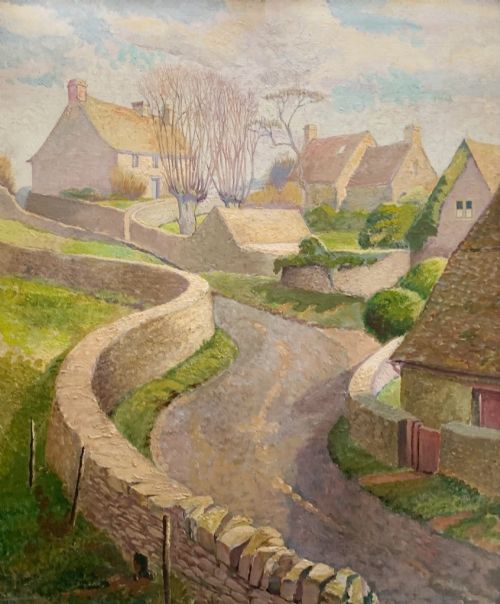
The materials recorded in these works divide primarily between watercolour pigment on paper and oil paint applied to canvas or wood panel. Watercolours often employ delicate washes to capture changing light, while oils provide heavier texture and richer colour for village taverns and rolling hills.
Support materials include heavyweight paper for watercolours and stretched canvas or wooden boards for oils, frequently housed within period gilt frames. Pigments were handled either with the transparent fluidity typical of the British watercolour tradition or the denser layering practised by nineteenth-century realists.
Subject matter frequently records rural Yorkshire, Sussex, and the Cotswolds, focusing on village streets, country inns, and local churches.
What varies in quality
Quality rests upon the artist's ability to command perspective and atmospheric depth, transforming a mere topographical record into a compelling composition. Stronger pieces demonstrate confident brushwork and a careful balance of light across stonework, foliage, and figures.
The distinction between standard decorative output and a finer work lies in the handling of local detail and the integration of the village into its surrounding landscape. Well-observed architectural proportions and subtle handling of weather elevate certain regional paintings above routine topographical sketches.
John McDougal·Lucy Pratt·William Greaves·Fred Lawson·Arthur Tucker·Charles Vickers·Frederick G. Coulridge·John Edward Bale·Robert Hollands Walker·Frederick Mayor·Percy Brooke·David Woodlock·B W Leader·Kershaw Schofield·John Ritchie·Walter Henry Sweet·Herbert Royle·Georgina Lara·John J. Hamer·Stanley Orchart·Alfred Rimmer·Joseph Thors·David Heward·Joseph Hughes Clayton·Martin Lamotte
The English Village Landscape Painting Glossary
- English School
- A term used to describe British artists working within shared regional traditions rather than belonging to a single formal movement. These painters often focused on domestic landscapes and rural life.
- Watercolour
- A painting method where fine pigment is suspended in a water-soluble binder and applied to paper. It relies on the white of the paper to show through translucent washes.
- Oil on Canvas
- A technique utilising pigments bound in drying oils applied to a stretched woven fabric support. This medium allows for deep colour saturation and gradual blending of tones.
- Provenance
- The documented history of ownership surrounding a work of art. It helps establish authenticity and trace the journey of a painting through time.
English Village Landscape Painting: Frequently Asked Questions
How do I date an antique village painting?
Dating relies on stylistic clues, framing methods, and artist biography records. Clothing styles of any figures depicted and architectural details like chimneys or signposts also help narrow the period.
Signatures, gallery labels on the reverse, and the type of canvas or paper provide further physical evidence for when the work was created.
Where should I hang a watercolour?
Watercolours require placement away from direct sunlight to prevent the fading of delicate pigments on paper. Stable indoor humidity protects both the paper support and the historical mount.
Using conservation-grade glazing helps filter ultraviolet light while keeping the artwork secure within its original or period frame.
What is the difference between oil and watercolour?
Oils use pigment bound in oil on canvas or wood, offering a heavier texture and deeper colour saturation. Watercolours use water-soluble pigment on paper, yielding a lighter and more translucent effect.
Both media capture British rural scenes, but they handle light and weather conditions through entirely different technical processes.
Are all these places still identifiable?
Many villages depicted still exist today, though surrounding landscapes and modern developments have often altered their immediate settings. Comparing historical paintings with modern maps reveals how much rural areas have changed.
Some smaller hamlets or specific roadside views remain remarkably similar to their nineteenth-century representations.