
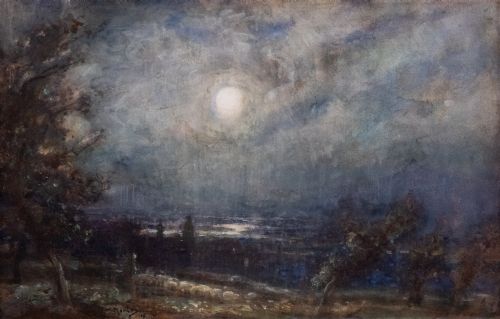


Original Atmospheric Watercolour Painting
An original atmospheric watercolour painting brings light and weather directly into a room through water-soluble pigments handled with fluidity.
Original Atmospheric Watercolour Painting
An original atmospheric watercolour painting captures fleeting light, mist, and weather across landscapes, marine views, and cityscapes. Buyers seeking this phrase encounter works executed on paper, often framed beneath glass and wood.
The selections span from the Victorian era and the nineteenth century through the Edwardian period and the mid-twentieth century. Styles range across British Impressionism, Edwardian Impressionism, and the twentieth-century British school.
Common subjects include coastal scenes, northern landscapes, and London landmarks rendered by named British artists. These watercolours rely on washes and pigment density to evoke mood rather than rigid topographical precision.
Materials and technique
Artists apply watercolour pigment and gouache suspended in water directly onto paper supports. The white of the paper often serves as the brightest highlight, preserved beneath translucent washes.
Framing typically involves wood mouldings and protective glass to shield the delicate paper surfaces from atmospheric moisture and handling. Pigments are layered wet-on-wet or wet-on-dry to control the diffusion of light and shadow.
Several artists clearly braved the bitter northern wind to capture Whitby Abbey and the rugged Yorkshire coast in watercolours.
Distinctions in quality
Quality rests upon the artist's economy of mark and the successful capture of atmosphere rather than sheer scale. A confident handling of washes creates depth and movement within marine and landscape scenes.
The preservation of the paper and the vibrancy of the pigments determine the enduring strength of the piece. Strong works balance tonal contrast with the natural luminosity inherent in the medium.
Thomas William Morley·Robert Leslie Howey·William Tuck·George Weatherill·Frank Wasley·William A. Macdonald·Frederick William Jackson·Fred Lawson·Herbert John Finn·William Kay Blacklock·Walter Duncan
The Original Atmospheric Watercolour Painting Glossary
- Watercolour pigment
- Finely ground colour particles mixed with a water-soluble binder. This medium allows for translucent washes and rapid application.
- Gouache
- An opaque water-based paint often used alongside watercolour to add solid highlights. It contains a white pigment filler to increase opacity.
- British Impressionism
- A painting style focusing on light and everyday subjects through visible brushwork. It developed distinct regional characteristics across British art schools.
- Topographical
- Depicting a specific real place with recognisable landmarks. These works combine artistic mood with historical records of towns and rivers.
Original Atmospheric Watercolour Painting: Frequently Asked Questions
How should I hang watercolour paintings?
Watercolours require placement away from direct sunlight to prevent the pigments from fading over time. Continuous exposure to bright light damages both the paper support and the water-soluble colours.
Ensure the room humidity remains stable to protect the paper and the wooden frames. Professional framing with UV-filtering glass offers essential protection for older works.
Are these works always painted on paper?
Paper serves as the primary support for these water-soluble pigments across all listed periods. The absorbent nature of paper allows the washes to settle with characteristic fluidity.
Artists select different weights and textures of paper to influence how the pigment pools and dries during creation.
How do I identify the period of a watercolour?
Dating relies upon the framing style, the artist's active lifespan, and the paper characteristics. Subject matter and clothing styles within figurative elements also offer clues to the era.
Signatures and inscriptions on the reverse often provide specific dates or locations that anchor the work in time.
What is the difference between watercolour and gouache?
Watercolour is inherently translucent, allowing light to pass through the pigment and reflect off the white paper beneath. This transparency creates luminous skies and water effects.
Gouache includes an opaque white additive that blocks light reflection, creating solid, matte areas of colour useful for highlights and dense clouds.