


English Victorian Wardrobe
An english victorian wardrobe provides substantial bedroom storage through architectural timber forms that anchor nineteenth century domestic interiors.

English Victorian Wardrobe
An english victorian wardrobe encompasses large bedroom storage furniture built throughout the nineteenth century, including compactums, linen presses, and multi-piece bedroom suites. Buyers seek these pieces for their generous proportions and architectural presence, which suit period properties and large modern spaces alike.
Most examples date from the Victorian era and the later nineteenth century, though related pieces show influences from the William IV period, George III revival, and Gothic revival styles. Buyers are most likely to encounter substantial mahogany and walnut wardrobes alongside versatile pine and ash cupboards.
Materials and Construction
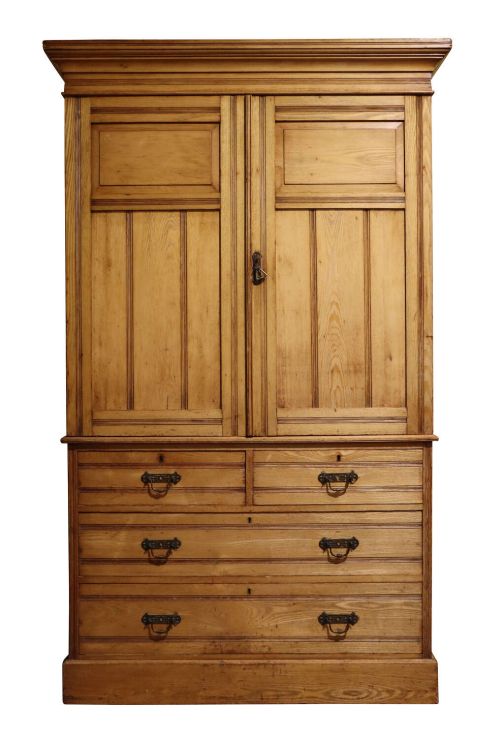
Cabinet makers utilised a wide variety of timbers for these wardrobes, ranging from dense hardwoods like flame mahogany, burr walnut, and ebonised oak to softer domestic woods such as pine, ash, and pitch pine. Solid construction techniques ensured these large carcases could support heavy internal sliding trays, hanging spaces, and drawers.
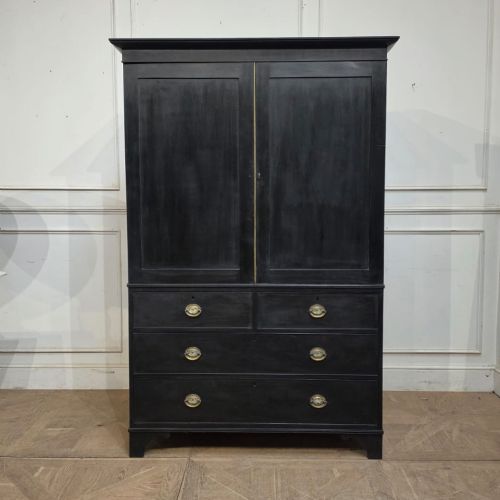
Surface treatments varied according to the timber and intended function, employing clear French polish to accentuate the grain of figured mahogany and walnut, alongside original paint finishes or ebonisation. Brass and metal hardware, including locks, hinges, and hanging hooks, provided functional strength and decorative contrast against the timber surfaces.
Materials span from painted pine and pitch pine to flame mahogany, burr walnut, and brass hardware.
Assessing Quality and Design
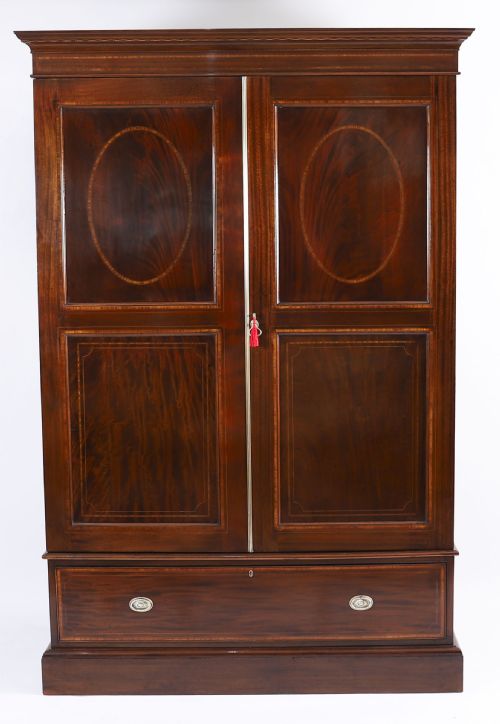
The finest examples demonstrate superior timber selection, utilising heavily figured flame mahogany, burr walnut, or satinwood veneers matched symmetrically across large door panels. Premium pieces often originate from notable workshops and incorporate complex interior configurations such as linen slides, drawers, and compactum compartments.
Simpler vernacular pieces, particularly those constructed from pine or ash, rely on honest utility and proportion rather than elaborate veneering or applied ornamentation. Quality in these items rests upon sturdy joinery, original painted or stripped surfaces, and well-proportioned architectural cornices.
Maple & Co.·Holland & Sons·Gillow & Co
The English Victorian Wardrobe Glossary
- Compactum
- A multi-functional wardrobe combining hanging space with sliding linen trays, shelves, and internal drawers. This form maximises bedroom storage within a single architectural cabinet.
- Linen Press
- A tall storage piece featuring upper cupboard doors enclosing sliding trays, traditionally used for flat linens, placed above a base of wider drawers. They often share forms with traditional wardrobes.
- Flame Mahogany
- A veneer cut from timber where the branch meets the trunk, producing a distinctive leaping flame pattern. Cabinet makers used this timber on prominent door panels to display rich figuring.
- Ebonised
- Wood treated with a chemical stain or pigment to imitate heavy, black ebony. This finish appeared on nineteenth century pieces to achieve a stark, classical aesthetic.
- Sentry Box
- A narrow single-door wardrobe configuration designed to fit tight bedroom spaces. These pieces combine compact footprints with full-height internal hanging capacity.
English Victorian Wardrobe: Frequently Asked Questions
How do I fit a large wardrobe?
Many nineteenth century wardrobes were constructed to dismantle into major sections, including cornices, base drawers, and side panels, allowing them to be transported and assembled within upper bedrooms.
Buyers should verify whether a specific compactum or multi-piece suite uses modular knock-down construction to ease delivery and placement against bedroom walls.
What is a compactum wardrobe?
A compactum is a specialised multi-functional storage cabinet that combines central hanging space with banks of internal drawers, shelves, and sliding linen trays behind panelled doors.
These versatile pieces offered comprehensive bedroom storage within a single footprint, often featuring in larger Victorian residences.
What woods were used?
Nineteenth century makers utilised both durable hardwoods and accessible softwoods, depending on the piece's destination and budget. Grand reception pieces featured flame mahogany, burr walnut, and satinwood, whilst domestic utility cupboards employed pine, pitch pine, and ash.
Some regional and decorative pieces also featured ebonised oak or original painted surfaces.