
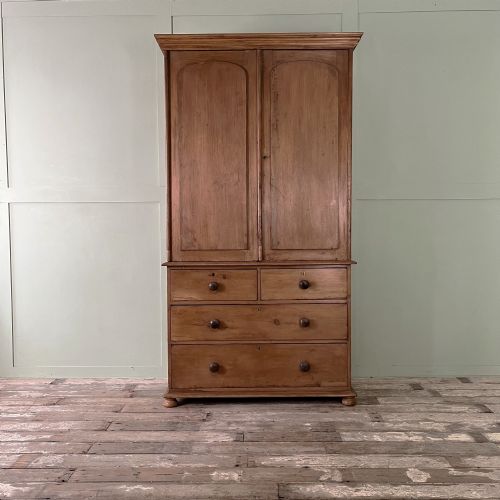
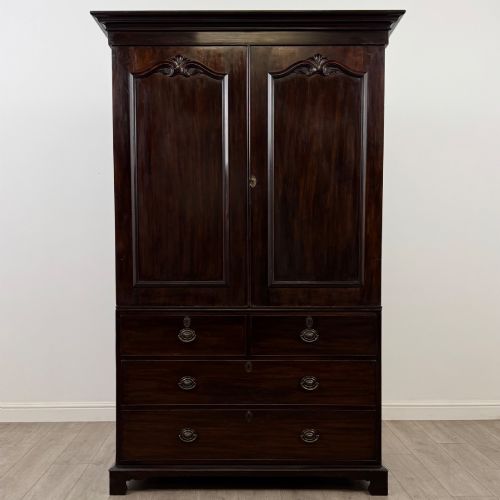
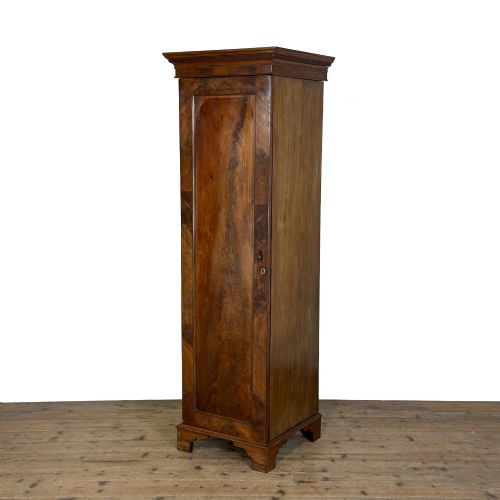
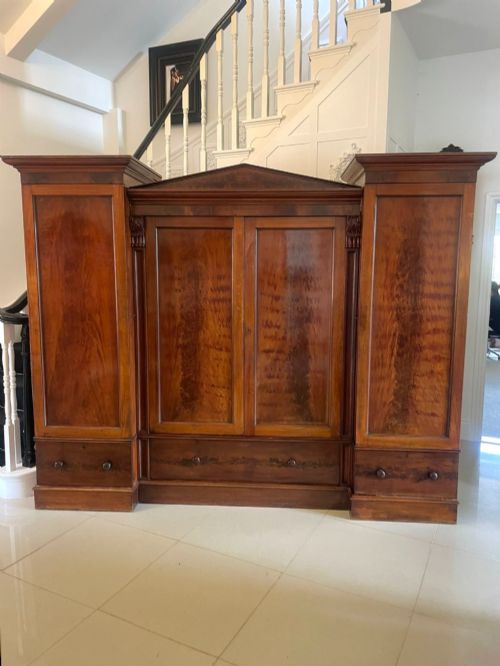
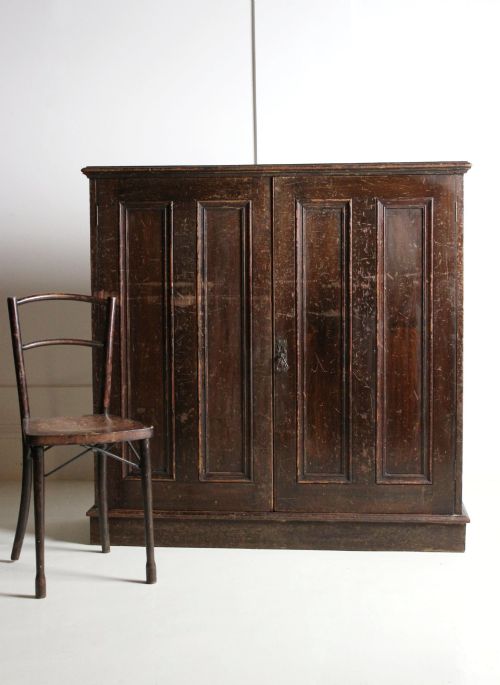
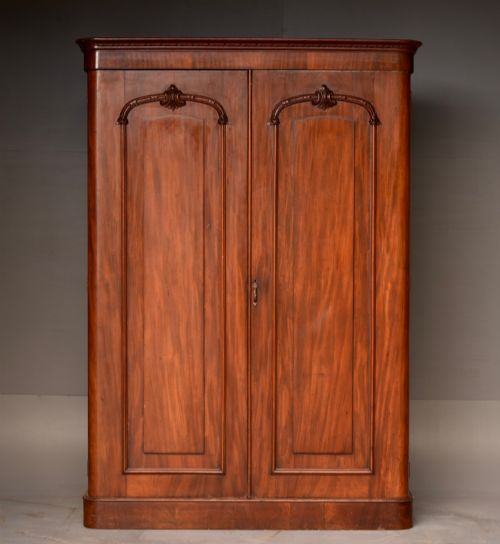
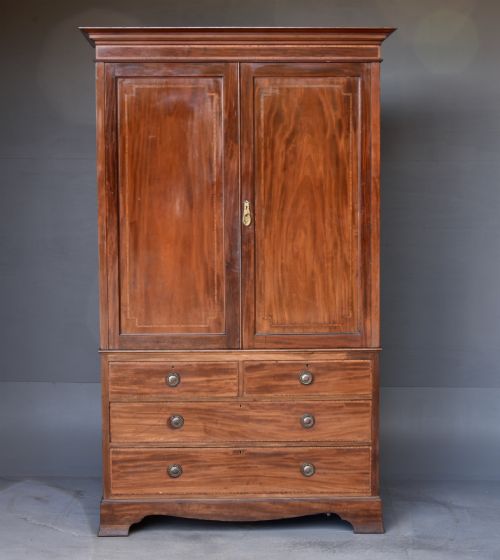
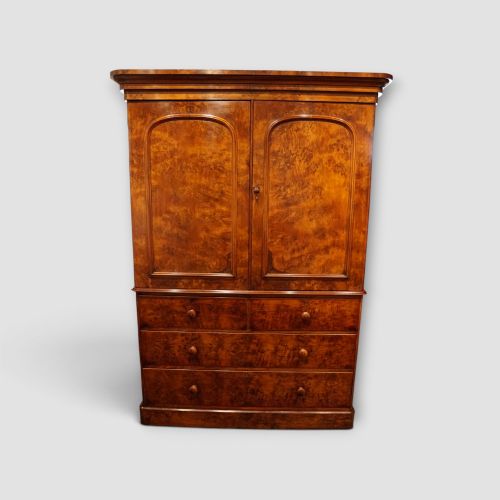
Victorian Linen Press Armoire
When you search for a victorian linen press armoire, you find large timber storage furniture built to hold linen and garments.

Victorian Linen Press Armoire
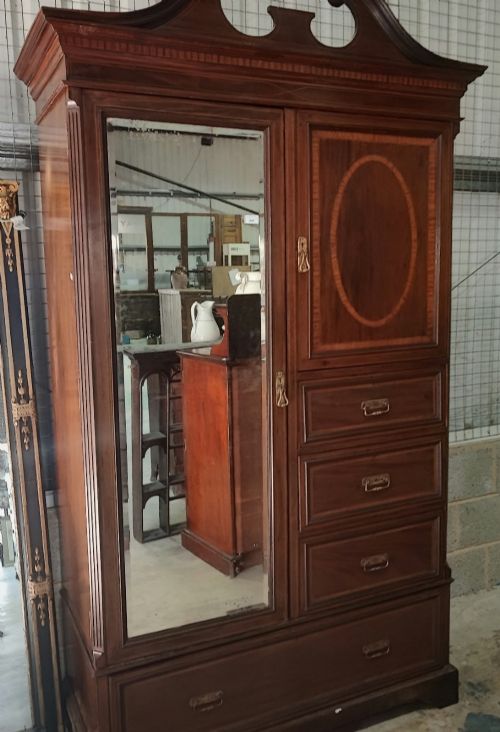
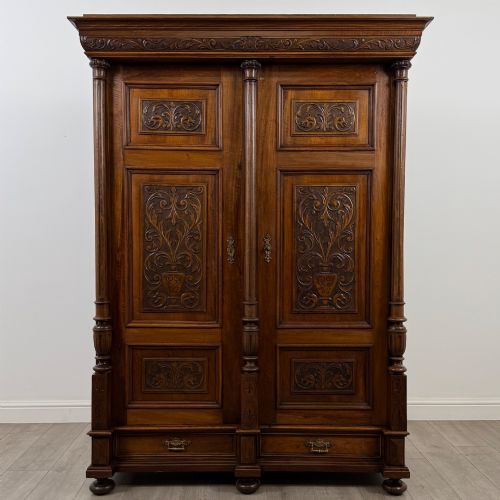
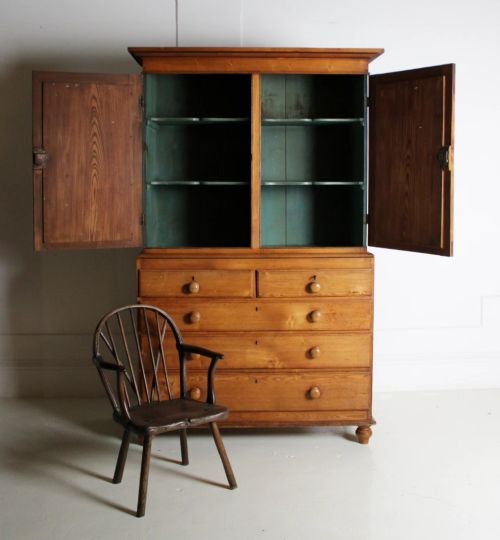
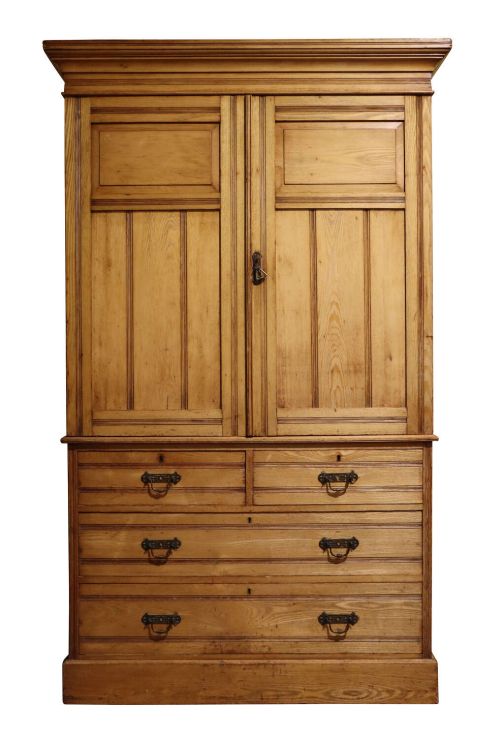
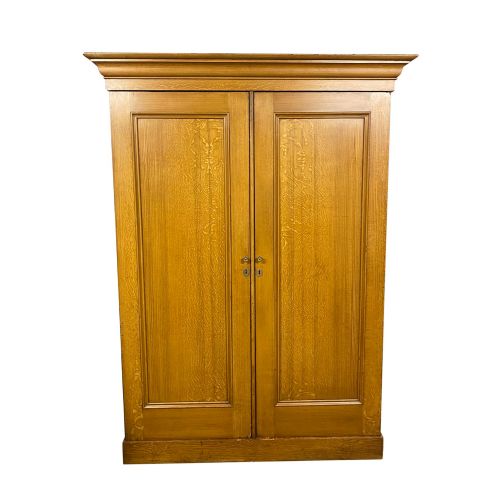
A victorian linen press armoire combines cupboard doors above internal sliding trays or drawers, alongside tall wardrobe sections for hanging garments. These pieces emerge in styles ranging from formal mahogany designs to painted pine country furniture.
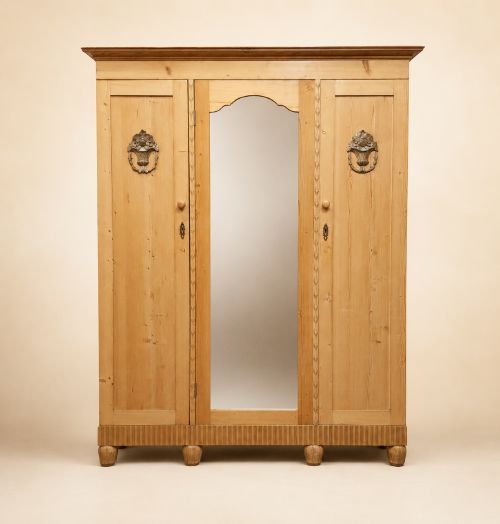
Most examples date across the nineteenth century, including Edwardian interpretations and earlier William IV pieces. They appear in formats from double and triple wardrobes to compactum units fitted with internal drawers.
Timber and Construction
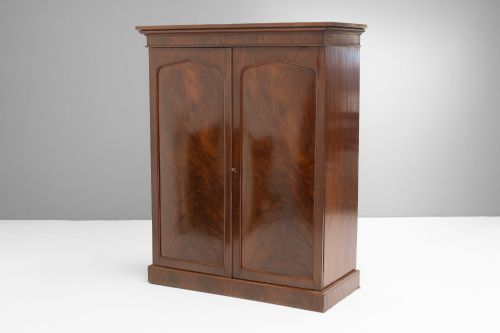
Cabinet makers built these pieces using solid timbers like mahogany, walnut, and pine, often applying figured veneers such as flame mahogany or burr walnut to prominent surfaces. Brass and iron hardware secures the doors and internal fittings.
Many larger timber wardrobes and linen presses were constructed to dismantle into sections for transport within larger houses. Painted surfaces utilise original scumble glazes, white lead paint, or plain wax finishes.
Some nineteenth-century wardrobes arrive with internal scented cedar panels designed to deter moths from expensive woollens.
Distinctions in Standard
The standard of a piece depends on the choice of timber figure, the crispness of carved details like blind fretwork, and the integrity of internal sliding trays. Finer workshops employed dense mahogany and elaborate flame veneers with precise joinery.
Country pine and scumble painted examples rely on surface preservation and original hardware rather than costly timber selection. Maker attribution to established firms like Gillows or Maple & Co elevates the standing of individual items.
maples & co·Edwards and Roberts·Gillows·S & H Jewell
The Victorian Linen Press Armoire Glossary
- Linen Press
- A tall storage cabinet featuring upper doors enclosing sliding shelves for linens, positioned above a base chest of drawers. This form evolved to store folded textiles before modern wardrobes became common.
- Compactum
- A fitted wardrobe combining hanging space, shelves, and internal drawers within a single carcass. These multi-purpose units maximise storage efficiency.
- Scumble
- A decorative paint technique creating simulated wood grain or mottled patterns over a base coat. Artisans applied this finish to humble pine furniture.
- Blind Fretwork
- Carved ornamentation applied to flat surfaces in geometric patterns that do not pierce through the wood. This detail appears on cornices of formal mahogany pieces.
- Knockdown
- Furniture constructed to be easily disassembled into panels for relocation. Large nineteenth-century wardrobes used this method to navigate narrow staircases.
Victorian Linen Press Armoire: Frequently Asked Questions
How do I dismantle a large wardrobe?
Many nineteenth-century wardrobes use internal bolts and wedged tenons to secure the cornice, sides, and base together without permanent glue.
Mark each component during disassembly to ensure correct alignment when rebuilding the piece in your room.
What is inside a linen press?
The upper section typically contains shallow wooden sliding trays designed for flat linens, while the lower section provides deep drawers for bulkier items.
Some variations substitute these internal trays for standard hanging rails or shelf combinations.
Where should I place these large cabinets?
These imposing timber pieces require substantial wall space and high ceilings due to their height and deep cornices.
Position them away from direct heat sources to prevent timber shrinkage and veneer splitting.
How do I distinguish pine from mahogany pieces?
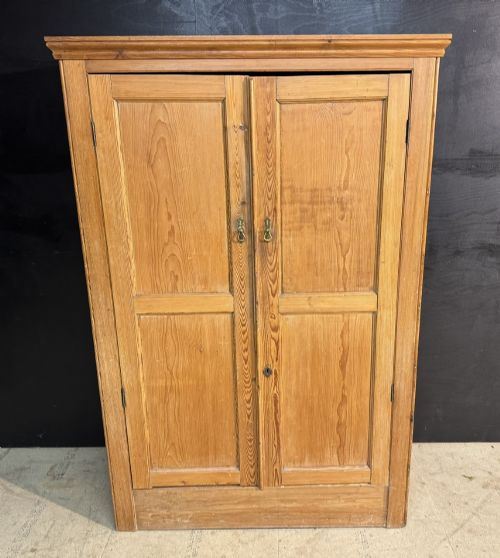
Pine pieces usually feature painted, waxed, or scumbled finishes suited to domestic country interiors, often showing knots within the soft timber grain.
Mahogany and walnut examples display rich, dark reddish or brown tones with dense, polished grain patterns intended for formal rooms.