




English Trunk Clock
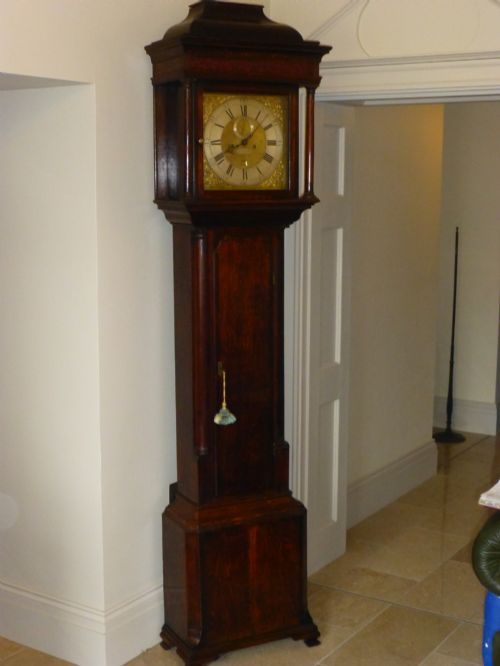
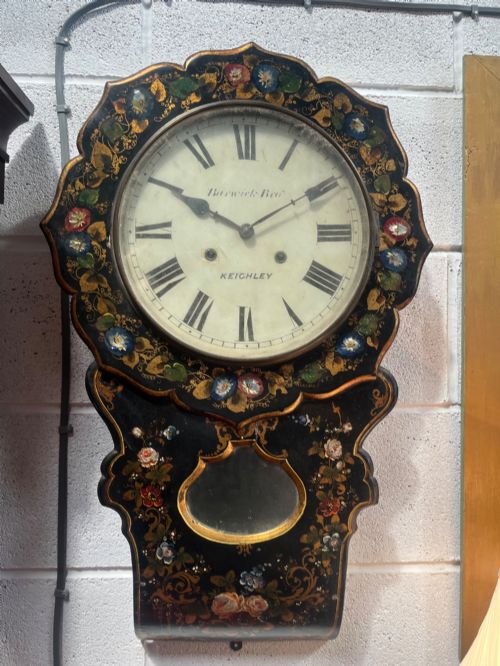
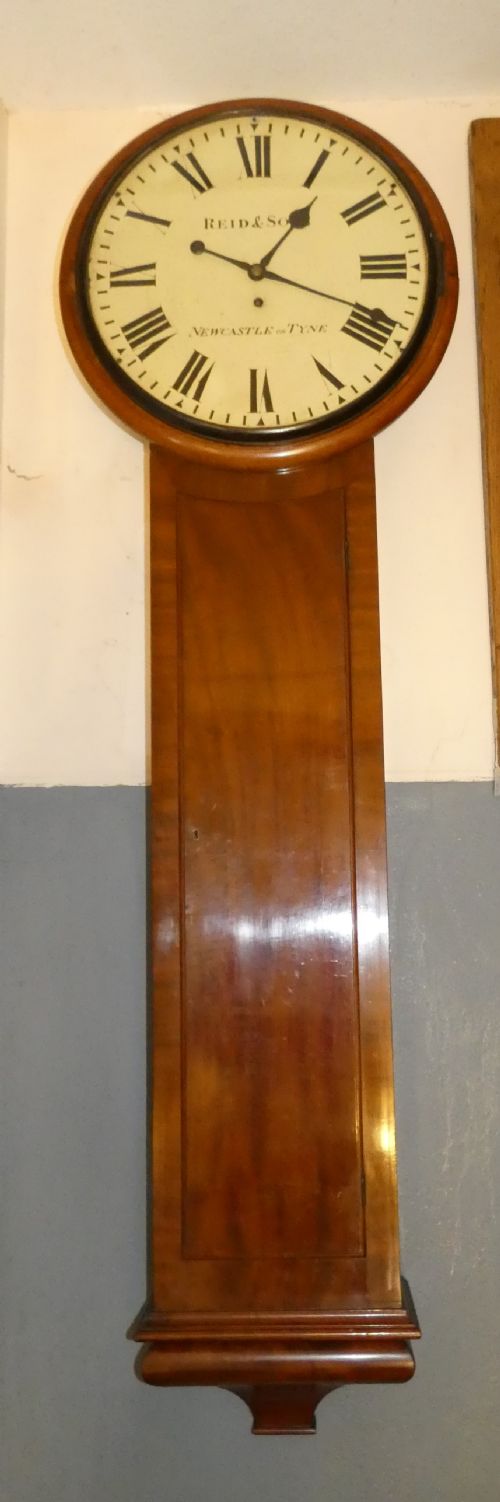
When you search for english trunk clock, you are looking for wall and longcase timepieces that show the dial above an extended trunk case.
English Trunk Clock
The term english trunk clock encompasses both drop-dial wall timepieces with extended lower cases and longcase clocks featuring narrow trunks. The items you meet on this page span the eighteenth, nineteenth, and early twentieth centuries, reflecting diverse regional British clockmaking traditions. Wall-mounted versions often feature compact wooden dials and pendulum boxes below, while floor-standing variants house long weights and pendulums inside fitted wooden trunks.
Makers working in London and provincial towns produced these pieces for domestic, commercial, and public spaces, employing reliable fusee or weight-driven movements. Dial formats range from painted metal and brass to solid wood, often paired with glass inspection doors on trunk cases. Whether you choose a Regency drop-dial wall piece or a Victorian regulator, each design prioritises functional legibility combined with cabinet-making skill.
Materials and construction
Cabinet makers utilised dense native and imported timbers, predominantly mahogany, oak, walnut, and rosewood, sometimes adding mother-of-pearl inlay or brass bezel surrounds. Cases display tight joinery, often with curved or chisel bottoms designed to house the swinging pendulum cleanly beneath the dial.
Movements rely on brass gear trains, with many wall-mounted examples driven by a single or twin fusee mechanism using a chain or gut line to maintain even power. Longcase variants typically utilise weight-driven or spring-driven movements, occasionally incorporating bell striking or chiming trains housed behind glazed trunk doors.
The recorded periods span from the late seventeenth century through the Regency, Victorian, and Edwardian eras.
Quality differences
The distinction between standard utility timepieces and finer examples lies in the crispness of the cabinet work, the choice of cabinet timbers, and the finish of the movement plates. Superior clocks exhibit carefully selected veneer grain, precise dial signwriting by named makers, and clean, un-wore gear teeth that show minimal alteration over time.
Provincial pieces often display charming local variations in dial design and case proportions, whereas high-end London makers delivered rigorous mechanical precision and refined secondary details like side access doors and cast brass bezels.
Richard Corless of Stockport·Halliday & Rich·John Walker·Thomas Utting·Edward East·R Roberts of London·John Thwaites·Webb of Frome·C Coleman·Mark Bartley·John Drew·Frederick Rowe·Sansom·James Bell·James Hargraves
The English Trunk Clock Glossary
- Fusee
- A conical pulley used in spring-driven clocks to equalise the torque of the mainspring as it unwinds. This mechanism ensures consistent force is delivered to the gear train.
- Drop-dial
- A wall clock format where the circular dial sits above an extended lower case enclosing the pendulum. The drop case can take various shapes, including bracket and chisel bottoms.
- Grandmother clock
- A smaller, more slender version of the traditional longcase clock, popular in the twentieth century. These shorter floor-standing timepieces fit neatly into lower-ceilinged rooms.
- Regulator
- A precision timekeeper designed for high accuracy, often featuring a simplified dial layout with a sweep second hand. These movements were traditionally used to set other household clocks.
English Trunk Clock: Frequently Asked Questions
What is a fusee movement?
A fusee is a conical pulley connected to the mainspring via a cord or chain, designed to maintain steady power as the spring relaxes. This mechanical refinement helps the clock maintain consistent timekeeping throughout its running period.
You will find this mechanism frequently employed in better-quality nineteenth-century English wall timepieces and trunk clocks.
How do I hang a wall clock safely?
Wall-hanging clocks require secure attachment to solid wall structures using appropriate fixings rated for the combined weight of the timber case and brass movement. Ensuring the case hangs plumb prevents uneven wear on the escapement and allows the pendulum to swing evenly.
Most drop-dial wall clocks include mounting eyes or secure bracket points built into the backboard for this purpose.
Why do some dials say wood while others are metal?
Wooden dials appear on specific regional styles, particularly during the Regency period, offering a distinct matte texture compared to painted metal or brass alternatives. Makers selected the dial material based on prevailing regional tastes and the specific workshop tradition.
Painted iron and brass dials remained standard across London and provincial workshops for their high contrast and legibility.
How do I wind an antique trunk clock?
Winding involves inserting a matching key into the winding square on the dial face and turning it gently until the spring reaches full tension. Care must be taken not to over-wind the movement, stopping as soon as firm resistance is felt.
Weight-driven versions are tended by pulling the cords or winding the weights back up rather than tensioning a mainspring.