

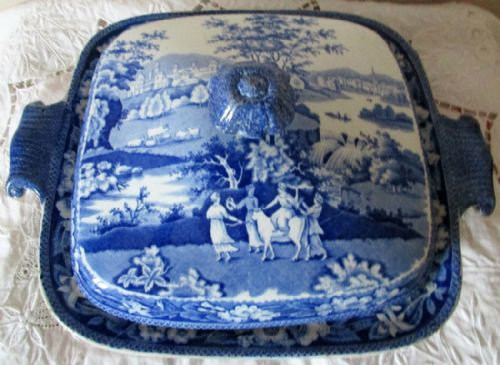


English Transferware Dish
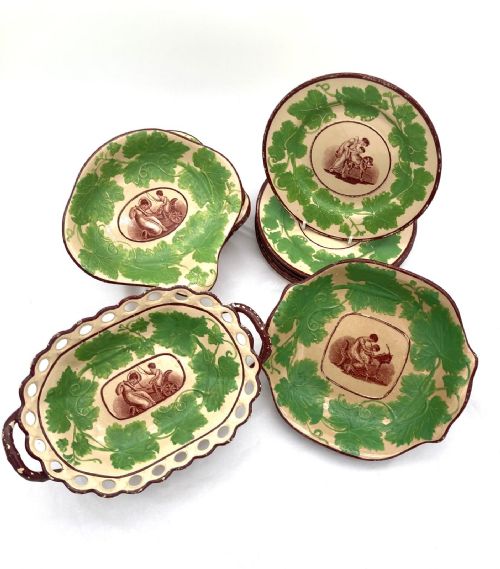
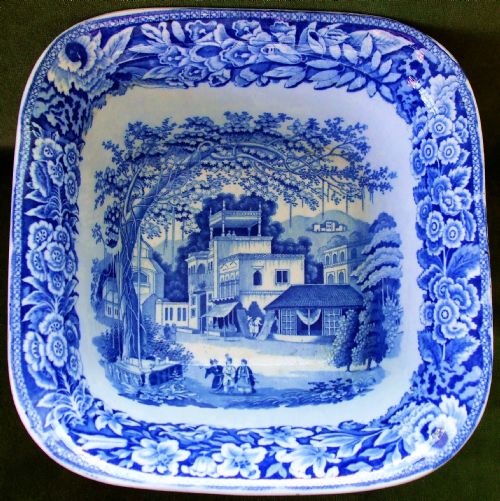
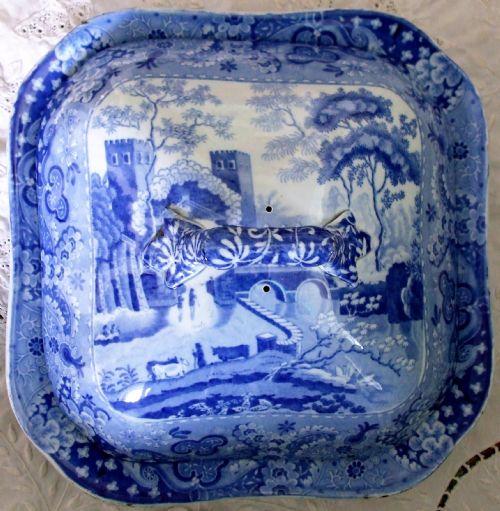
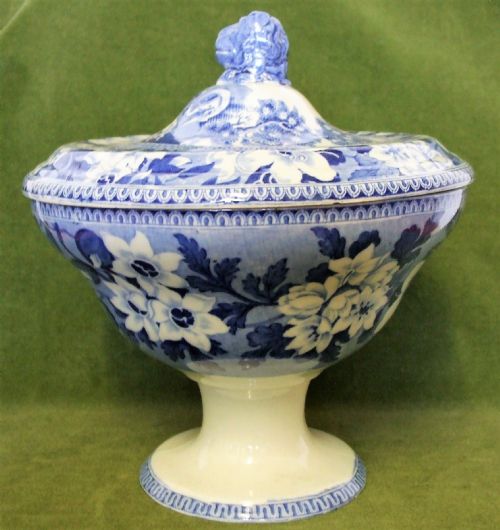
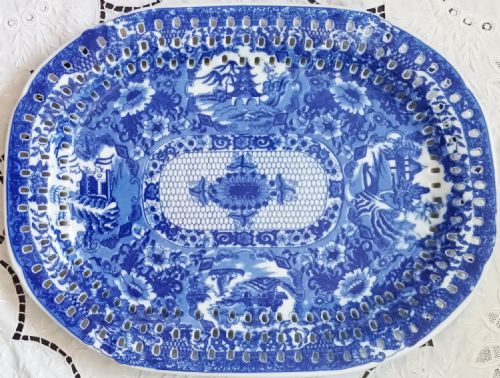
An english transferware dish brings eighteenth and nineteenth-century pictorial scenes directly to the table through printed earthenware and porcelain.
English Transferware Dish
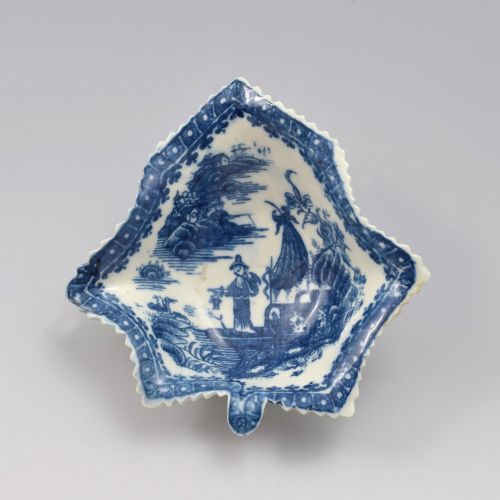
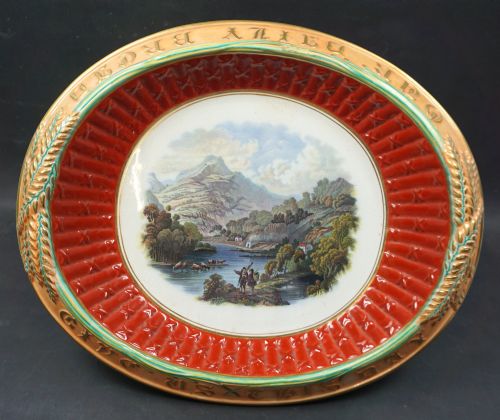
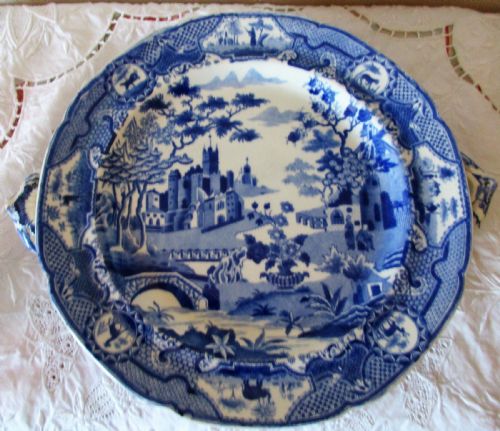
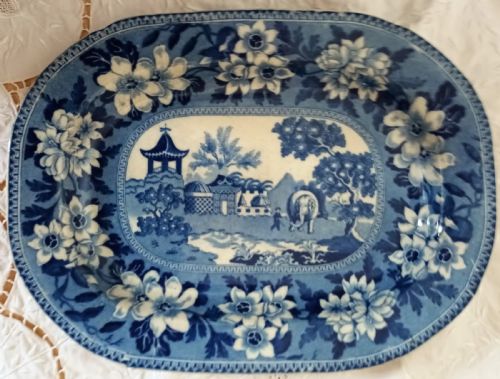
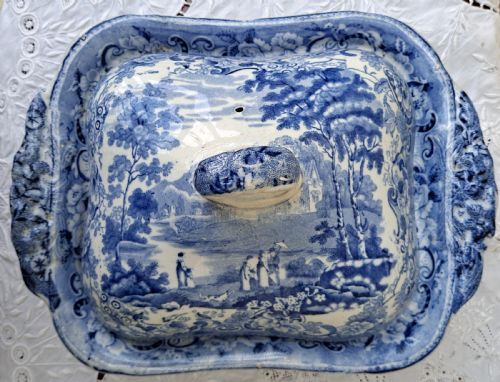
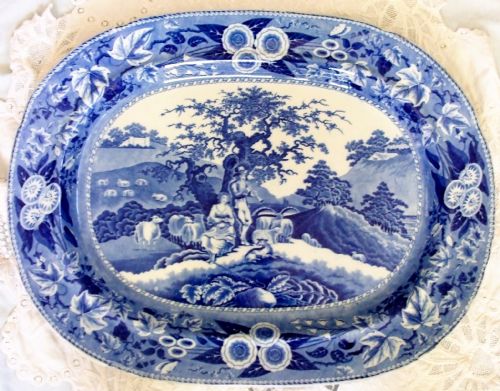
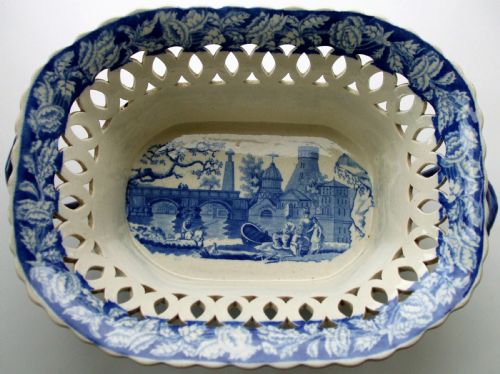
When searching for an english transferware dish, you encounter a wide variety of utilitarian and serving forms produced across Georgian, Regency and Victorian eras. The selection on this page ranges from small pickle dishes and spoon trays to large serving platters, vegetable tureens, and decorative plates.
Most examples you meet here date from the nineteenth century, utilising blue and white transfer printing to depict pastoral landscapes, architectural ruins, and Chinoiserie motifs. Forms vary from simple flatware to pierced serving dishes and lidded tureens designed for formal dining.
How they were made
Potters produced these pieces using earthenware, pearlware, and soft-paste porcelain shaped into plates, platters, and tureens. Artisans applied cobalt pigment through a copperplate transfer paper onto the biscuit ceramic body before glazing.
The printed design was sealed beneath a clear or slightly tinted glaze and fired in a kiln to fuse the cobalt pigment permanently into the surface. Some iterations incorporated additional hand-painted enamel highlights over the transferred outline.
Early Staffordshire potters occasionally added accidental thumbprints in the cobalt glaze, leaving a permanent ghostly signature of the maker's hand.
What varies in quality
Quality in an english transferware dish rests on the crispness of the printed line and the depth of the cobalt pigment against the ceramic body. Early pearlware bodies and fine porcelain examples often display a more refined glaze and sharper topographical detail than later mass-produced earthenware.
The clarity of the transfer without blurring or smudging distinguishes finer works, alongside the complexity of the pictorial subject matter such as detailed architectural scenes or multi-figure pastoral landscapes.
Spode·John Rogers and Son·J and R Clews·John and Richard Riley·John Davenport
The English Transferware Dish Glossary
- Transfer printing
- A method of decorating ceramics by engraving a copper plate, pulling an impression on tissue paper, and transferring the ink onto an unglazed or biscuit-fired ceramic body.
- Pearlware
- A refined earthenware developed by Josiah Wedgwood around 1779, featuring a slightly bluish glaze that pooled in recesses to mask the underlying cream-coloured body.
- Tureen
- A deep covered serving vessel used for soups, sauces, or vegetables, frequently accompanied by a matching stand or platter.
- Chinoiserie
- A European artistic style reflecting Chinese motifs and imaginary oriental landscapes, frequently adapted in blue and white on early ceramic services.
- Biscuit
- Unglazed ceramic ware that has been fired once in a kiln prior to the application of glaze and subsequent decoration.
English Transferware Dish: Frequently Asked Questions
How do I date an english transferware dish?
Dating relies upon the ceramic body, the shade of the glaze, and the registration marks or maker stamps found on the underside. Pearlware bodies and specific cobalt tones generally point towards the Georgian period, while heavier earthenware often indicates mid-Victorian production.
Makers often named their patterns or included topographical titles within the transfer design itself. Cross-referencing these printed titles with known operating dates of potteries helps narrow the decade of manufacture.
Can I use these dishes for serving food?
While these pieces were originally created as functional tableware for dining, antique ceramics require careful handling today. Modern dishwashers and microwaves can cause crazing in the historic glaze or weaken the underlying earthenware body.
Hand washing in lukewarm water with mild soap preserves the integrity of the ceramic and the cobalt pigment. Many collectors prefer to display them on walls or dressers rather than risking daily use.
Why are some pieces marked with place names?
Potteries frequently drew inspiration for their printed patterns from popular travel books, picturesque views, and contemporary events. Titles referring to specific bridges, castles, or foreign cities were added to capture public interest in exploration and topography.
These topographical series allow historians to identify the exact visual source used by the engraver. They also provide a fascinating record of how nineteenth-century Britons viewed the wider world.