
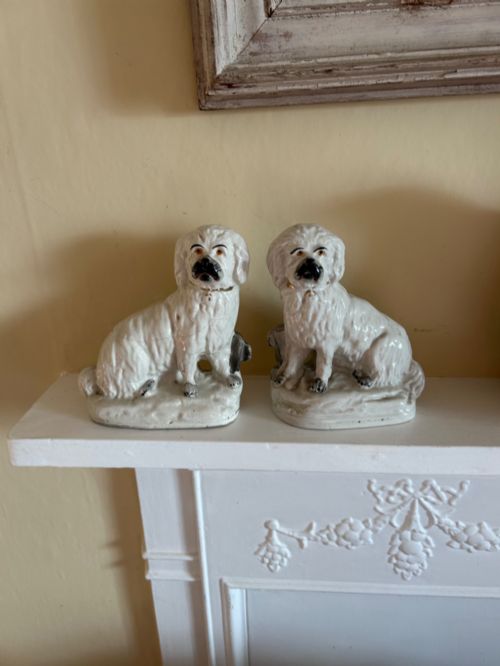


English Staffordshire Spaniels
English Staffordshire spaniels are charming ceramic mantel ornaments from the nineteenth century that bring traditional character to any fireside or shelf.
English Staffordshire Spaniels
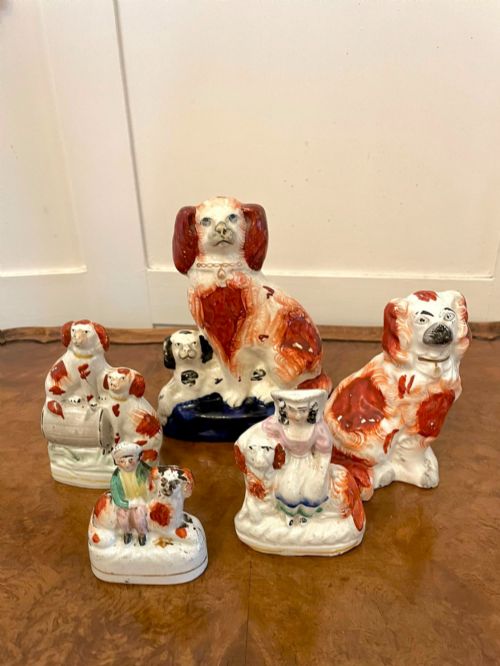
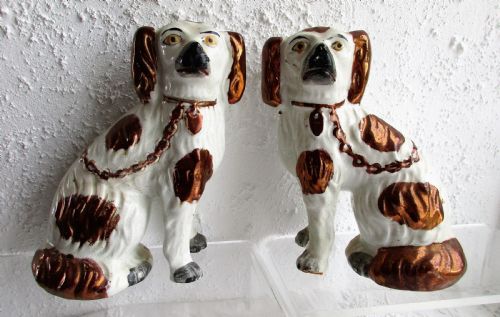
When you search for english staffordshire spaniels, you encounter a variety of nineteenth-century ceramic figures shaped as seated dogs, often sold in pairs as mantle ornaments. The most common form on this page is the Victorian comforter spaniel, modelled facing left or right to sit either side of a fireplace.
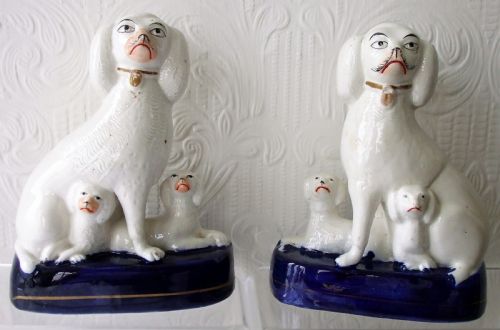
Beyond the classic spaniels, the listings also include related ceramic figures such as poodles with pups, Maltese terriers, and dogs accompanied by children. These decorative objects span from the Regency era through to the late Victorian period, reflecting evolving domestic tastes in ceramic animal sculpture.
The materials and finishes range from plain white earthenware to pieces highlighted with gilt, copper lustre, or detailed hand-painted enamel colours. Most examples function purely as decorative figurines, though the selection occasionally extends to small snuff boxes from the eighteenth century.
How they were made
Potters shaped these figures primarily from earthenware and stoneware, utilising ceramic moulds to create the distinct forms of seated dogs and poodles. Once cast and fired, the bodies received glazes and enamel details, sometimes enhanced with touches of gilt or glass eyes to bring expression to the face.
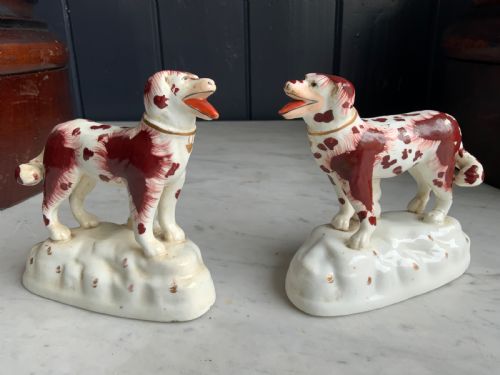
Colour application varied from simple black and white or red and white markings to more elaborate hand-painted coats. The base materials and surface glazes together define the tactile quality typical of nineteenth-century Staffordshire production.
Some spaniels peer out with glass eyes rather than painted ones, giving them an unexpectedly soulful gaze across the mantelpiece.
What varies in quality
Uniformity in a pair matters significantly, as matched left- and right-facing dogs that retain their original companion balance hold greater appeal. The presence of secondary elements, such as attached pups or children alongside the main figure, also influences the character of the piece.
The English Staffordshire Spaniels Glossary
- Comforter spaniels
- Staffordshire pottery figures designed in pairs to sit on either side of a fireplace mantel. These dogs represent the King Charles spaniel breed popular in the nineteenth century.
- Earthenware
- A porous type of ceramic fired at lower temperatures, commonly used for nineteenth-century Staffordshire figures. It forms the structural body beneath the glaze and enamel colours.
- Copper lustre
- A metallic pottery glaze that produces a coppery, reflective sheen on the surface of the ceramic. Potters utilised this technique to highlight collars, lockets, and facial details.
- Enamel
- Opaque vitreous colours applied over the fired glaze and fixed with a lower temperature second firing. This method allowed makers to add distinct patches and facial markings to the dogs.
English Staffordshire Spaniels: Frequently Asked Questions
Where did people display these dogs?
Victorian households traditionally placed these spaniel figures on mantelpieces, facing inwards toward the hearth.
Pairs were positioned symmetrically on either side of the fireplace to serve as comforting domestic guardians.
Are these figures always sold in pairs?
Many examples survive as matched pairs designed to sit facing one another on a shelf or mantel.
Collections also include individual figures, small groups with puppies, or sets featuring multiple dogs.
What dog breeds do these figures represent?
The majority of the ceramic figures depict King Charles spaniels with characteristic drooping ears and solemn expressions.
Other variants in the tradition include poodles with pups, Maltese terriers, and general Staffordshire dogs.
How do you date a Staffordshire dog?
Dating relies on stylistic clues such as the modelling of the clay, the type of glaze, and the specific enamel colours used.
Most pieces date from the Victorian era, spanning the nineteenth century, though earlier Regency and eighteenth-century examples do appear.