



English Silver Candle Holders
English silver candle holders bring direct domestic illumination from the eighteenth century through to the twentieth in sterling silver, old sheffield plate and pewter.
English Silver Candle Holders
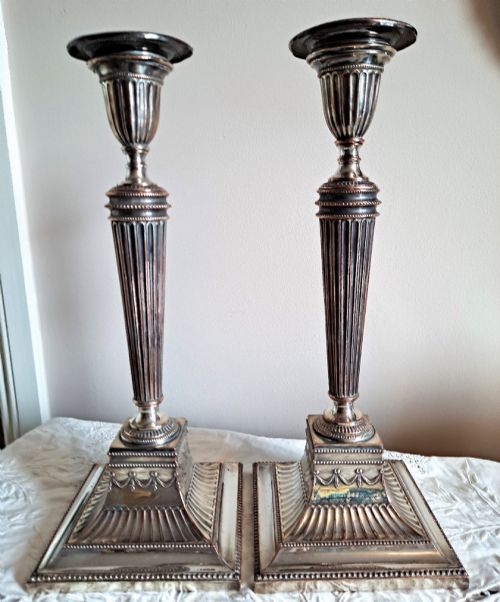
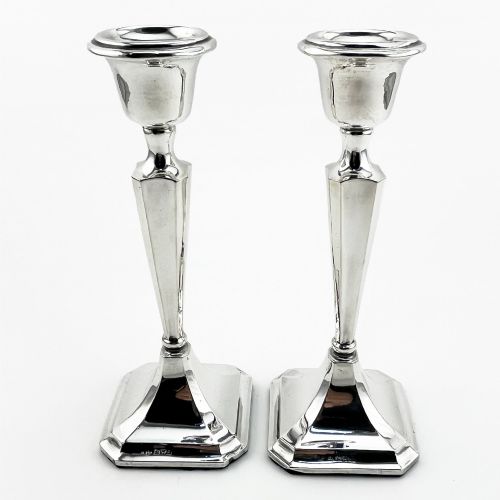
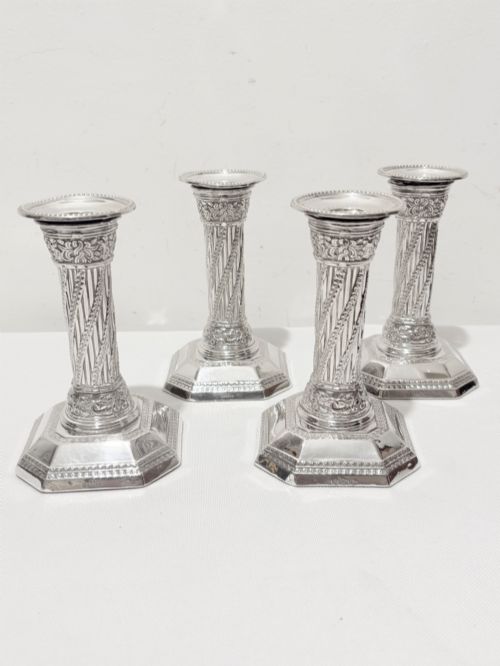
English silver candle holders encompass candlesticks, candelabras, wall sconces and match holders spanning the eighteenth century, the Victorian era, and the mid twentieth century. Buyers seeking english silver candle holders will encounter matched pairs and larger sets produced across Georgian, Regency, Victorian, Edwardian, Art Nouveau and Art Deco periods.
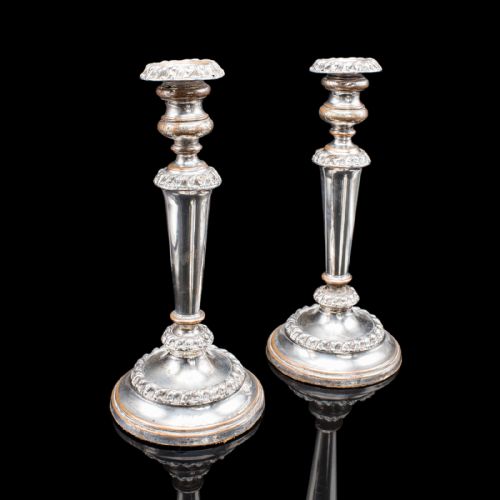
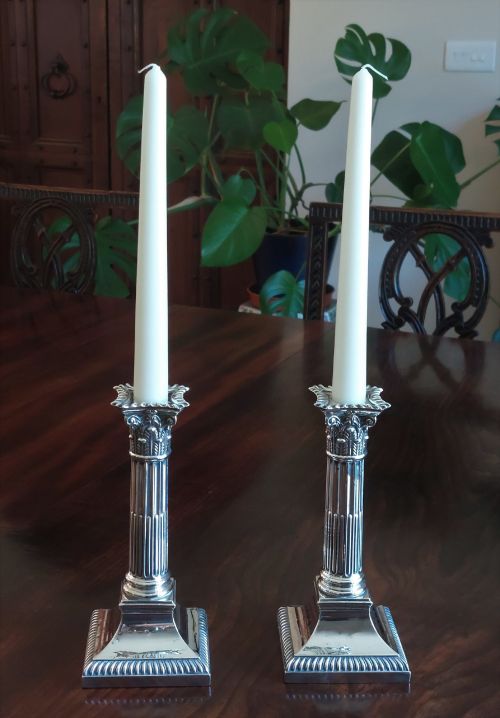
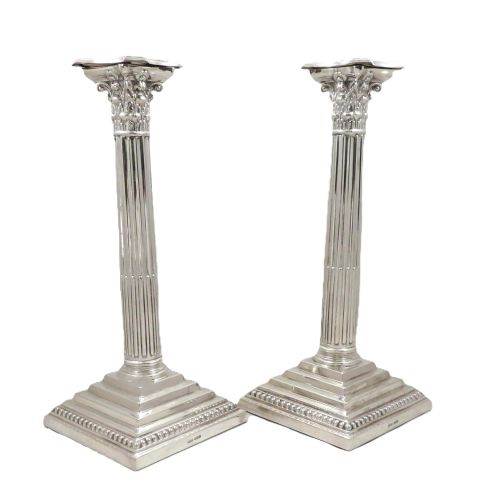
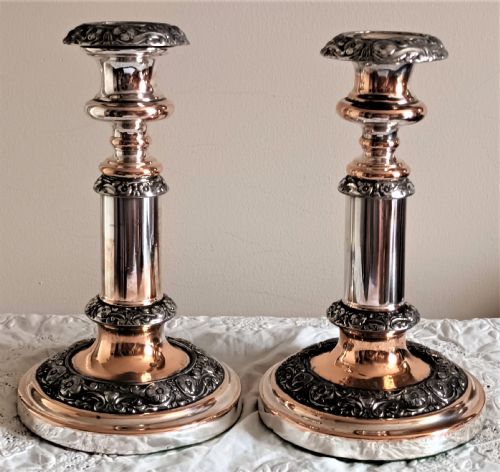
Forms range from tall Corinthian column candlesticks and telescopic designs to miniature folding tapersticks and desk candle stands. Materials extend beyond sterling silver to include silver plate, old sheffield plate, paktong and pewter.
Materials and Construction
Maker workshops utilised sterling silver, silver plate and old sheffield plate, applying techniques such as casting, hammering and plating over base metals like copper. Early pieces often employ paktong or pewter for structural rigidity.
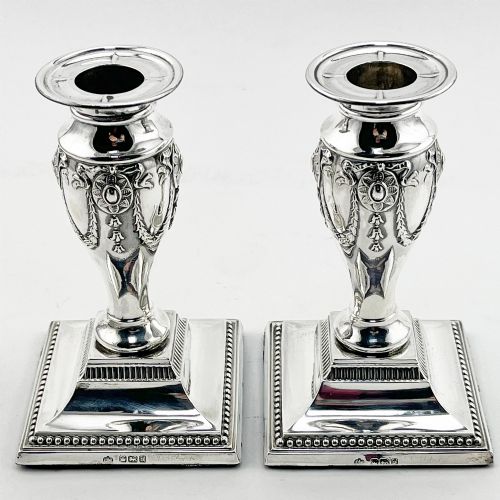
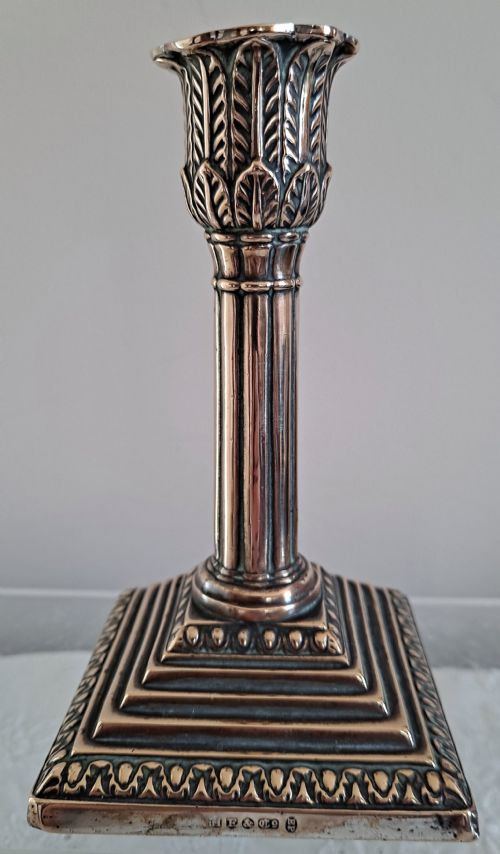
Construction methods vary from weighted bases on sterling silver sticks to fused copper and silver sheets in old sheffield plate items. Hallmarks stamped into sterling examples indicate assay offices in cities such as London, Birmingham and Chester.
English Silver Candle Holders Retail Price Guide 2026
Typical asking prices for english silver candle holders among the pieces listed under this phrase on Sellingantiques today, from the lower quarter to the upper quarter. They describe what is for sale here now, not the wider market.
Listings feature English silver candle holders spanning the eighteenth century to the 1960s, incorporating sterling silver, old sheffield plate, pewter and paktong.
Design and Execution
Quality rests upon the crispness of cast ornamentation, such as neoclassical columns or art nouveau whiplash lines, and the integrity of the underlying metal. Pieces bearing clear maker marks and intact original nozzles demonstrate superior workshop origin.
The survival of original surface finishes, whether unpolished old sheffield plate or heavy sterling silver weight, distinguishes standard production from exceptional silversmith output.
J F Hall & Co·William Comyns·John Reilly·Elkington & Co·Garrard & Co·John Cafe·Barker Ellis·James Dixon & Sons
The English Silver Candle Holders Glossary
- Old Sheffield Plate
- A fused composite material made by melting a sheet of silver to a thick copper base before rolling into sheets. This technique predates modern electroplating and remains visible at cut edges.
- Taperstick
- A miniature candlestick designed specifically to hold a thin wax taper used for melting sealing wax on letters. These small items follow the formal styles of their full sized contemporaries.
- Paktong
- A copper, nickel and zinc alloy imported from China and utilised by British makers for casting heavy candle holders during the eighteenth century. It possesses a bright colour resembling silver.
- Candelabra
- A branched lighting fixture holding multiple candles upon a central stem and arms. Examples range from two arm versions to larger multi light arrangements.
- Go-to-bed
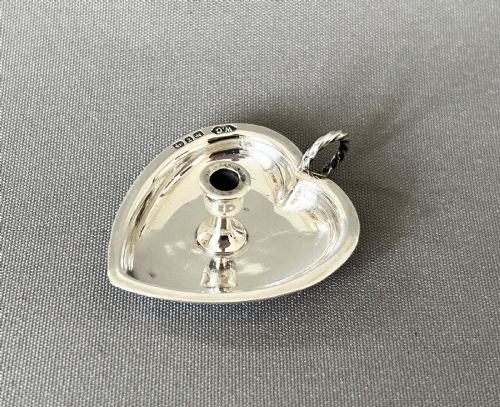
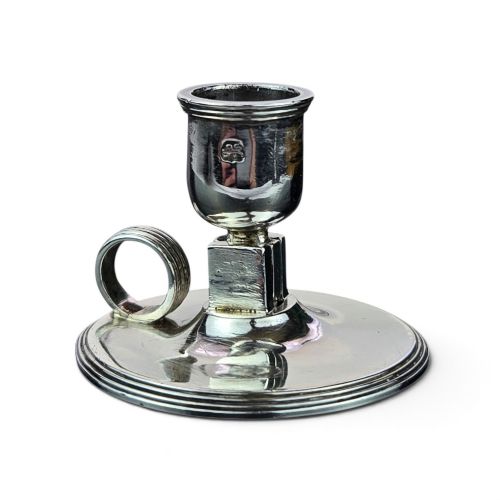
- A small portable candle holder fitted with a match compartment or striker, intended for lighting a path to the bedroom.
English Silver Candle Holders: Frequently Asked Questions
How do I clean tarnished silver candle holders?
Use a soft cloth and a specialised silver polish designed to remove tarnish without abrading the surface. Avoid harsh chemical dips that strip away patination and fine detail.
Take care around weighted bases and hallmarked areas to preserve the integrity of the metal and any engraved inscriptions.
What is the difference between sterling and plate?
Sterling silver contains a guaranteed high proportion of pure silver throughout its entire structure, bearing official hallmark stamps. Silver plate applies a thin layer of silver over a base metal core such as copper or brass.
Old sheffield plate uses a fused mechanical bond between silver and copper, whereas later plated items rely on electroplating methods.
How do I date an unmarked candlestick?
Examine the overall stylistic vocabulary, comparing architectural details like Corinthian capitals or neoclassical reeding against known design periods. Construction techniques, such as seam placement and base weighting, offer further chronological clues.
Consult related pieces with verified maker marks or hallmarked dates to establish a reliable comparative baseline for the form.