





English School River Scene
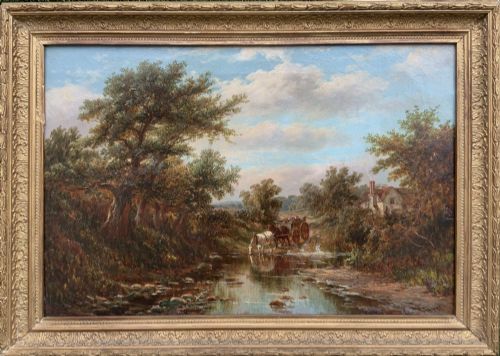
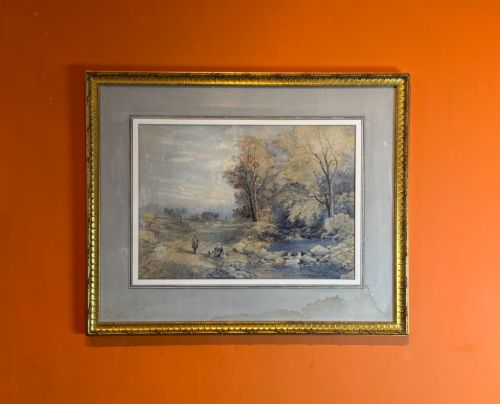
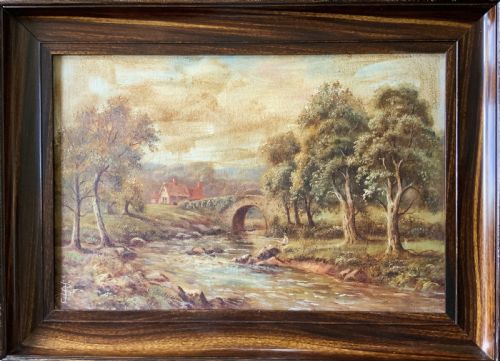
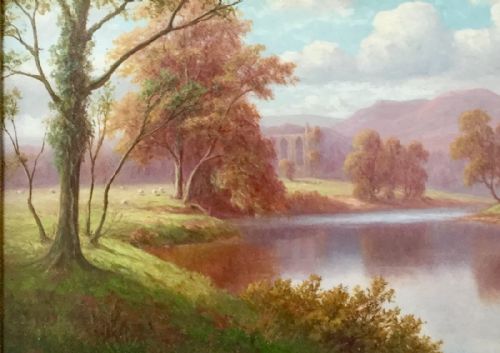
An English school river scene captures the quiet charm of waterways through traditional brushwork.
English School River Scene
An English school river scene brings together historic waterways, bridges, and rural life as recorded by regional and national artists. Buyers looking at this page encounter watercolours, oil paintings on canvas, and wood panels spanning centuries of British art.
The works range from expansive Victorian views with castles to intimate Edwardian streams and quiet nineteenth-century pastoral settings. Many pieces focus on specific locations such as the Thames, local locks, and rural bridges.
Works attributed broadly to the English school sit alongside pieces by named nineteenth and twentieth-century painters. The subject matter centres firmly on natural waterways, local boat traffic, and pastoral figures by the bank.
Materials and techniques
Artists utilised oil paint on canvas or wood panels, alongside delicate watercolours on paper protected by glass and housed within gilt wood frames. The choice of medium dictates the texture of the water and the treatment of light across the landscape.
Framing often involves traditional giltwood that complements the painted composition and preserves the work. Support materials range from stretched canvas to robust panels and paper sheets.
English School River Scene Retail Price Guide 2026
Typical asking prices for english school river scene among the pieces listed under this phrase on Sellingantiques today, from the lower quarter to the upper quarter. They describe what is for sale here now, not the wider market.
Substantial examples showcase regional British views from the Thames to Yorkshire and Devon.
Assessing quality and execution
Quality rests in the handling of light on water, the depth of the perspective, and the confidence of the brushwork in capturing figures and foliage. Stronger pieces demonstrate careful attention to atmospheric conditions rather than rigid adherence to formula.
The distinction between a standard provincial study and a finished exhibition piece lies in the subtlety of tone and the preservation of the original medium and frame.
David Cox Jnr·Thomas Baker of Leamington·Frederick Waters Watts·Henry Dawson·Robert Winchester Fraser
The English School River Scene Glossary
- English school
- A broad classification for artists trained or working within Britain, encompassing various regional movements and traditional styles. This term links together both signed works by known painters and anonymous period pieces.
- Watercolour
- A painting method where fine pigments are suspended in a water-soluble vehicle on paper. It allows for translucent washes that suit luminous depictions of rivers and skies.
- Oil on canvas
- Pigment bound in an oil medium applied to a stretched woven fabric support. This technique provides rich colour depth and a durable surface.
- Giltwood
- Wood carved and coated with gold leaf or a metallic substitute used for framing artwork. It provides a traditional decorative border that enhances the painting.
- Wood panel
- A rigid wooden support used instead of canvas for oil painting. It offers a stable surface favoured in various periods for smaller cabinet works.
English School River Scene: Frequently Asked Questions
What is an English school river scene?
An English school river scene is a historic painting or watercolour depicting British waterways, rural banks, and associated figures. These works reflect traditional landscape traditions across multiple centuries.
They offer a window into historic topography and the changing uses of riversides before modern development.
How do I date an antique river painting?
Dating relies on stylistic clues, framing methods, artist signatures, and the materials used such as paper or canvas types. Period clothing on figures also provides a reliable timeframe.
Comparing the technique with documented works by known painters helps narrow down the decade of creation.
Are these paintings original works?
The selection consists of original hand-painted watercolours and oil paintings rather than modern reproductions. Each piece bears the distinct brush marks or wash techniques of the individual artist.
Signatures appear on several pieces, while others represent the broader output of regional British artists.
How should I frame and display these artworks?
Works on paper require glass protection and acid-free mounts to prevent fading from light exposure. Oil paintings on canvas benefit from stable indoor environments away from direct heat sources.
Original gilt wood frames should be preserved carefully to maintain the historic integrity of the piece.