

English Rural Landscape Art
English rural landscape art captures quiet country scenes, winding riverbanks, and thatched cottages through the observant eyes of nineteenth and twentieth-century painters.
English Rural Landscape Art
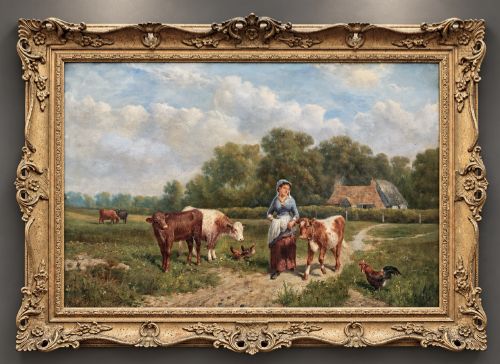
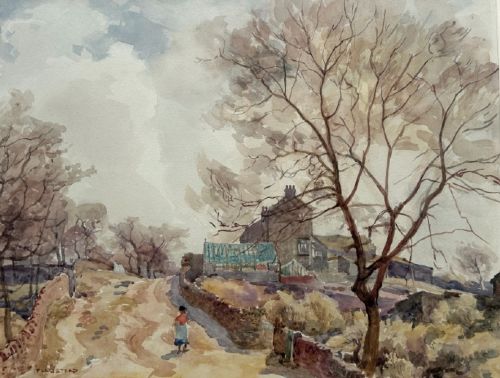
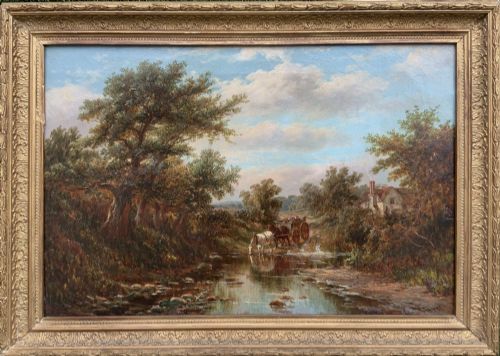
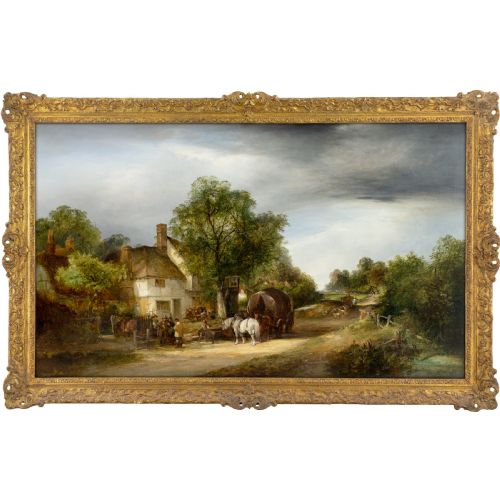
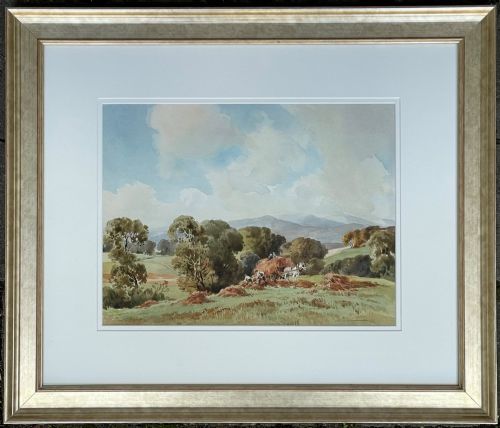
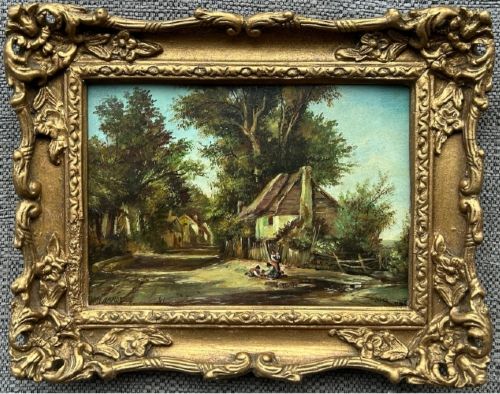
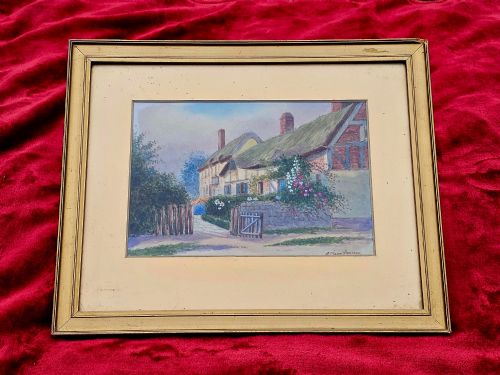
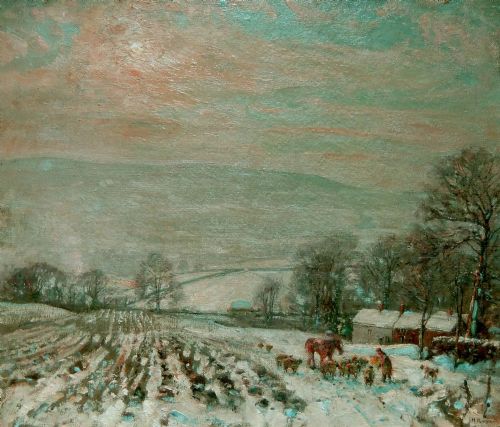
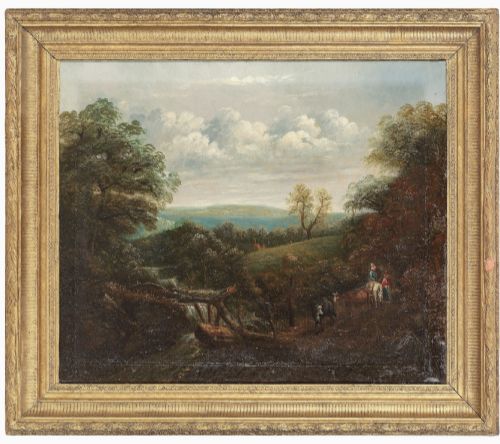
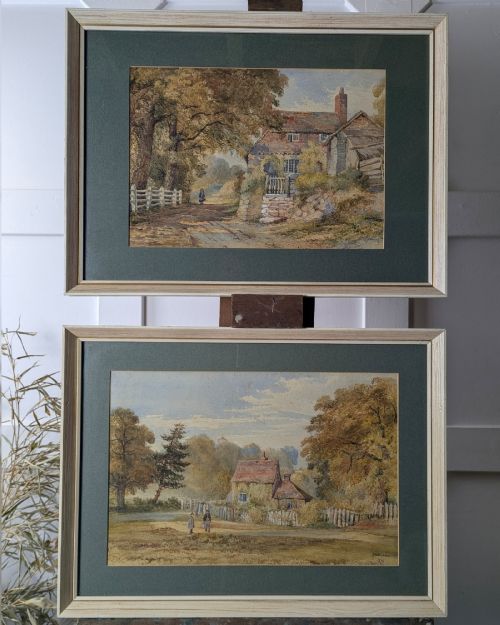
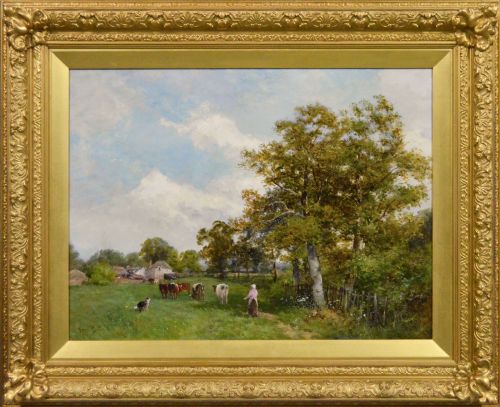
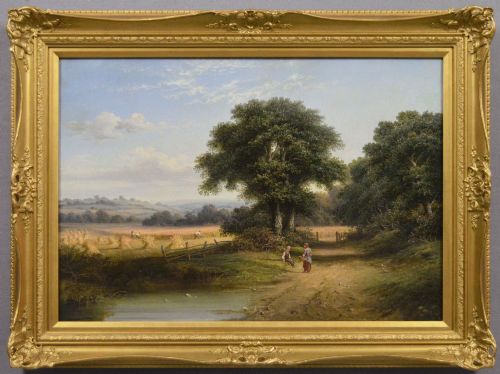
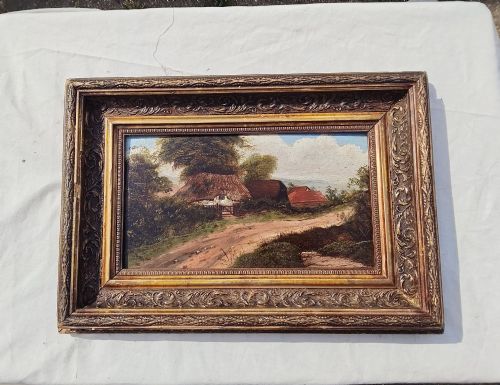
English rural landscape art embraces framed watercolours, oil paintings on canvas, and board works depicting agricultural fields, village paths, and pastoral vistas. These pieces span from the late nineteenth century through the Edwardian era and into the mid-twentieth century, capturing the changing rhythms of British country life.
Buyers frequently encounter works by named regional painters alongside examples from the broader British School and Norwich School traditions. Common subjects include harvest scenes, livestock grazing near rivers, and woodland cottages rendered in traditional or impressionistic styles.
Materials and Methods
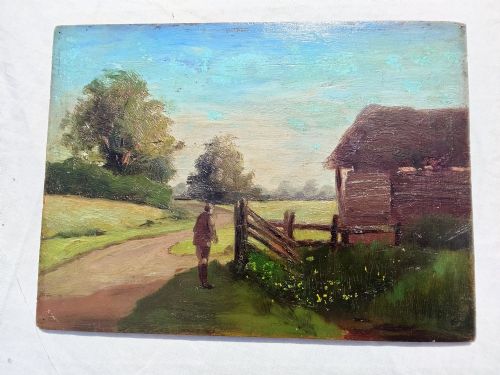
Artists relied on oil paint applied to canvas, wooden board, card, or panel, alongside delicate watercolour pigments worked onto paper supports. Gilt wood frames frequently accompany these pieces, preserving the original presentation of the artwork.
Brushwork ranges from tight, realistic detail found in Victorian works to looser applications associated with British Impressionism and early twentieth-century plein air painting.
Keep an eye out for hidden canine companions quietly herding sheep or following behind carts in these rural paths.
Distinctions in Quality
Quality rests upon the artist's handling of light, atmospheric depth, and the natural movement within the countryside scene. Stronger examples demonstrate confident brushwork and a precise command of tone, particularly in skies and water reflections.
Condition of the support and the preservation of the original pigment also shape the standing of a piece. Works retaining their period gilt frames and clear artist signatures or attribution carry distinct historical merit.
George Graham·Percy Lancaster·William Howard Hardy·A. Marie Parsons·John McDougal·Herbert Royle·Robert A Nottingham·David Bates·Walter Heath Williams·John Horace Hooper·Raymond Booth·Frederick Walker·George Oyston·William Greaves·Miles Birkett Foster·Herman S Melville·George Morland·Sydney Yates Johnson·Edgar Woollatt·Harry Freckleton·Henry Charles Fox·William JB Jenkins·Ernest Higgins Rigg·Cuthbert Crossley·Reginald Grange Brundrit
The English Rural Landscape Art Glossary
- Norwich School
- The first provincial art movement in Britain, originating in the early nineteenth century and focusing on local Norfolk scenery. Members painted direct observations of nature, including rivers, woods, and rural labourers.
- Plein Air
- The practice of painting outdoors to directly capture the transient effects of light and weather upon a landscape. This method gained widespread adoption among late nineteenth-century British painters.
- Watercolour
- A painting method where fine pigment is suspended in a water-based solution and applied to paper. It allows for translucent washes and delicate tonal gradations.
- British Impressionism
- A stylistic approach emerging in the late nineteenth century characterised by visible brushstrokes and an emphasis on spontaneous light effects. Artists applied these techniques to traditional rural subject matter.
English Rural Landscape Art: Frequently Asked Questions
What periods do these landscapes cover?
The available works span from the late eighteenth century through the Victorian and Edwardian eras up to the mid-twentieth century. This timeline covers shifting artistic movements from traditional realism to early British impressionism.
Most pieces date from the nineteenth and early twentieth centuries, reflecting a period of intense artistic interest in the English countryside and rural traditions.
How do I identify a watercolour from an oil painting?
Watercolours are painted on paper, usually displayed under glass with a mount, showing translucent layers of pigment. Oil paintings use thick binders on canvas, board, or wood panels, presenting a textured surface.
Oils generally retain a distinct sheen and heavier impasto, whereas watercolours rely on the white of the paper to provide brightness and light.
Where were these rural scenes typically painted?
Painters recorded identifiable regions across England, including Yorkshire, Sussex, Dorset, Derbyshire, and Wales. Many artists worked directly outdoors in rural villages, farmyards, and river valleys.
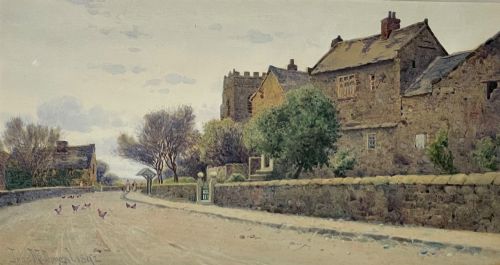
Local landmarks, parish churches, and thatched cottages frequently anchor the composition, grounding the artwork in specific geographic locations.
How should I care for an antique painting?
Keep works away from direct sunlight and sources of damp to protect both paper supports and oil canvases from degradation. Stable indoor temperatures prevent the cracking of old oil paint and the warping of wooden panels.
Retain original gilt frames where possible, as they complement the period of the artwork and maintain its historical integrity.