

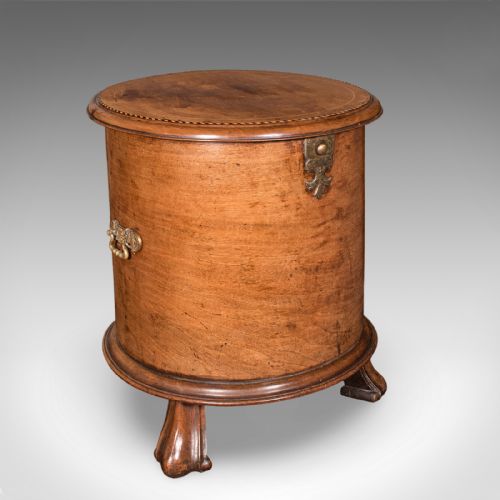


English Regency Box
When you explore an english regency box, you encounter finely crafted containers designed for tea, correspondence, and keepsakes during the early nineteenth century.
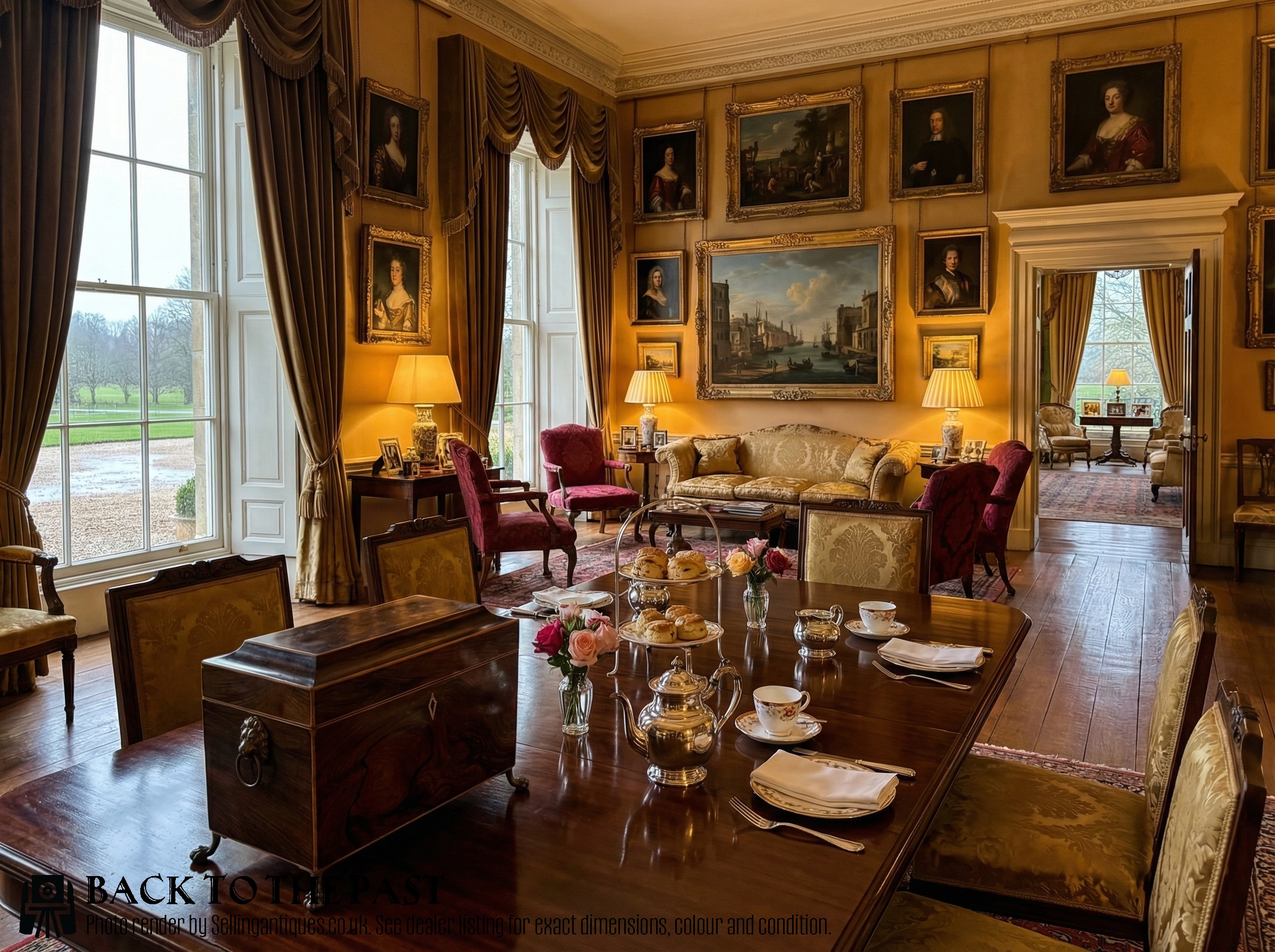
English Regency Box
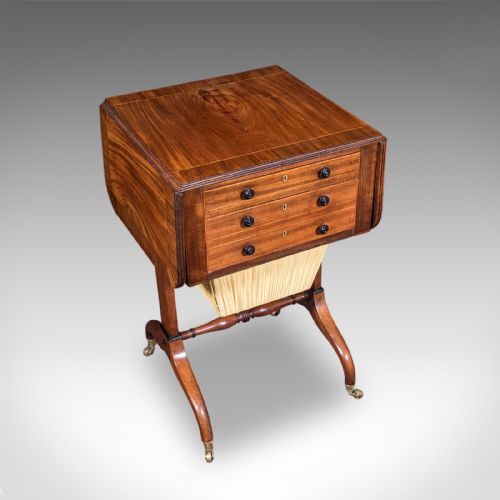
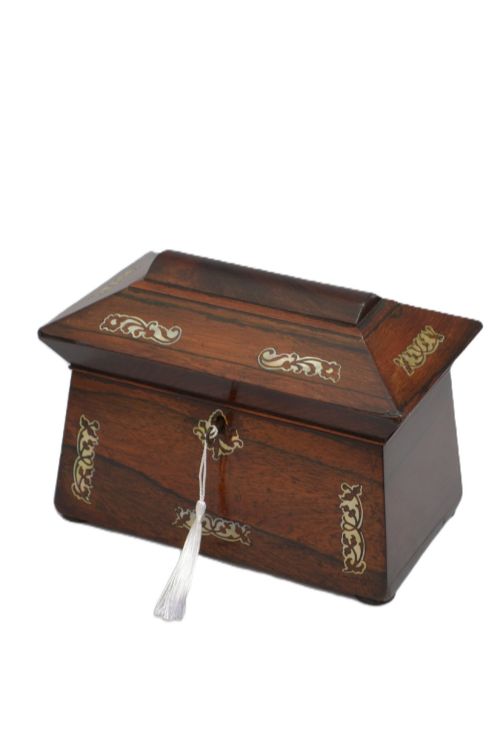
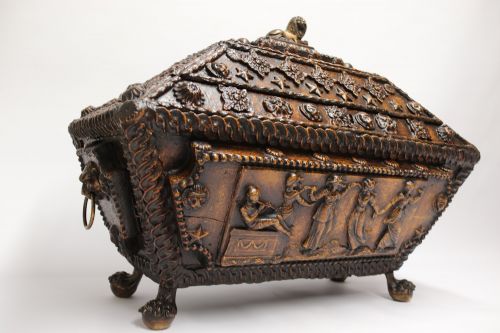
Tea caddies represent a prominent category on this page, frequently featuring sarcophagus forms, dual compartments, and internal glass mixing bowls. Other common forms include writing boxes, sewing containers, and larger cellarettes or wine coolers intended for the dining room.
Originating predominantly from English workshops of the Regency and William IV periods, these objects reflect the refined taste of the era. Makers utilised dense tropical hardwoods and intricate surface decoration to elevate everyday storage into display pieces.
Materials and Construction Techniques
Cabinetmakers constructed the primary carcase of an english regency box using substantial timbers such as mahogany, rosewood, and walnut, often selecting veneers with pronounced flame figures. Secondary woods provided interior divisions for stationery, tea canisters, or sewing implements.
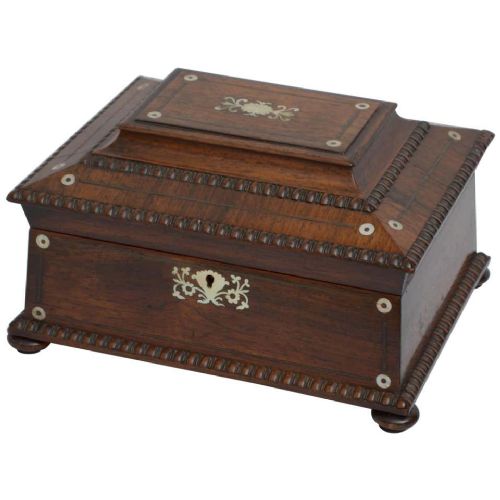
Surface ornamentation defined the aesthetic, employing precision brass inlay, mother of pearl accents, and delicate boxwood or fruitwood stringing. Penwork and painted Chinoiserie motifs appeared on specialised specimens, creating intricate geometric or pictorial designs across the lids and panels.
Listings feature containers spanning the Georgian, Regency, and William IV periods, constructed in mahogany, rosewood, walnut, and tortoiseshell.
Standards of Execution and Finish
The distinction between standard and superior pieces rests upon the precision of the cabinetwork and the complexity of the decorative detailing. Finer examples display meticulous alignment in brass stringing and tightly fitted internal compartments that retain their original velvet or leather linings.
Selection of timber grain significantly influences desirability, with highly figured flame mahogany or richly grained rosewood commanding greater attention. The inclusion of original maker appurtenances, functioning locks with keys, and untouched surface patination elevate individual specimens.
Gillows·William Rudkins London·Litherland Davies Of Liverpool·Joseph Wilmore·Ridgway
The English Regency Box Glossary
- Tea caddy
- A small container designed to store loose tea leaves securely. These vessels often feature internal lidded canisters and mixing bowls.
- Writing slope
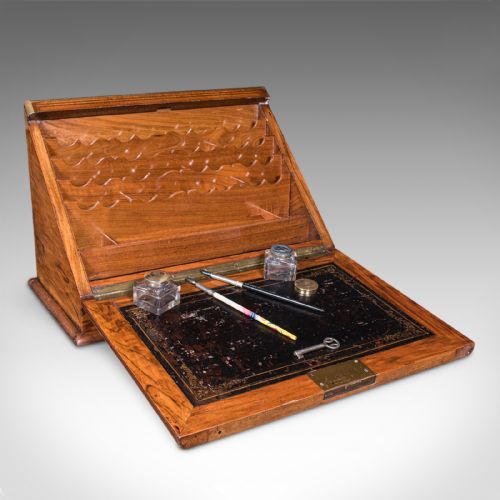
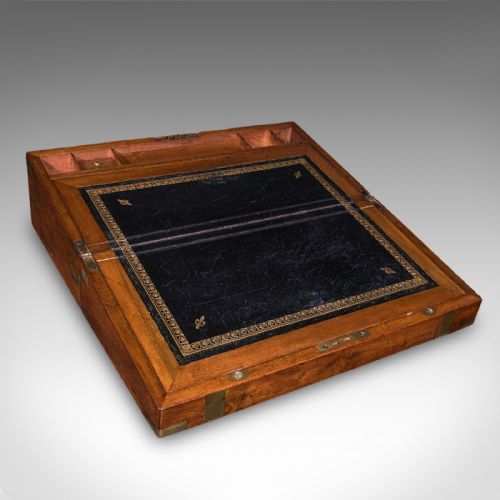
- A portable desk featuring a hinged, slanted writing surface that folds flat when closed. Interiors typically contain compartments for inkwells, pens, and correspondence.
- Sarcophagus
- A distinctive architectural shape featuring a stepped, domed lid and tapered base, frequently utilised for tea caddies and wine coolers. This classical form drew inspiration from ancient monumental design.
- Tunbridge ware
- Small wooden objects decorated with mosaic patterns created from thousands of tiny tinted wood blocks. This specialised technique originated in Kent.
- Penwork
- A decorative technique utilising fine ink drawing on a prepared wood or painted surface, often depicting oriental or classical motifs. Artists then sealed the detailed linework with clear varnish.
English Regency Box: Frequently Asked Questions
What was an english regency box used for?
These containers served specific domestic functions within the Regency household, primarily organising valuable commodities and personal correspondence. Tea caddies preserved expensive loose leaf tea, while writing slopes provided a portable surface for letters and documents.
Other variants accommodated jewellery, sewing implements, or smoking accessories. Their presence in the drawing room combined practical utility with fashionable display.
How do I care for an antique wood box?
Protect the timber and delicate brass inlays by maintaining stable indoor humidity away from direct heat sources and strong sunlight. Regular dusting with a soft, dry cloth preserves the historic polish.
Aplying microcrystalline wax sparingly helps nourish dry wood surfaces when necessary. Avoid using liquid cleaners or household polishes that might damage aged veneers.
How can I date an antique box?
Examine the construction methods, hardware, and secondary timbers used in the interior compartments. Dovetail joints, brass escutcheons, and lock mechanisms provide chronological clues characteristic of early nineteenth century manufacturing.
Stylistic indicators such as Regency brass inlay or William IV proportions help narrow the production window. Comparing the piece against documented examples from the same era confirms the likely decade.
Are interior fittings usually original?
Many surviving examples retain their fitted velvet linings, glass mixing bowls, and small canisters, though some components experienced replacement over the decades of use. Complete sets of internal lids and matching containers enhance the integrity of the piece.
Examining the wear patterns inside the compartments reveals whether the fittings remain contemporaneous with the outer carcase. Minor losses to velvet or paper linings occur frequently in specimens of this age.