


English Regency Accent Chair
An English Regency accent chair brings neoclassical lines and rich timber into a room, offering both seating and strong visual character.
English Regency Accent Chair
When searching for an English Regency accent chair, you encounter a variety of forms designed for libraries, halls, and drawing rooms. These seats reflect the neoclassical taste of the early nineteenth century, drawing on classical Greek and Roman motifs.
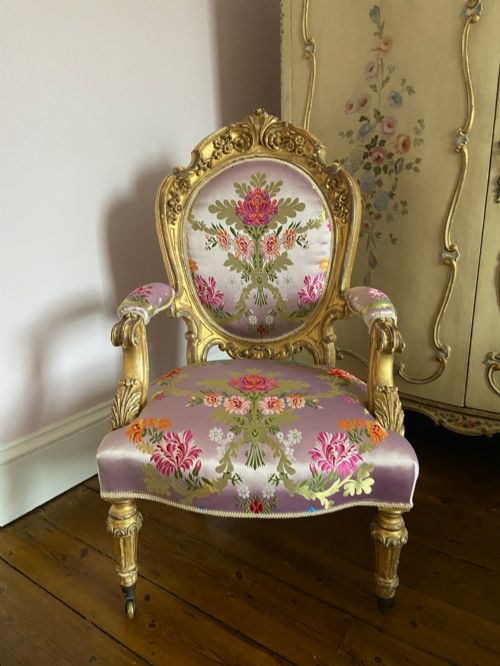
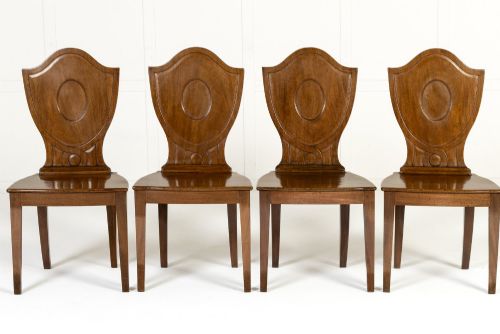
The selections here span specific functional types, including library armchairs, elbow chairs, hall chairs, and side chairs. Many pieces date from the Regency period and the broader nineteenth century, while others show later revivals or stylistic influences.
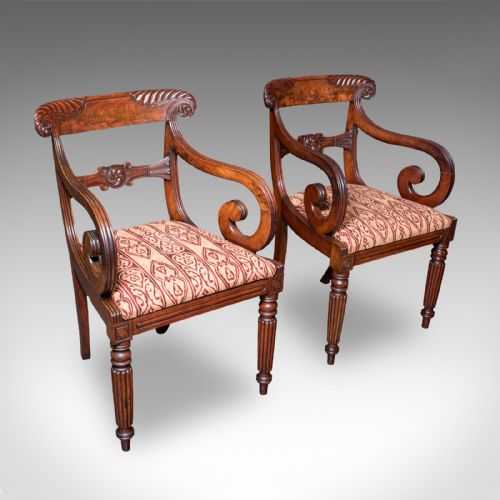
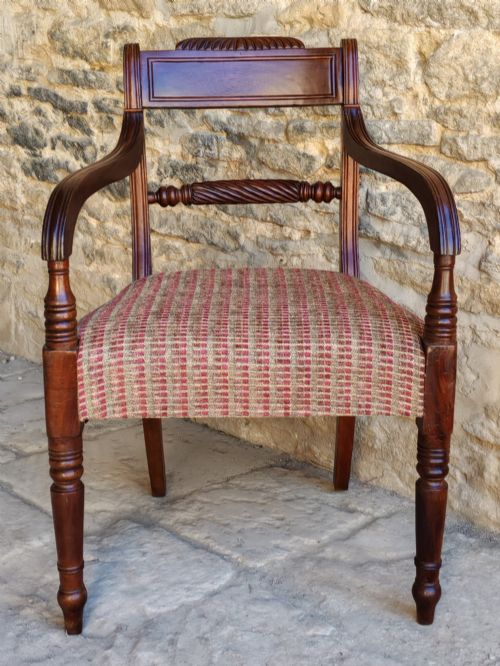
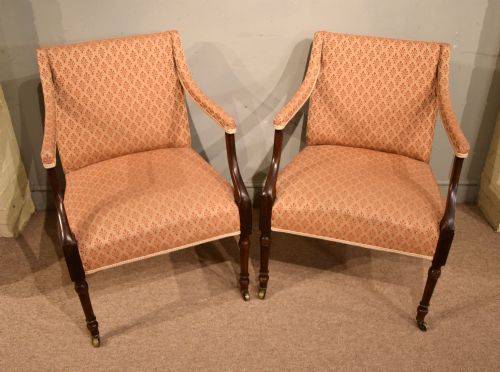
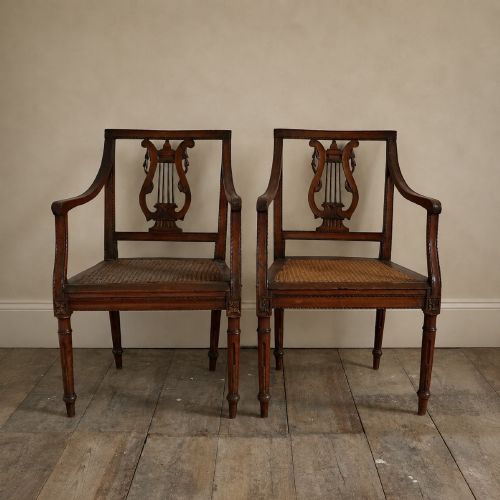
You will notice distinct structural variations among these seats, from ropeback carvers and lyre-back cane chairs to scroll-arm models and country rocking chairs. Mahogany remains a dominant timber, though walnut, ebonised wood, and painted finishes also appear.
Materials and construction
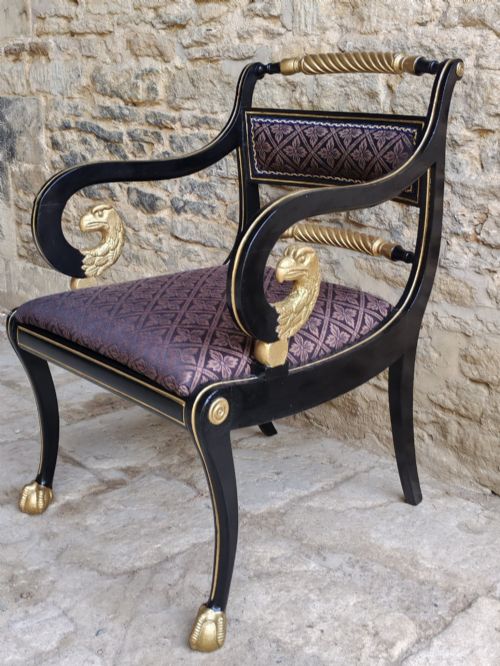
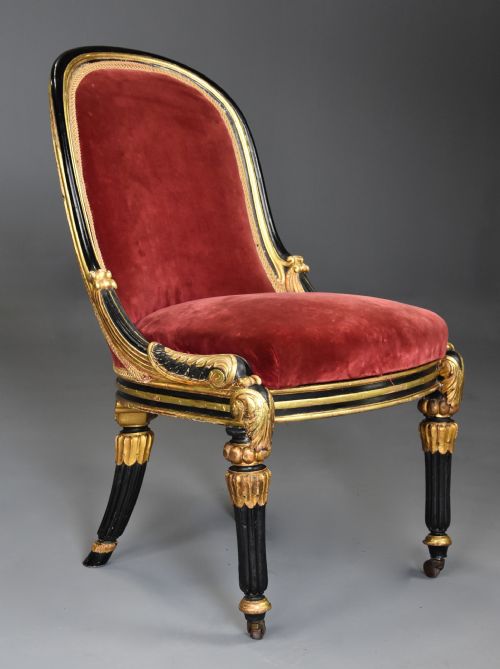
Cabinetmakers of the period relied heavily on solid mahogany and walnut, shaping the timber into curved rails, turned legs, and carved backrests. Ebonised wood and parcel gilt finishes offered a contrasting surface treatment for more formal seating.
Decorative details often included brass inlay, carved acanthus leaves, and shell motifs applied to the woodwork. Caned seats and upholstered pads in fabric or needlepoint provided the practical sitting surface, supported by beech or other secondary timbers.
Some country rocking chairs managed to survive the elegance of the Regency period dressed entirely in their working farm paint.
Evaluating craftsmanship
The distinction between standard and superior pieces rests on the crispness of the carving and the quality of the timber selection. Finer examples display deeply undercut acanthus foliage, precise brass inlay, and tightly jointed frames that remain solid over centuries.
Surface preservation dictates much of the appeal, with original paint, patinated mahogany, and untouched gilt surfaces holding greater distinction than heavily restored or later surfaces. The harmony of proportions between the backrest, arms, and legs also separates everyday furniture from masterwork production.
Gillows
The English Regency Accent Chair Glossary
- Carver
- An armchair, typically featuring open arms, designed for the head of a dining table or as a companion seat in a reception room.
- Ebonised
- Wood treated with a dark stain or finish to imitate expensive ebony, frequently paired with gilt highlights in Regency pieces.
- Lyre back
- A chair backrest featuring an open central splat shaped like the ancient musical instrument, popular during the neoclassical period.
- Ropeback
- A chair design featuring carved wooden rails twisted to resemble knotted rope, often found on dining and occasional seating from the early nineteenth century.
- Parcel gilt
- A decorative technique where specific carved details or mouldings are partially gilded with gold leaf over a painted or dark wood ground.
English Regency Accent Chair: Frequently Asked Questions
What is an English Regency accent chair?
An English Regency accent chair is a seat produced during the early nineteenth-century Regency era or styled after its neoclassical aesthetic. These chairs include library armchairs, hall seats, and side chairs made from mahogany, walnut, or painted timbers.
They serve as decorative and functional additions to period and contemporary interiors alike, bringing distinct architectural lines to a room.
Where were these chairs placed originally?
In period homes, these chairs were positioned in reception rooms, libraries, hallways, and morning rooms depending on their form. Hall chairs stood stiffly against walls for formal use, while elbow chairs and library seats provided comfort for reading or entertaining.
Their placement matched the social hierarchy of the house, with finer pieces kept in public drawing rooms.
How do I care for antique wood?
Antique timber benefits from stable indoor humidity and protection from direct sunlight, which can fade mahogany and dry out old finishes. Occasional application of appropriate wax helps preserve the natural sheen of the wood without building up a heavy residue.
Avoid placing these chairs near modern heat sources to prevent the wood from splitting or joints from loosening.
How can I tell a Regency chair from later copies?
Examination of the joinery, timber weight, and wear patterns helps distinguish nineteenth-century production from later revival pieces. Period chairs often exhibit hand-cut joinery and secondary woods appropriate to the era, alongside natural timber shrinkage and patination.
Stylistic details like crisp acanthus carving and authentic brass inlay also point towards genuine Regency manufacture rather than twentieth-century imitation.