


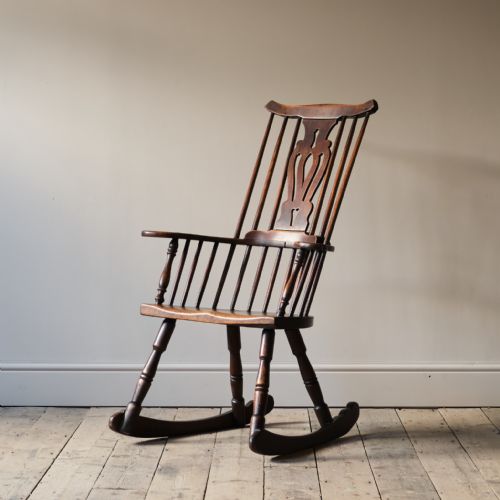


Georgian Country Rocking Chair
A georgian country rocking chair brings solid vernacular timberwork and home-worn comfort straight into a modern sitting room.
Georgian Country Rocking Chair
When you search for a georgian country rocking chair, you are looking at domestic seating adapted with curved rockers from the eighteenth and nineteenth centuries. These chairs span regional English traditions, including examples from Lancashire, Cheshire, the Thames Valley, and the West Country.
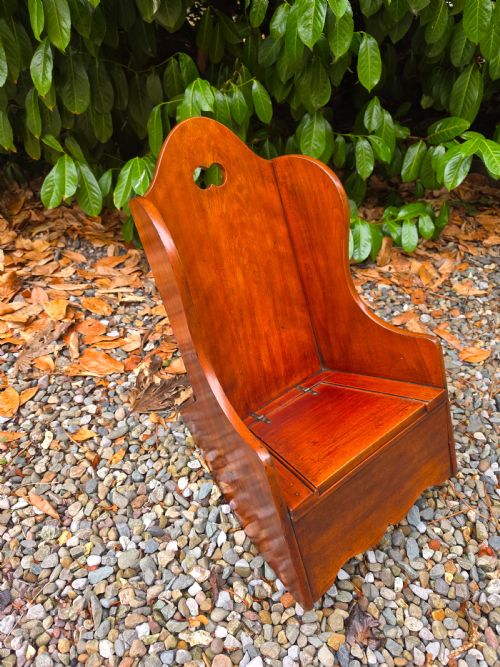
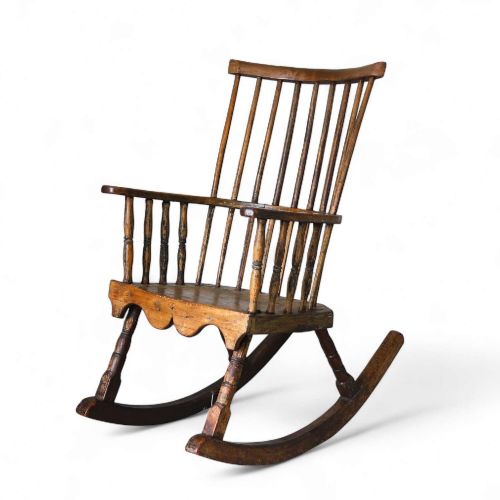
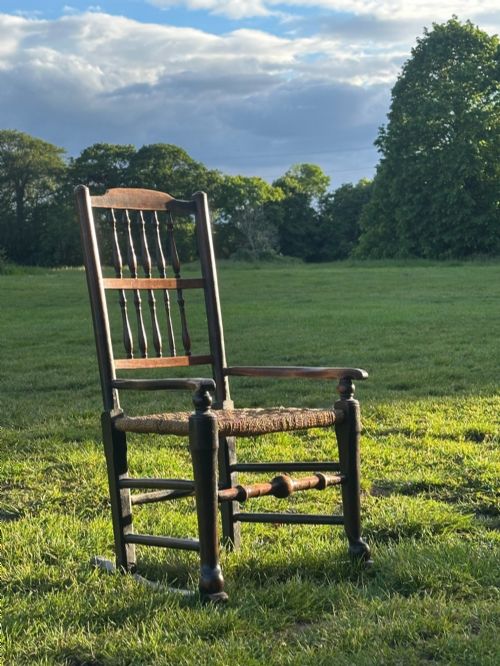
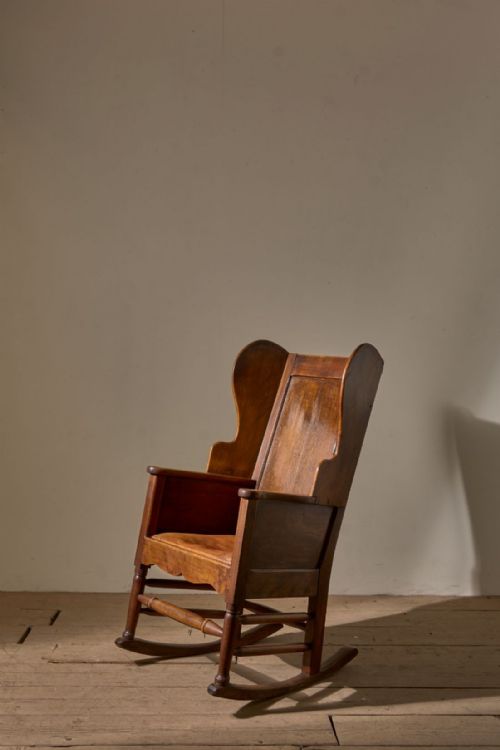
The pieces on this page appear in adult and child formats, featuring ladder backs, comb-backs, spindle backs, and lambing designs. You will encounter adult armchairs alongside smaller potty rockers and child windsor chairs in various regional woods.
The forms remain rooted in everyday vernacular use rather than formal London cabinet-making. Makers built them for the hearth and nursery, utilising local timbers that gained rich patination over centuries of handling.
How they were made
Country joiners and chairmakers constructed these rocking chairs using a mix of native hardwoods like elm, oak, ash, beech, fruitwood, and sycamore. They turned spindles on pole lathes and shaped solid seats from single planks of timber.
Construction methods relied on traditional mortise and tenon joints, steam-bent components for combs and backs, and pegged fixings. Some surfaces retain traces of original paint while others display bare wood polished through daily use.
Listings feature woods including elm, oak, ash, beech, fruitwood, and sycamore across the eighteenth and nineteenth centuries.
What varies in quality
Quality in a georgian country rocking chair rests on the integrity of the timber and the balance of the proportions. Chairs retaining their original rockers and uncompromised structural joins hold greater integrity than those with heavily replaced lower sections.
The character of the surface timber dictates visual appeal, with richly figured elm seats and honest patination marking out superior vernacular examples. Finer turning on spindles and well-executed regional variations distinguish the more ambitious country workshops from basic utility pieces.
The Georgian Country Rocking Chair Glossary
- Vernacular
- Things made by local craftspeople for everyday use rather than following grand metropolitan design styles. These pieces reflect regional materials and practical domestic needs.
- Comb-back
- A chair design where the vertical spindles extend up to a horizontal top rail resembling the teeth of a comb. This construction offers sturdy head support.
- Ladder back
- A chair back formed of horizontal arched slats between two upright posts. It represents a traditional country seating format.
- Lambing chair
- An enclosed chair type designed to keep draughts away from the sitter by the hearth. Early examples often incorporate solid panelled timber sides.
- Spindle back
- A chair featuring multiple slender turned uprights set into the seat and top rail. This method provides lightweight strength.
Georgian Country Rocking Chair: Frequently Asked Questions
How are these rocking chairs dated?
Makers dated them through construction details, tool marks, and the ageing of native timbers like oak and elm. Regional variations also point to specific working traditions.
Changes in back styles, such as the evolution from ladder backs to comb-backs, help place a chair within the eighteenth or nineteenth century.
Were these chairs made for children?
Many examples on this page are child-sized seating, including potty rockers and miniature windsor chairs. Country families needed robust furniture scaled for nurseries and parlours.
These smaller chairs received the same careful timber construction as adult versions, often utilising fruitwood and elm.
How do I place a rocking chair at home?
Their compact vernacular proportions allow them to sit comfortably in living rooms, bedrooms, or reading corners. The curved rockers require clearance on wooden floors or thick rugs.
Pairing an elm or oak rocker with neutral walls lets the patinated timber grain stand out as a focal point.
What woods were commonly used?
Country makers relied on whichever strong native timber grew locally, including elm, oak, ash, beech, fruitwood, and sycamore. Seats were frequently carved from thick elm slabs.
Turned components often utilised ash or beech for flexibility and strength during the steam-bending and assembly process.