

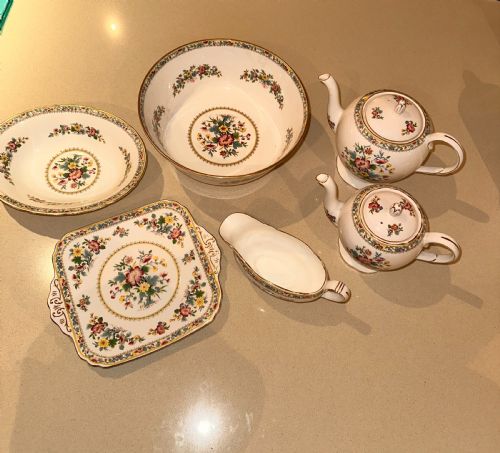


English Porcelain Service
An English porcelain service gathers the dining table with painted flowers, gold leaf and glazed bone china.
English Porcelain Service
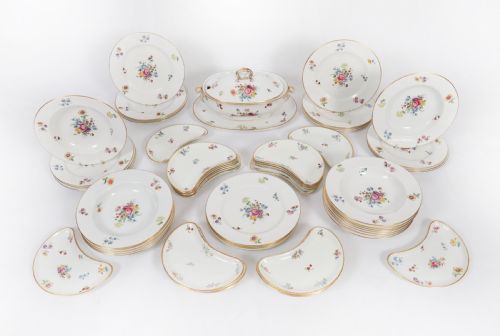
An English porcelain service comprises matched groups of dining and tea wares produced across the eighteenth, nineteenth, and early twentieth centuries. Pieces span large dinner services, dessert sets, tea sets, and individual sugar bowls or teapots.
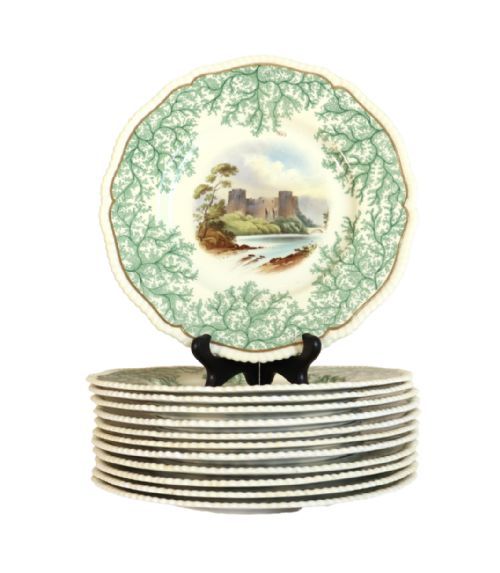
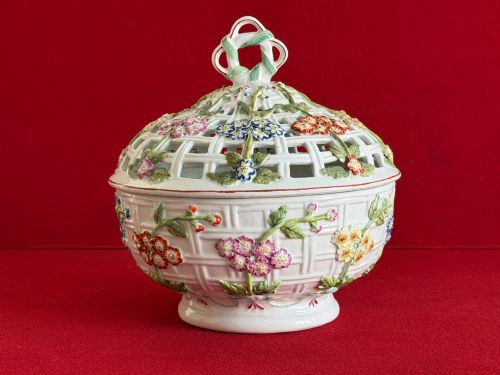
The material record here points heavily toward nineteenth-century production, alongside significant eighteenth-century Worcester and Derby tablewares. Forms range from utilitarian sauceboats and chestnut baskets to expansive multi-piece dining sets.
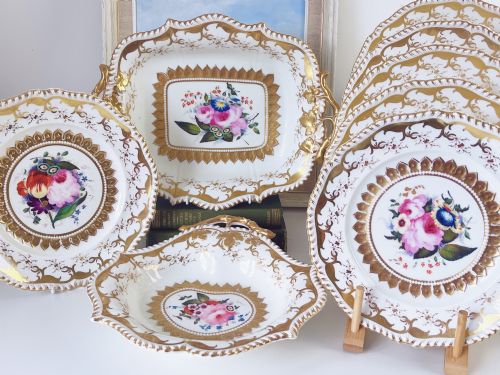
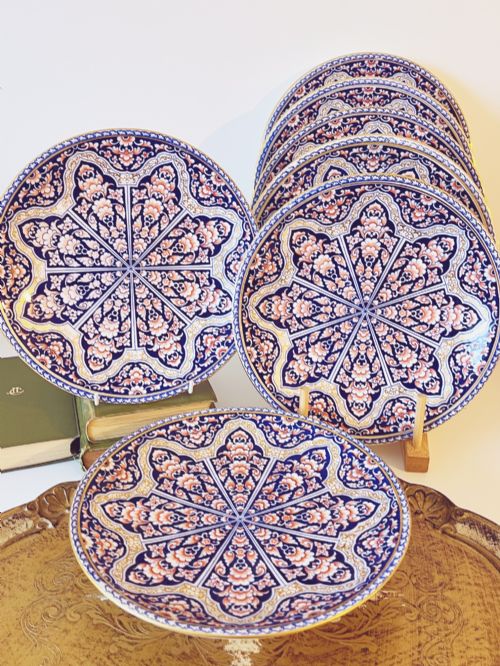
Buyers encounter everything from formal Regency dessert services to Victorian tea sets decorated with botanical motifs and Imari patterns. These sets reflect changing domestic habits around dining and entertaining over two centuries.
Materials and Manufacture
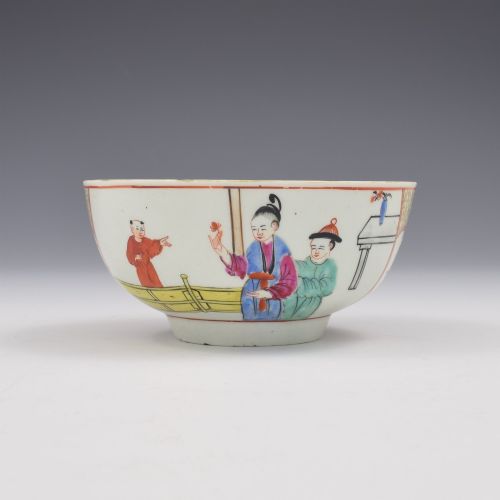
Potteries shaped these wares from porcelain, bone china, and ironstone, combining body pastes with fluid lead glazes. Firing set the white ground before artisans applied hand-painted enamel colours and transfer printing.
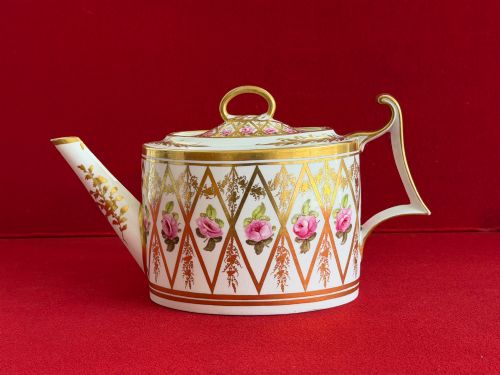
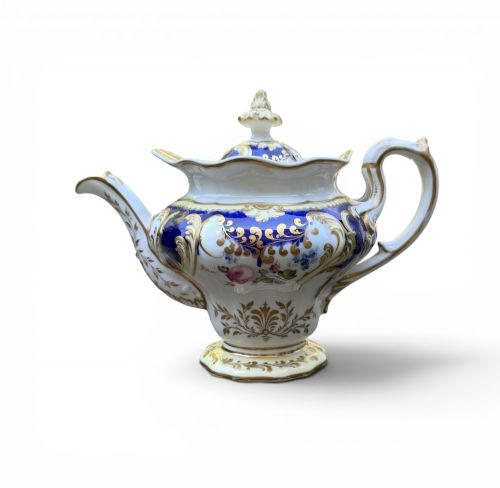
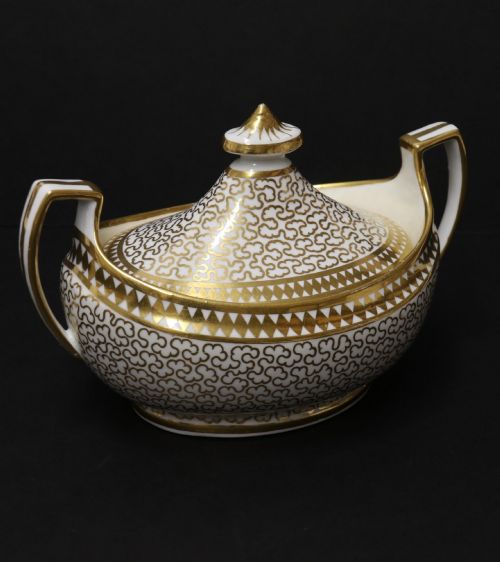
Gilding and gold leaf accents enriched borders and handles, particularly on Regency and Victorian dessert and tea services. Kiln workers utilised specialised mineral pigments to achieve deep blues, greens, and iron-red tones under the glaze.
One cheerful tea set arrives painted in a Harlequin pattern, proving that Victorian table settings loved a splash of yellow.
Factors of Quality
Quality rests primarily on the crispness of the porcelain body and the precision of the hand-painted decoration. Finer services display delicate brushwork by named artists or skilled factory hands rather than mechanical transfer printing alone.
The preservation of original gilding and the absence of firing distortions distinguish superior plates, sucriers, and teapots. Completeness across a multi-piece service also elevates the standing of surviving sets.
Grainger Lee and Company·Spode·Derby Porcelain·Dr Wall Worcester·Wedgwood·Chamberlains Worcester·Royal Doulton·Coalport·Minton·Flight Barr and Barr·Royal Albert Crown China·Doric China Longton Stafford
The English Porcelain Service Glossary
- Sucrier
- A covered sugar bowl designed as part of a tea or coffee service. These vessels often feature matching covers with small floral or scroll knops.
- Felspar porcelain
- An innovative ceramic body introduced in the nineteenth century, incorporating felspar to increase durability and whiteness. Spode utilised this material for various patterned services.
- Imari
- A decorative style inspired by Japanese export wares, featuring rich iron-red, cobalt blue, and gilt motifs. Victorian Imari and related patterns appear frequently across nineteenth-century plates and tea sets.
- Comport
- A raised dish or pedestal bowl used for serving fruit or dessert in formal dining sets. They often anchor multi-piece dessert services alongside matching plates.
- Slop bowl
- A bowl included in historical tea sets to receive dregs of cold tea before pouring fresh cups. They mirror the decorative pattern of the accompanying teapot and cups.
English Porcelain Service: Frequently Asked Questions
How do I date an English porcelain service?
Dating relies on factory marks stamped or painted on the underside, stylistic clues like Regency shapes or Victorian borders, and the type of ceramic body used. Bone china and felspar bodies point toward the nineteenth century, while early Worcester pieces display distinct crescent or square seal marks.
Comparing pattern numbers and hand-painted motifs against known factory timelines helps narrow the decade of production. Documentation or provenance notes accompanying older sets also assist in confirming exact periods.
Can I use antique tea sets daily?
Using antique porcelain requires care because historical glazes and gold leaf can wear down with frequent washing and hot liquids. Many collectors reserve these services for occasional display or gentle use rather than daily dining.
Hand washing in lukewarm water with mild soap preserves the delicate enamel paints and prevents any damage to the aged ceramic body.
What is the difference between a tea service and a dessert service?
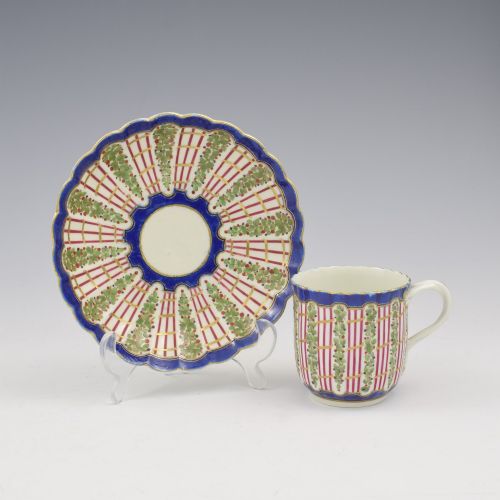
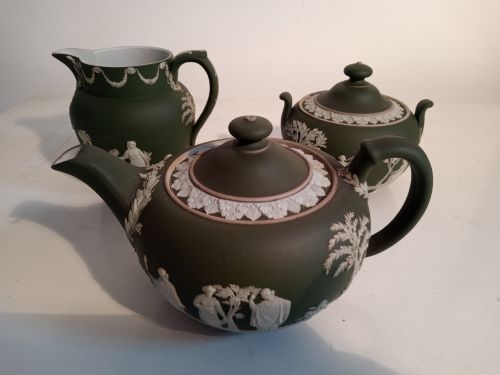
A tea service includes teapots, cups, saucers, sugar bowls, and milk jugs intended for serving tea and coffee. These pieces feature smaller vessel capacities suited to hot beverages.
A dessert service comprises comports, serving dishes, and decorative plates designed for presenting fruit, sweets, or small courses at the conclusion of a formal meal.
How are mismatched pieces identified in a service?
Mismatched services often reveal subtle variations in paste thickness, glaze tone, or pattern numbering across different component pieces. Even when floral motifs look similar, factory hands applied distinct borders or gilding styles that expose composite sets.
Examining the underside of plates, cups, and bowls for consistent maker marks clarifies whether the entire service originated from a single production run.