
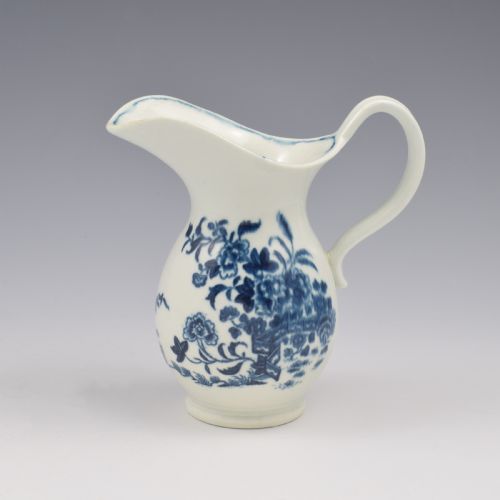
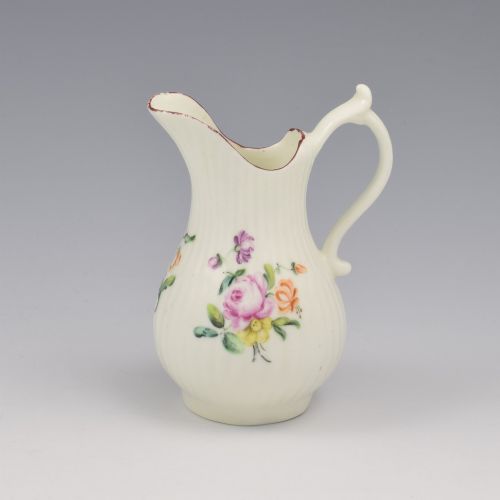
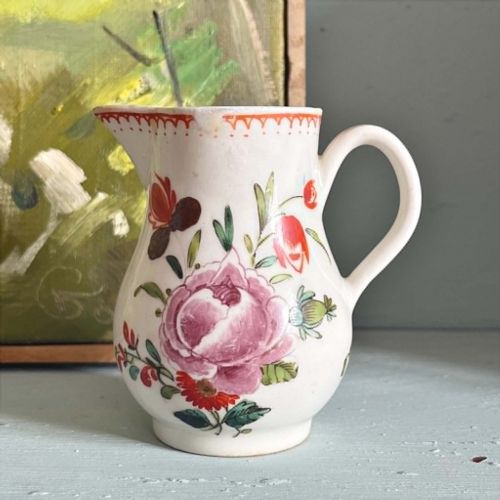
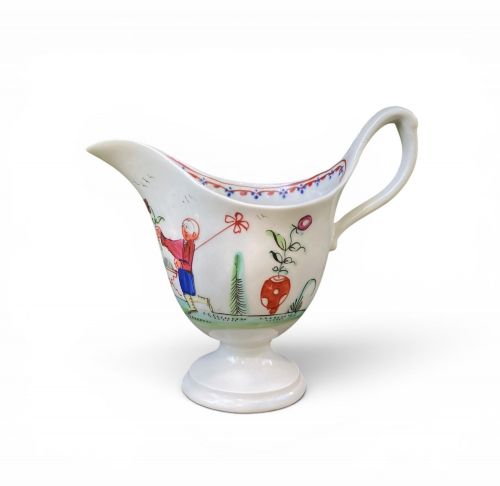


English Porcelain Milk Jug
An English porcelain milk jug brings the warmth of eighteenth and nineteenth-century domestic rituals straight to your table.
English Porcelain Milk Jug
When you search for an english porcelain milk jug, you encounter functional domestic vessels designed to hold dairy for tea and coffee service across several centuries. The selections on this page range from delicate eighteenth-century soft-paste forms to robust twentieth-century painted pieces.
The most frequent examples you will meet span the Georgian and Victorian eras, taking shapes such as sparrowbeak creamers, hydra jugs, and fluted baluster vessels. These pieces reflect the evolution of British ceramic manufacturing from early provincial factories to esteemed nineteenth-century porcelain works.
Makers utilised these small jugs for daily hospitality, decorating them with hand-painted polychrome flowers, gilded highlights, armorial crests, and detailed botanical or landscape scenes. Their survival in varied conditions speaks to careful domestic use and generational preservation.
Materials and methods of manufacture
Potters constructed these pieces using porcelain and soft-paste porcelain, shaping the body either by throwing on a wheel or by pressing into moulds to achieve forms like the dolphin ewer or the low Chelsea ewer. Glaze was then applied and fired to create a smooth, vitreous surface.
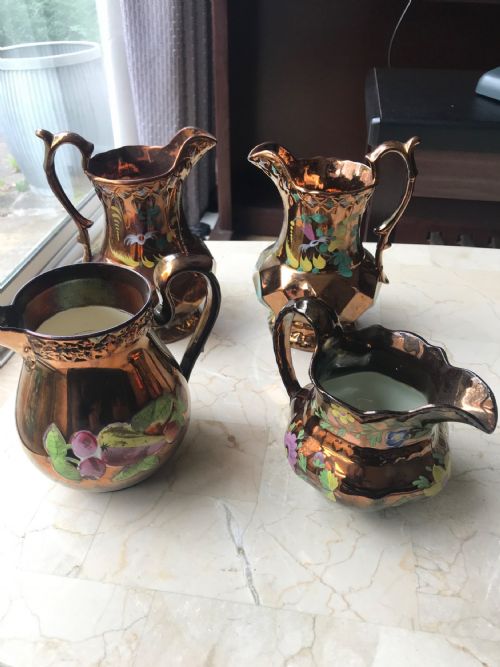
Decoration relied heavily on hand-painting, polychrome enamels, and gold leaf gilding, sometimes enhanced by copper lustre or transfer printing. Artisans applied these pigments over or under the glaze before secondary kiln firings to set the colours permanently.
Object forms include sparrowbeak creamers, hydra jugs, dolphin ewers, and miniature sugar bowl and cream sets by prominent English potteries.
Distinctions in standard and execution
Quality rests upon the crispness of the moulding and the delicacy of the porcelain body, where thinner walls and translucent soft-paste bodies indicate higher ambition from the factory. The refinement of the spout and handle integration also separates standard utility wares from exhibition pieces.
The execution of the hand-painted decoration determines the upper tier of these jugs, visible in the precision of polychrome floral sprays, armorial crests, or signed fruit studies. Clean gilding and well-preserved enamel colours maintain the visual impact intended by the original maker.
Dr Wall Worcester·Derby Porcelain·Bow porcelain·New Hall porcelain·Royal Worcester·Rockingham Porcelain·John Rose Coalport·Chamberlain Worcester
The English Porcelain Milk Jug Glossary
- Sparrowbeak
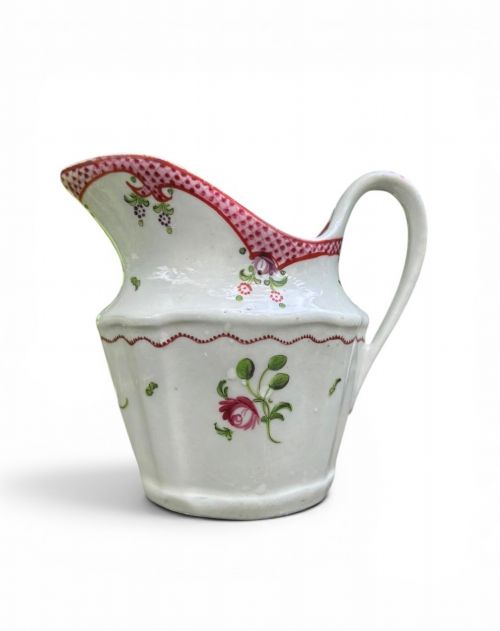
- A small eighteenth-century cream jug characterised by a pinched spout resembling a bird's beak. This form was common in early porcelain factories like Bow and Worcester.
- Soft-paste porcelain
- An artificial ceramic composition fired at lower temperatures than hard-paste porcelain, creating a warm, slightly creamy body favoured by early English potters.
- Hydra jug
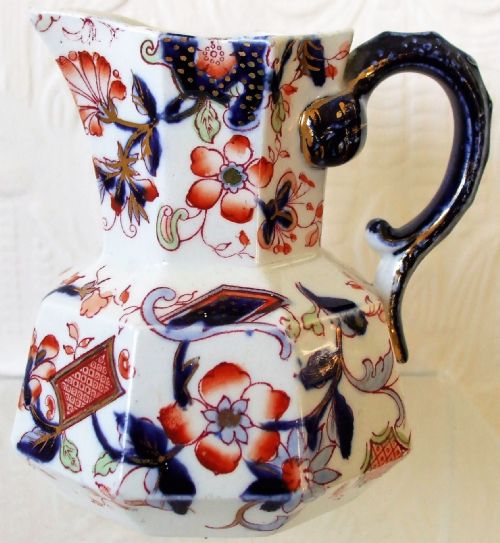
- A ceramic pitcher featuring a flared rim and a serpent-handled form inspired by classical antiquity. Nineteenth-century factories such as Keeling and Co. produced notable examples.
- Gilding
- The application of gold leaf or gold paint to ceramic surfaces for decorative highlights. It appears frequently along rims, handles, and painted panels.
- Armorial
- A decorative scheme featuring a family crest, coat of arms, or heraldic device. These bespoke commissions denoted the status of the original owner.
English Porcelain Milk Jug: Frequently Asked Questions
How do I date an early porcelain milk jug?
Dating relies on examining the paste body, glaze characteristics, and factory marks underneath the base. Soft-paste bodies and hand-pencilled pattern numbers often point to the eighteenth century, while factory transfer marks help identify nineteenth-century pieces.
Stylistic cues such as rococo moulding or neo-classical transfer designs further narrow down the decade of production. Comparing handle shapes and spout formations against documented factory shapes provides additional verification.
What is the difference between a milk jug and a creamer?
Historical terminology often uses milk jug and creamer interchangeably, though creamers traditionally tended to be smaller vessels designed for concentrated cream. Milk jugs occasionally accommodated larger capacities for table service.
Both forms shared similar manufacturing techniques and decorative schemes within tea sets. The distinction rests primarily on proportion and volume rather than a strict functional divide.
Can I use an antique porcelain jug for daily service?
While these jugs were originally made for domestic use, age and delicate soft-paste materials make modern daily service risky. Thermal shock from hot liquids or accidental impacts can cause irreversible damage to eighteenth and nineteenth-century bodies.
Displaying them or reserving them for gentle occasional use preserves their glaze and painted enamels. Hand washing in lukewarm water is essential if cleaning is required.
How do I identify Dr Wall Worcester porcelain?
Dr Wall period Worcester pieces often feature warm, slightly pitted soft-paste bodies with translucent qualities when held to the light. Decoration frequently includes underglaze blue painting or polychrome enamels inspired by Chinese export porcelain.
Markings on the base commonly include crescent moons, square seal marks, or simulated Chinese characters. The potting exhibits a fine balance between lightness and structural strength typical of eighteenth-century craftsmanship.