

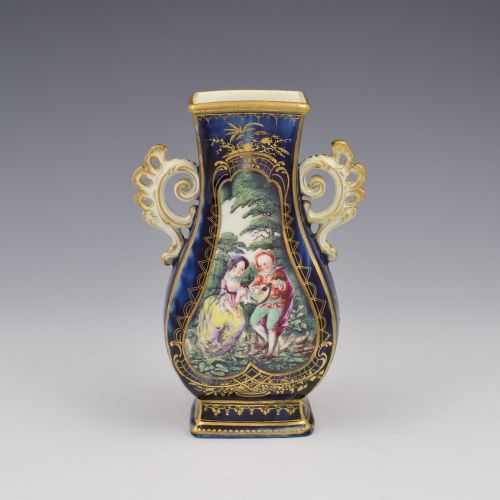


English Porcelain Mantel Vases
English porcelain mantel vases bring botanical painting and rich gilding to the fireplace, offering a focal point for traditional interiors.
English Porcelain Mantel Vases
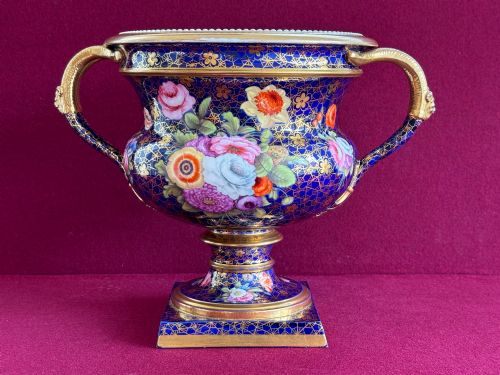
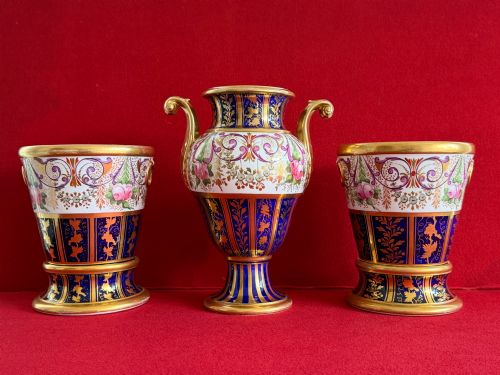
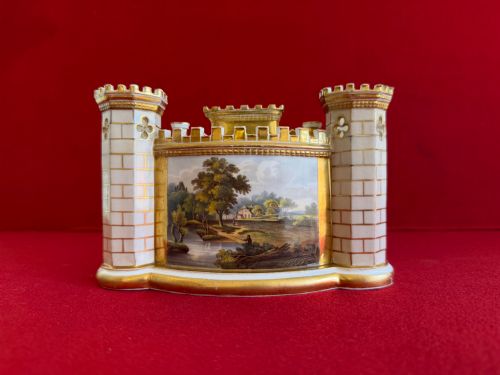
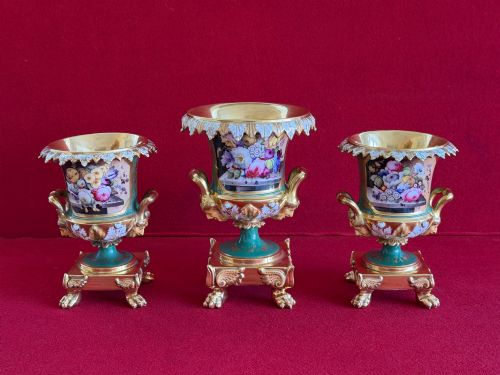
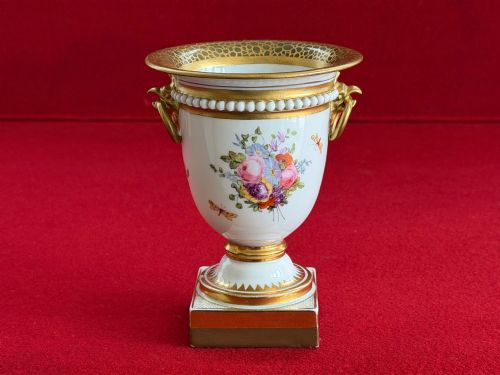
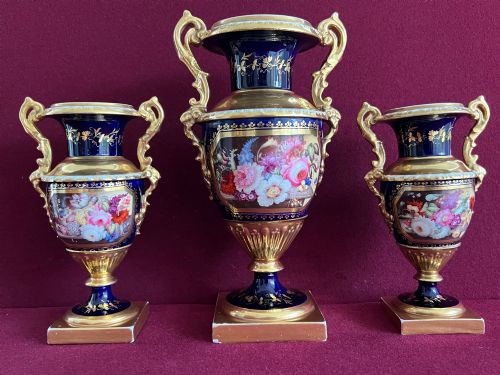
English porcelain mantel vases are decorative vessels designed to sit upon a fireplace mantel, appearing as single urns, matched pairs, or larger multi-piece garnitures. When searching for english porcelain mantel vases, collectors encounter forms ranging from classical urns to spill vases and pot pourri containers produced across multiple centuries.
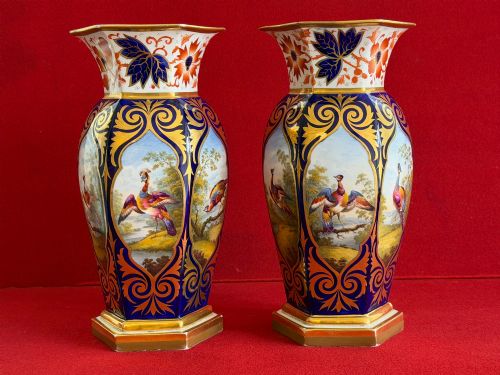
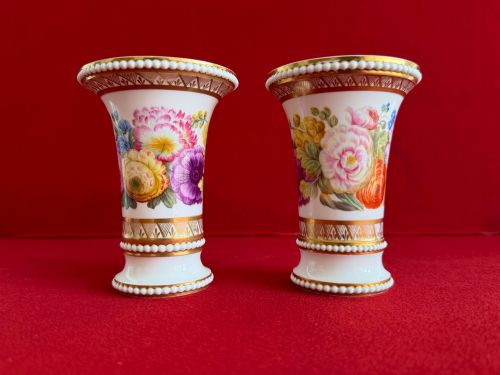
The periods represented stretch from the eighteenth century through the nineteenth and twentieth centuries, incorporating Regency, Victorian, and later aesthetics. These pieces often feature hand-painted bird or botanical scenes, alongside elaborate gilt embellishments and moulded details.
Makers such as Chelsea, Worcester, and Royal Crown Derby dominate the tradition, utilising soft-paste and standard porcelain bodies. Forms can include cornucopia designs and figural pairings alongside traditional urn silhouettes.
Materials and Techniques
The manufacture of these vases relies upon fine porcelain and ironstone bodies, shaped into urns, garnitures, and decorative vessels. Soft-paste porcelain appears in eighteenth-century examples, while later nineteenth-century pieces utilise robust ceramic and ironstone compositions.
Decoration is achieved through hand-painting and enamel work, frequently accented with gold leaf, gilding, and gold leaf applications. Skilled artists paint detailed subjects directly onto the glazed porcelain surfaces before final firing.
English Porcelain Mantel Vases Retail Price Guide 2026
Typical asking prices for english porcelain mantel vases among the pieces listed under this phrase on Sellingantiques today, from the lower quarter to the upper quarter. They describe what is for sale here now, not the wider market.
Evaluating Quality and Execution
Quality in these vases rests upon the precision of the hand-painted artistry, particularly in figurative, floral, and avian scenes executed by named painters. The delicacy of the porcelain potting and the richness of the gilding further distinguish finer examples from standard production.
The completeness of a matching garniture pair or set significantly influences the standing of a piece within the field. Preservation of the original enamel colours and gold leaf accents without excessive rubbing maintains the visual integrity of the design.
Flight, Barr and Barr·Chelsea Porcelain·Royal Worcester·Mason’s Ironstone·Minton Porcelain·Royal Crown Derby
The English Porcelain Mantel Vases Glossary
- Garniture
- A matched set of three or more vases designed to be displayed together on a mantelpiece. These sets typically comprise a central urn accompanied by two matching side vessels.
- Soft-paste porcelain
- An early ceramic composition fired at lower temperatures than true hard-paste porcelain. It produces a warm, slightly creamy body often found in eighteenth-century British manufacture.
- Spill vase
- A slender cylindrical vessel specifically intended to hold thin wooden spills used for lighting fires and candles. They sit comfortably on narrow mantel ledges due to their compact footprints.
- Pot pourri vase
- A vessel featuring a pierced or perforated lid designed to diffuse dried scented flower petals into a room. These often incorporate decorative handles and painted panels.
- Gilding
- The application of gold leaf or gold paint to highlight rims, handles, and moulded details. High-quality gilding shows crisp burnishing and deep metallic lustre.
English Porcelain Mantel Vases: Frequently Asked Questions
How do I style mantel vases?
Place a matched pair symmetrically at either end of the mantelpiece to frame a mirror or a central clock. If you possess a three-piece garniture, position the larger central urn in the middle with the smaller vessels flanking it.
Ensure the colours of the porcelain complement the surrounding room decor, allowing hand-painted bird or floral motifs to stand out against the fireplace background.
Can these vases hold water?
Many antique porcelain and ironstone vases were created purely for decorative display rather than functional use with fresh flowers and water. Thermal shock or hairline fractures in the old glaze can cause leaks, so it is safer to use them dry or with artificial stems.
If you wish to use a sturdy ironstone or nineteenth-century piece for blooms, inspect the interior thoroughly for existing cracks before adding liquid.
How do I date a porcelain vase?
Examine the base of the vessel for factory marks, pattern numbers, and impressed ciphers that correspond to known operating dates of the pottery. The style of the painting, such as Regency neoclassical motifs or later Victorian Chinoiserie, provides further chronological clues.
Weight, body composition, and whether the piece is soft-paste or hard-paste porcelain also point towards specific manufacturing eras.
What is a garniture set?
A garniture is a decorative set of matching ceramic or porcelain vessels produced together to adorn a mantelpiece or sideboard. They typically consist of three or five graduated pieces sharing identical decorative schemes.
In eighteenth and nineteenth-century interiors, these sets served as the primary ornamental centrepiece of the formal reception room.