




English Oak Hall Chairs
English oak hall chairs are sturdy, timber-framed seats built for corridors and entranceways, offering robust practicality and centuries of regional craftsmanship.
English Oak Hall Chairs
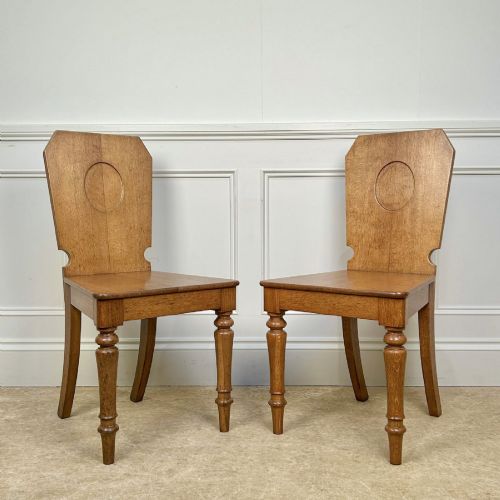
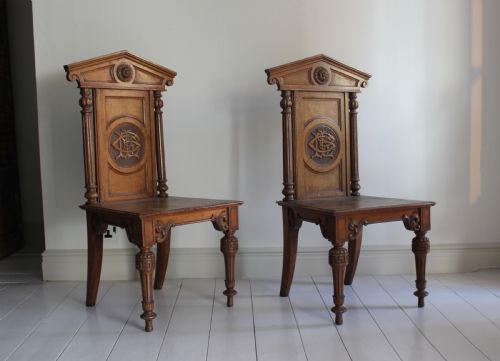
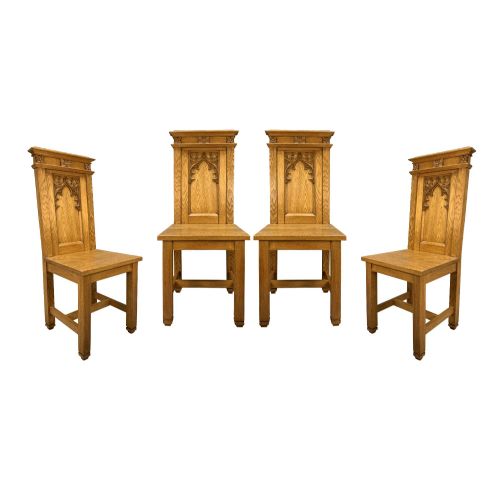
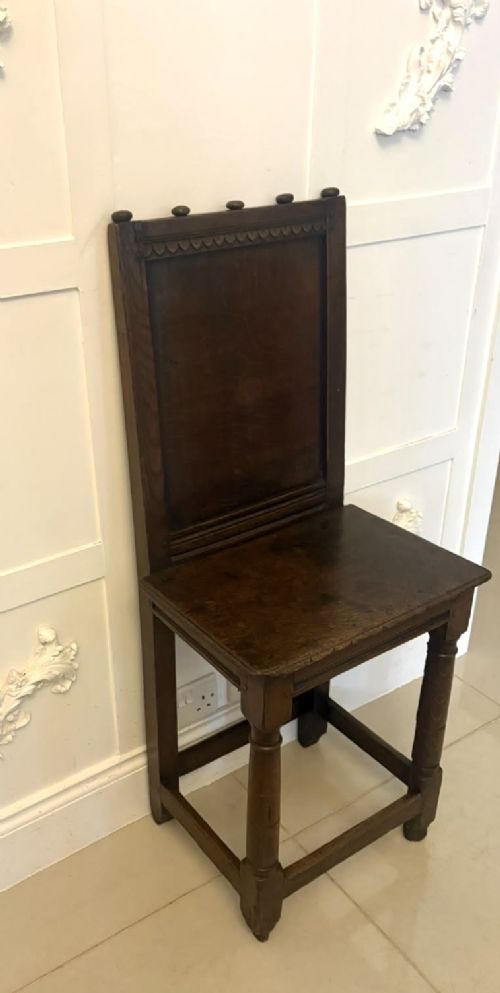
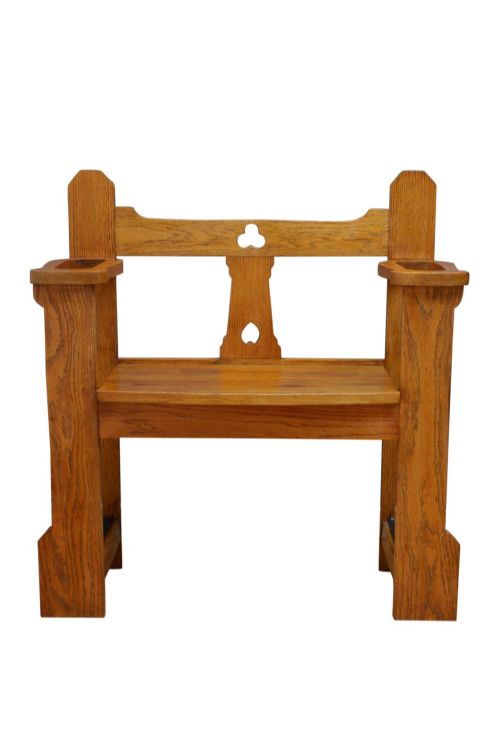
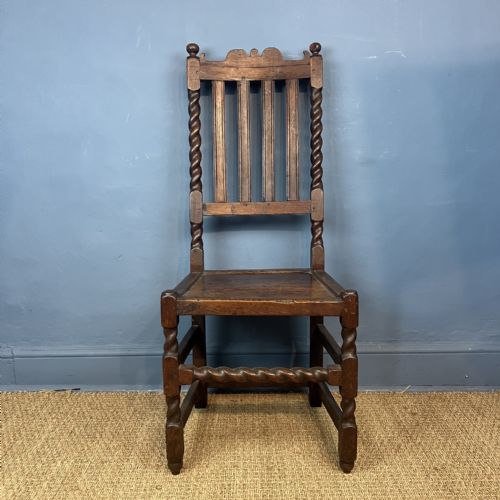
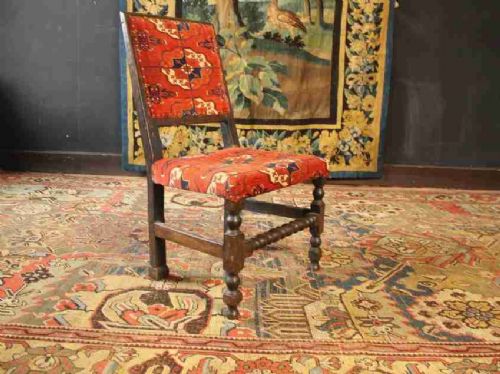
When you search for english oak hall chairs, you encounter a robust seating form traditionally placed in entrance halls and corridors to receive visitors. These utilitarian items range from austere 17th-century joint stools and backstools to elaborate Victorian Gothic revivals and early 20th-century Arts and Crafts benches.
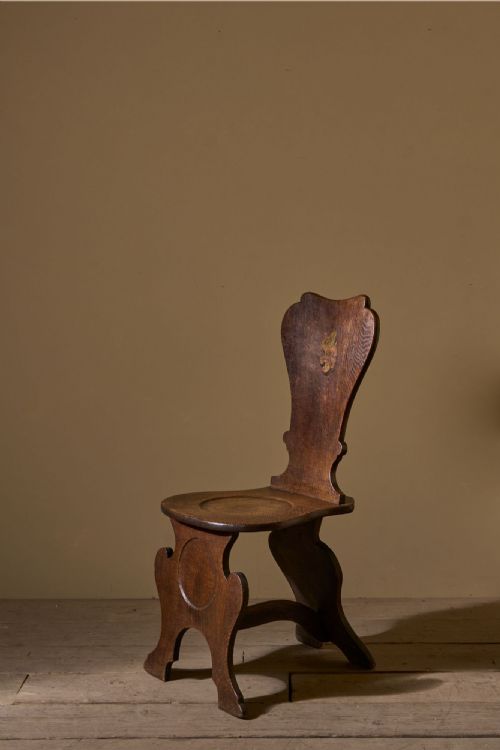
The pieces on this page span several centuries, with particular strength in seventeenth-century joinery and nineteenth-century Gothic interpretations. Buyers frequently meet pairs or single side chairs shaped from solid timber, sometimes featuring high panelled backs, carved crestings, or shield designs.
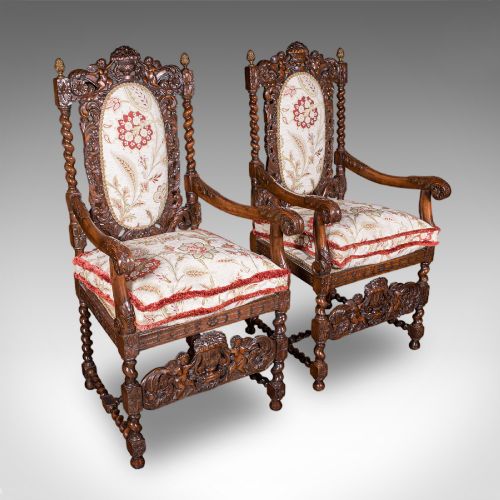
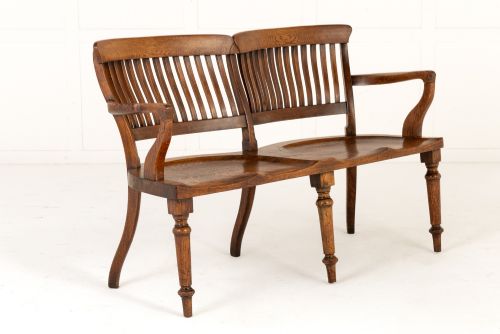
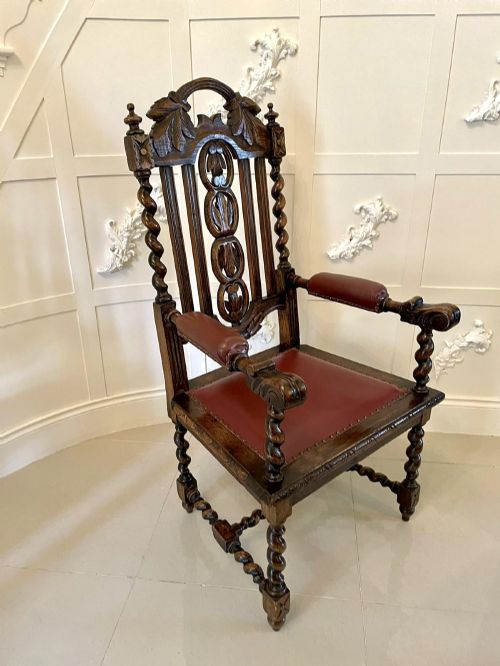
Beyond standard side chairs, the selection includes armchairs, wainscot forms, and narrow hall seats designed for compact spaces. Regional variations emerge clearly, from South Yorkshire backstools to Lancashire pieces, showing local woodworking traditions.
Materials and Construction
English oak serves as the primary structural material, worked predominantly as solid timber rather than veneer. Makers utilised traditional frame-and-panel joinery, pegged mortise and tenon joints, and turned elements to build rigid, load-bearing skeletons.
Surface treatments vary from natural waxed finishes to historic paint and bleached surfaces, protecting the dense grain over generations. Occasional secondary materials appear in the hardware and upholstery, utilising brass accents, leather, textile pads, rush, and woven fabric seats.
English Oak Hall Chairs Retail Price Guide 2026
Typical asking prices for english oak hall chairs among the pieces listed under this phrase on Sellingantiques today, from the lower quarter to the upper quarter. They describe what is for sale here now, not the wider market.
Listings feature English oak hall chairs spanning the 17th, 18th, and 19th centuries, alongside Edwardian and 1920s reinterpretations in solid oak and elm.
Distinctions in Quality
The standard of carving and joinery separates basic regional utilitarian seating from high-status workshop production. Crispness in relief-carved backsplats, proportion in turned legs, and the integrity of pegged structural joints dictate the baseline execution.
Surface preservation and timber selection also drive distinctions, as pieces retaining original rich patination and uncompromised structural timber hold greater integrity. The degree of historic alteration, replacement hardware, or later restoration work further separates untouched examples from heavily reworked ones.
Holland and Sons·Mouseman
The English Oak Hall Chairs Glossary
- Backstool
- An early form of upholstered or plain wooden chair without arms, popular before standard dining sets evolved.
- Wainscot chair
- A heavy wooden armchair constructed with panelled backboards, typically found in high-status 17th-century interiors.
- Gothic Revival
- A 19th-century stylistic movement mimicking medieval architectural motifs, featuring pointed arches and tracery.
- Joint stool
- A sturdy, mortise-and-tenon constructed wooden stool built by joiners rather than turners.
- Splat
- The vertical central strip of wood forming the middle of a chair back, frequently carved or pierced.
English Oak Hall Chairs: Frequently Asked Questions
Where were hall chairs placed?
These seats were traditionally stationed in entrance hallways, vestibules, and grand corridors rather than principal reception rooms. They provided short-term seating for guests waiting to be announced.
Because they lived in drafty entryways, makers built them heavily from durable English timber to withstand constant use and temperature shifts.
How do I identify a 17th-century piece?
Seventeenth-century examples rely on heavy frame-and-panel construction, visible pegged joints, and linear turned supports without excessive padding. Surfaces often display deep patination built up over hundreds of years of wax and handling.
Characteristics include low seats, straight backs, and restrained geometric or foliate carving distinct from later Victorian revivals.
Are these chairs comfortable for daily use?
Most historic hall chairs prioritise upright posture and structural rigidity over soft cushioning. Wooden seats and high panelled backs encourage straight sitting rather than lounging.
Adding a removable textile or leather squab cushion can soften the timber base while preserving the historic seat surface underneath.
What is a Glastonbury chair?
The Glastonbury form is a distinctive ecclesiastical armchair style featuring X-framed legs and a sloping panelled back. Nineteenth-century makers revived this medieval pattern during the Gothic revival period.
These armchairs often incorporate carved inscriptions and solid oak arm rests tailored for domestic or church use.