


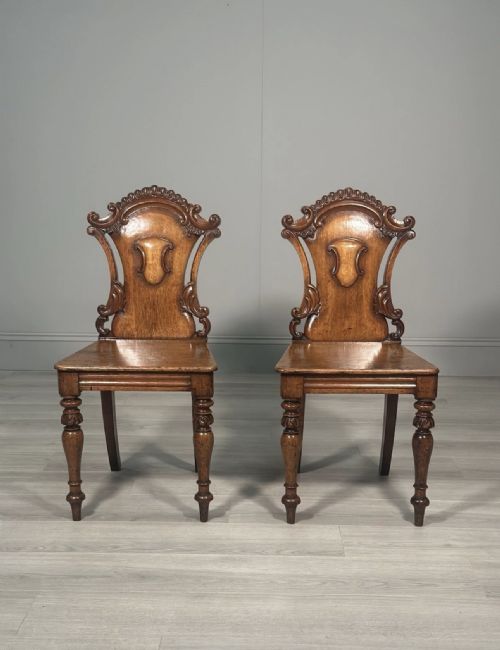


Oak Timber Hall Chairs
Oak timber hall chairs are substantial wooden seats designed for entryways, offering robust practicality alongside striking period character.
Oak Timber Hall Chairs
When you search for oak timber hall chairs, you encounter formal entranceway seating spanning centuries of British and European design. These pieces include single seats, pairs and sets intended for hallways and reception spaces.
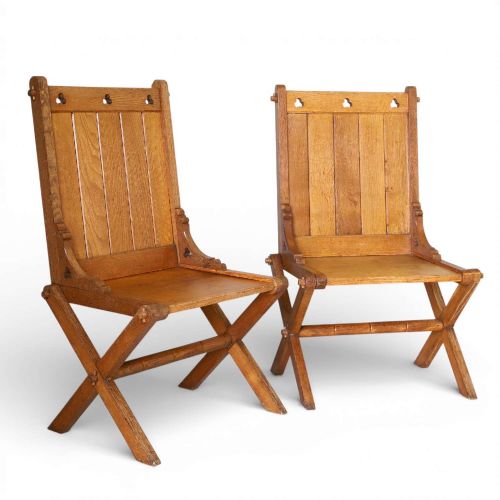
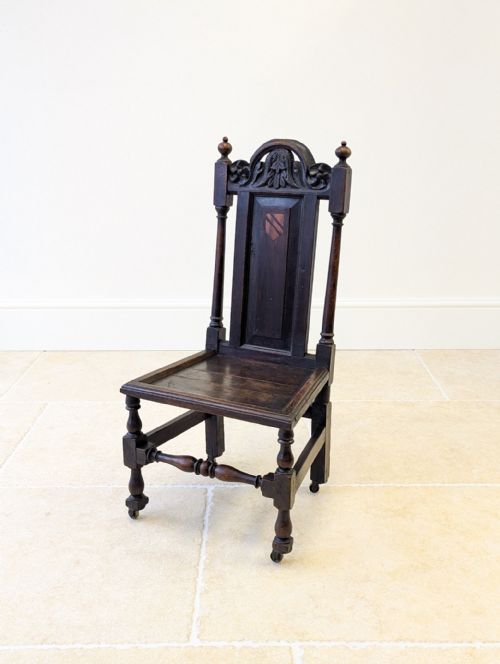
You are most likely to meet Victorian examples on this page, particularly those dating from the nineteenth century featuring carved details. Earlier seventeenth-century single chairs and twentieth-century revivals also appear among the selection.
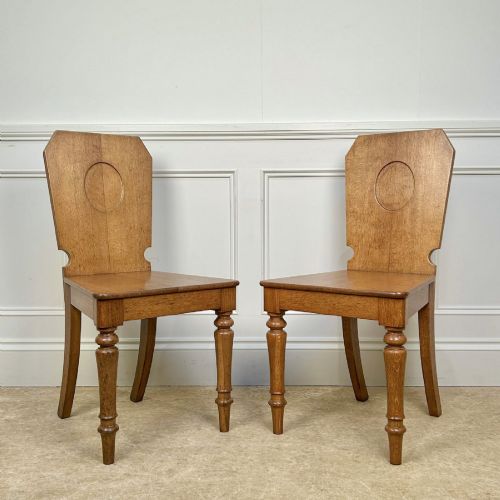
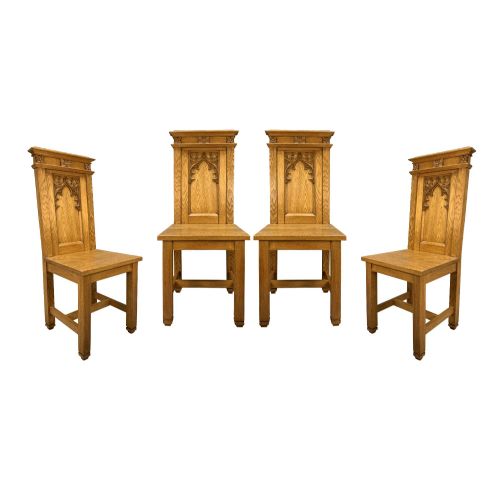
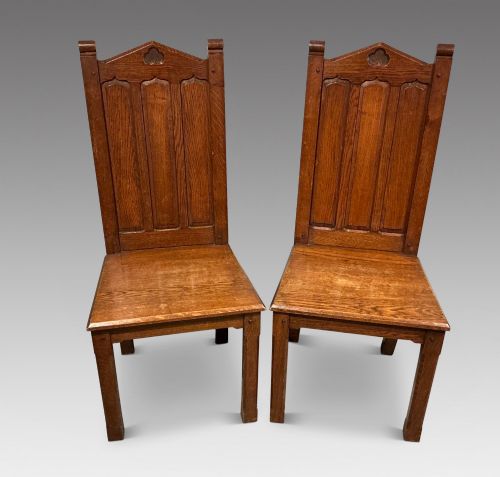
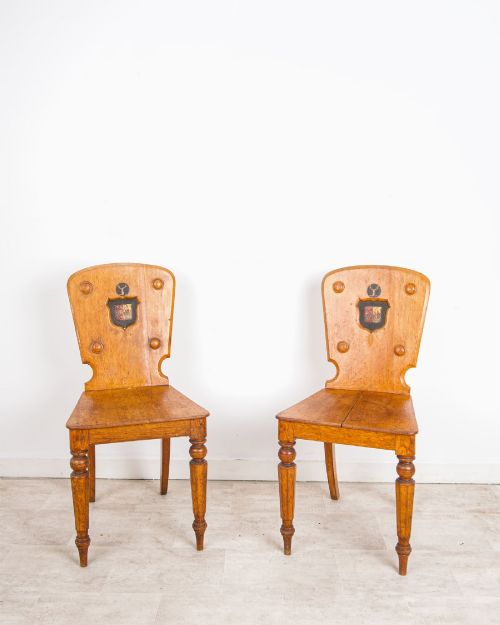
Forms extend beyond standard side chairs to incorporate armchairs, benches, settles and occasional seating. Many incorporate heraldic shield backs, trefoil motifs or carved panels suited to period interiors.
How they were made
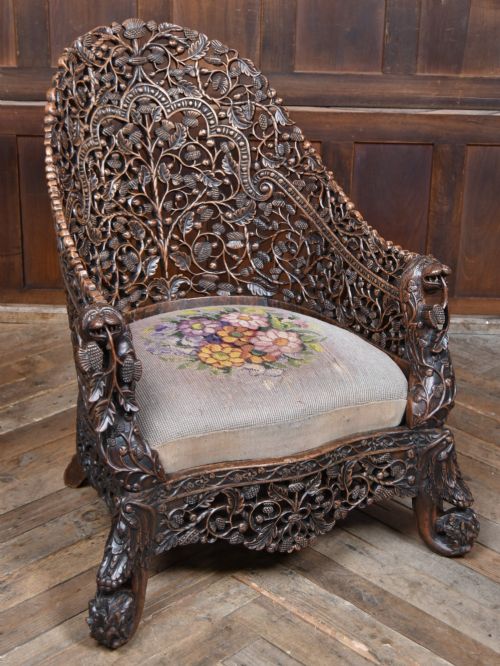
Makers utilised solid oak and English oak timber as the primary structural material, shaping frames through traditional joinery techniques. Selected pieces incorporate secondary elements such as brass fixtures or upholstered fabric, tapestry and textile panels.
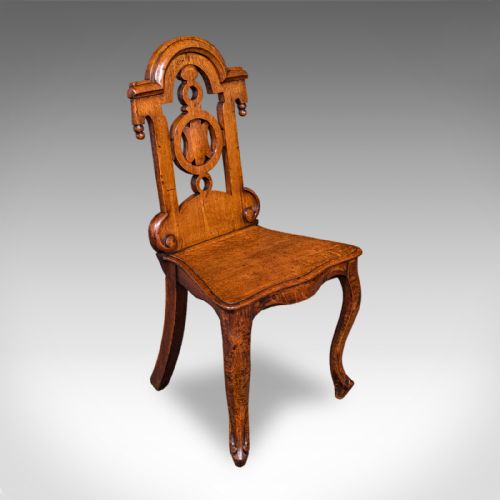
Carving defines the decoration of these chairs, ranging from deep relief work in Gothic Revival and Jacobean Revival styles to folk art interpretations. Artisans also employed turning and cabriole legs to shape the supports of Victorian and later pieces.
Oak Timber Hall Chairs Retail Price Guide 2026
Typical asking prices for oak timber hall chairs among the pieces listed under this phrase on Sellingantiques today, from the lower quarter to the upper quarter. They describe what is for sale here now, not the wider market.
Among the formal oak seating, an unexpected Black Forest carved bear chair stands ready to greet visitors.
What varies in quality
The depth and execution of the hand-carving separate standard utility seating from exceptional examples. Crisp relief work on shield backs and structural panels indicates superior craftsmanship.
The choice of timber and the integrity of the solid oak construction influence the standing of a piece. Original surfaces and patination achieved through age contribute significantly to the character of the chair.
Holland and Sons
The Oak Timber Hall Chairs Glossary
- Gothic Revival
- A nineteenth-century design movement drawing inspiration from medieval architecture, frequently seen on these chairs through pointed arches and trefoil details.
- Jacobean Revival
- A style emulating the seventeenth-century British aesthetic, characterised by heavy carving, turned legs and straight lines.
- Shield back
- A chair back shaped in the form of a heraldic shield, commonly utilised on nineteenth-century entranceway seating.
- Settle
- A wooden wooden bench with a high back and arms, often incorporating enclosed storage beneath the seat.
- Cabriole leg
- A furniture leg featuring a double curve, sweeping outward in a convex arc and inward in a concave arc.
- Apprentice piece
- A small-scale item created by a trainee artisan to demonstrate mastery of woodworking techniques.
Oak Timber Hall Chairs: Frequently Asked Questions
Where were hall chairs placed?
These seats stood in entrance halls, corridors and reception areas of period homes. They offered a place for visitors to wait while awaiting admittance.
Because they occupied transitional spaces, their designs prioritized architectural presence and sturdy construction over deep cushioning.
How do I identify Victorian examples?
Victorian pieces often display revivalist ornamentation such as Gothic arches, Renaissance motifs or heavy carved shields. They frequently utilise solid oak with turned or cabriole supports.
Examining the construction methods and the wear on the timber helps distinguish nineteenth-century production from later revivals.
Are these chairs comfortable for daily use?
Most historic entranceway seats were built with rigid wooden panels or carved backs rather than plush padding. They served formal and functional purposes in high-traffic entryways.
Placing them in modern hallways provides a striking visual anchor, though they function best for brief seating rather than lounging.
What is the difference between side chairs and armchairs here?
Side chairs feature an open frame without armrests, designed to sit neatly against hallway walls when not in use. Armchairs include structural arm supports, offering a more commanding presence.
Both forms share the characteristic use of oak timber and decorative carving tailored for reception spaces.