
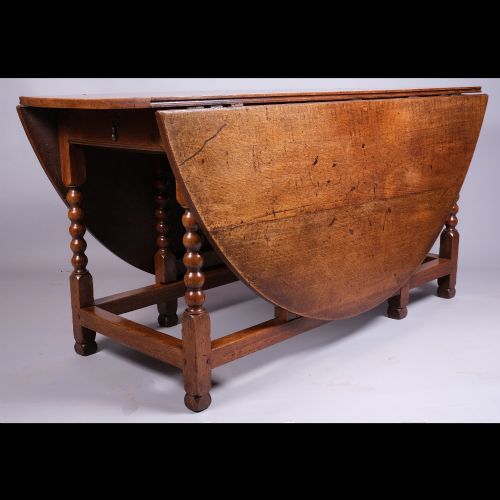


English Oak Drop Table
An english oak drop table brings centuries of functional craftsmanship into a room, offering adaptable surfaces through hinged leaves.
English Oak Drop Table
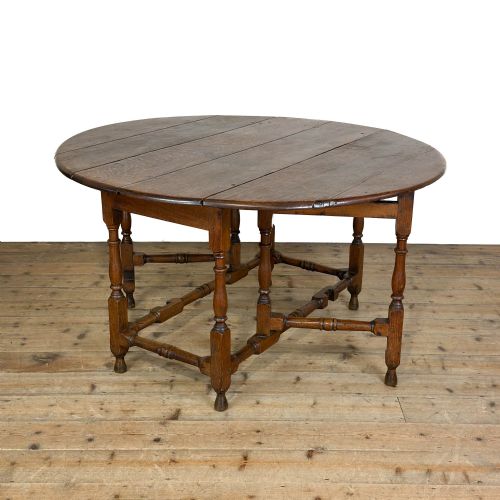
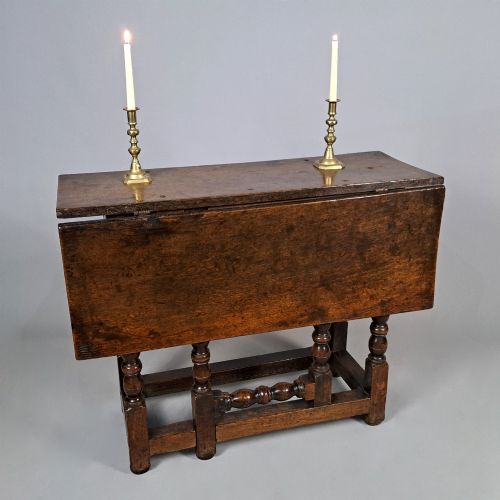
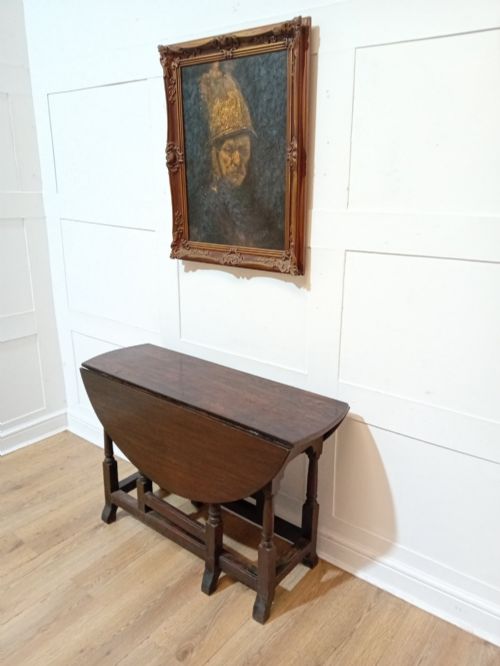
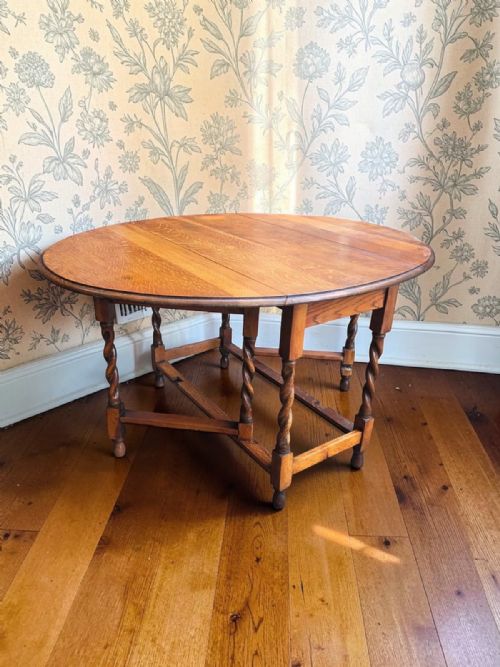
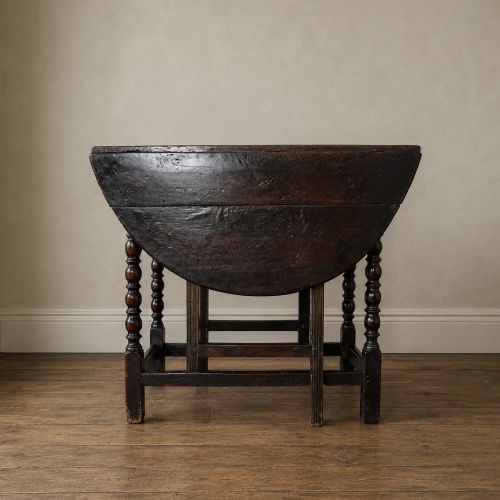
An english oak drop table comprises surfaces with hinged flaps designed to fold down or swing up on pivoting legs. The pieces found here span from the seventeenth and eighteenth centuries through to twentieth-century revivals.
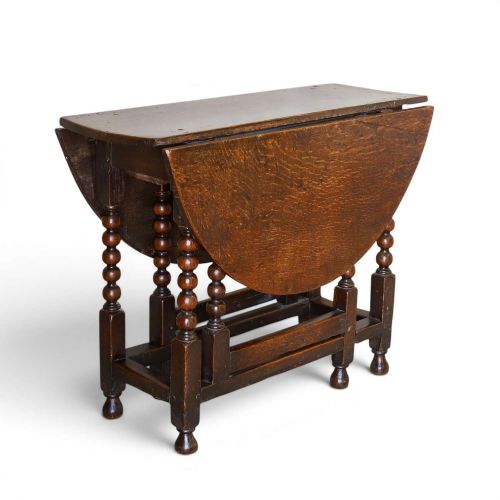
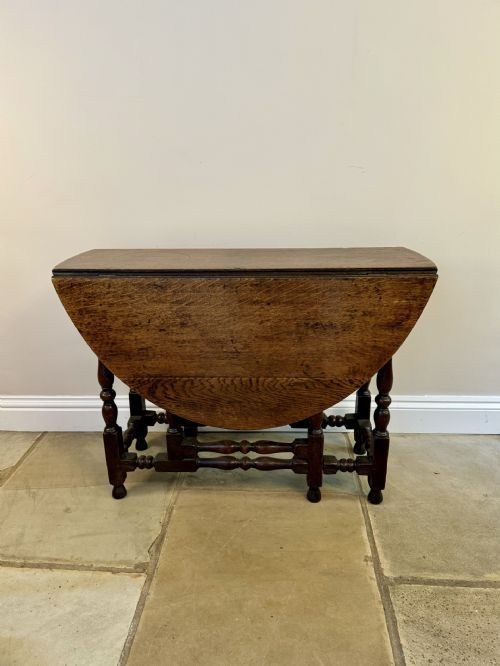
Gateleg formats predominate among the listings, where pivoting gate supports hold up the extended leaves. Side tables and dining formats appear regularly alongside smaller occasional forms.
What varies in quality
The standard of timber selection and the integrity of the original surface patina dictate distinction across examples. Period pieces retain patinas developed through centuries of use.
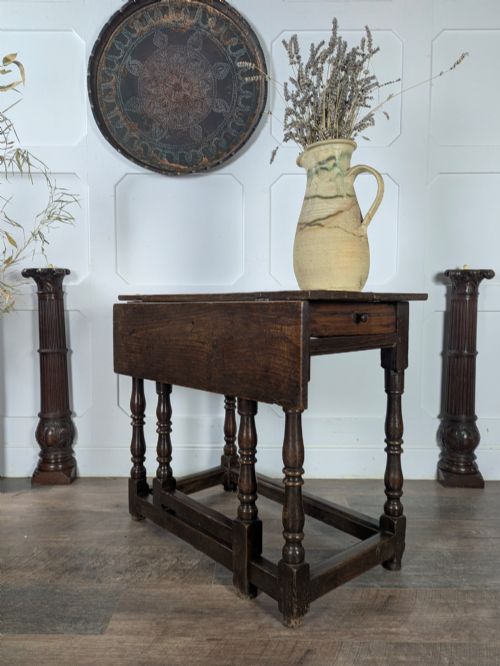
The complexity of the turnings on the legs and the smoothness of the gate mechanism distinguish finer workshops from simpler provincial work.
Listings feature solid oak construction spanning the seventeenth century through to 1930s revivals, including gateleg and tripod forms.
The English Oak Drop Table Glossary
- Gateleg table
- A table with hinged leaves supported by one or more legs that swing out like a gate. This design provides robust support for folding surfaces.
- Barley twist
- A spiral turning carved into furniture legs or posts. This decorative technique appears frequently on seventeenth-century and revival pieces.
- Bobbin turning
- A form of woodturning resembling a string of beads or bobbins. It creates a rhythmic profile along structural supports.
- Patina
- The surface sheen and colour developed by wood over years of age and handling. A well-preserved surface indicates long use and care.
- Drop leaf
- A hinged table flap that folds down when not in use. It allows the furniture to save space in smaller rooms.
English Oak Drop Table: Frequently Asked Questions
How do I use an english oak drop table daily?
Keep the leaves dropped against the sides for compact placement in a hallway or against a wall. Raise the flaps and swing out the supporting legs when you need extra surface area for dining or writing.
Protect the surface from excessive moisture and heat by using coasters and placemats. Regular dusting with a dry cloth maintains the timber without stripping the finish.
How do I tell seventeenth-century pieces from later revivals?
Examine the construction marks, timber density, and joint types visible underneath and around the hinges. Seventeenth-century examples show hand-tool signatures and pegged joints typical of early vernacular joinery.
Twentieth-century revival pieces often display machine-cut precision and standardised hardware. Compare the patina and wear patterns against dated benchmark examples from the same era.
What rooms suit a gateleg drop leaf table best?
Dining rooms and kitchens benefit greatly from the expandable surface of a gateleg table. You can seat more people during meals and shrink the footprint afterward.
Smaller side and occasional variants fit comfortably in living rooms or studies as lamp tables. Their adaptability makes them useful in spaces requiring flexible layouts.
How should I care for the original oak surface?
Apply a mild beeswax polish occasionally to nourish the dry timber and enhance the natural grain. Avoid silicone-based sprays that build up and attract dust over time.
Keep the furniture away from direct heat sources and strong sunlight to prevent the oak from splitting or fading. Stable indoor humidity preserves the structural integrity of the joints.