
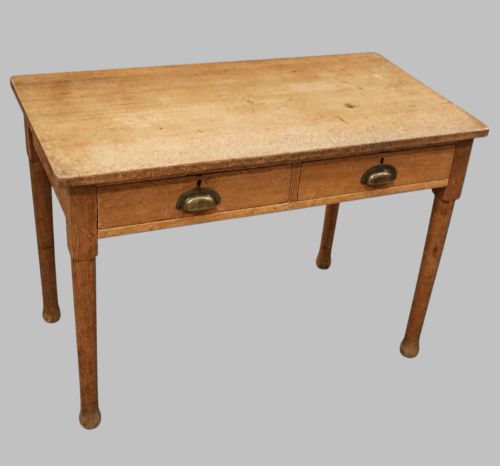
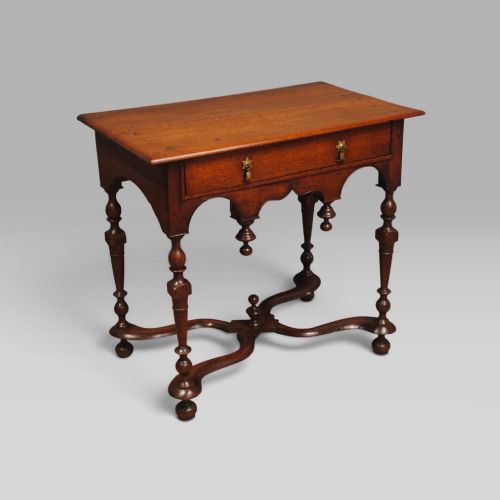
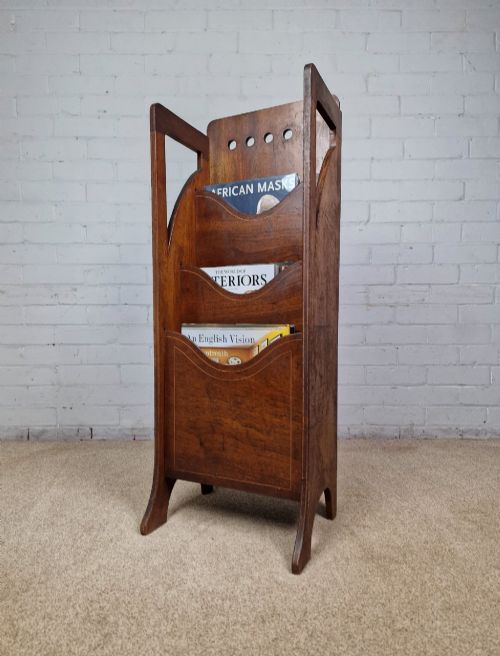
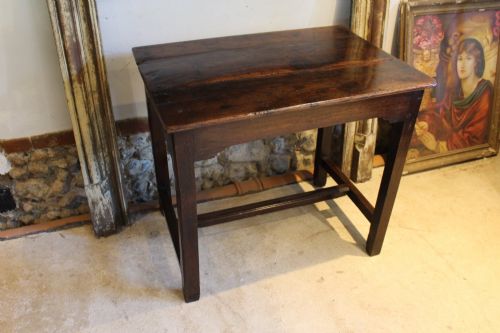

Early Oak Table
An early oak table brings the rich patina and enduring grain of centuries past directly into a modern interior.
Early Oak Table
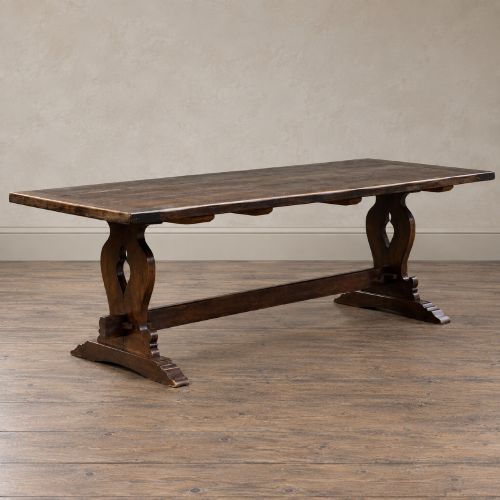
When searching for an early oak table, buyers encounter a diverse selection of utilitarian and formal furniture spanning from the seventeenth century through to the early twentieth century. The inventory ranges from substantial refectory and wake dining tables down to smaller side tables, lowboys, and cricket tables suited for everyday domestic placement.
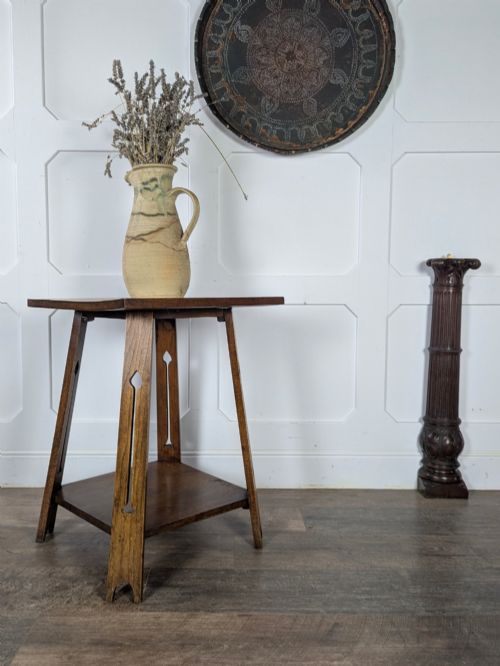
The most common examples on this page date from the eighteenth and nineteenth centuries, alongside revival pieces from the early twentieth century influenced by earlier Jacobean and Georgian forms. These surfaces served varied functions in country houses, farmhouses, and taverns, functioning as desks, serving tables, and central dining hubs.
Regional variations emerge clearly across the selection, with Welsh lowboys and cricket tables sitting alongside English tavern tables and continental limed oak designs. Buyers choose these forms for their sturdy construction and the distinct character imparted by decades of honest use.
How they were made
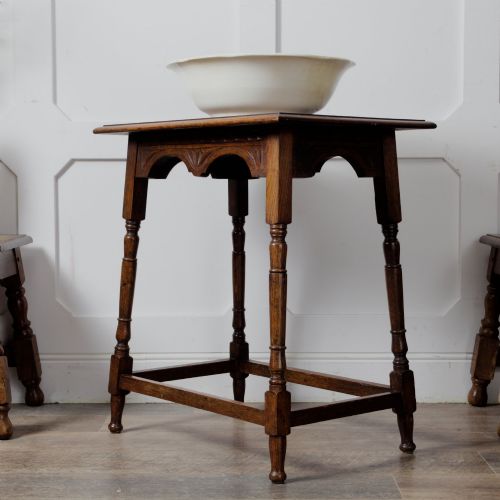
Joinery relied heavily on solid oak timbers, often supplemented with secondary woods such as elm, fruitwood, or pine for internal elements and drawer linings. Carpenters utilised traditional pegged mortise and tenon joints to build rigid frames capable of withstanding heavy daily use.
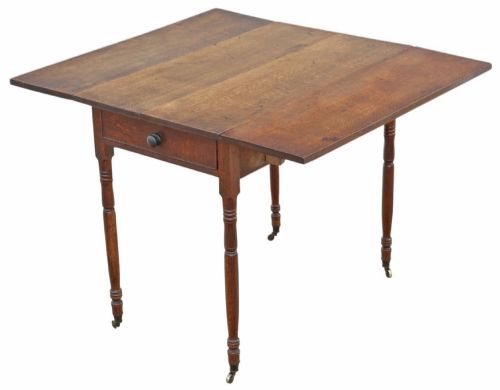
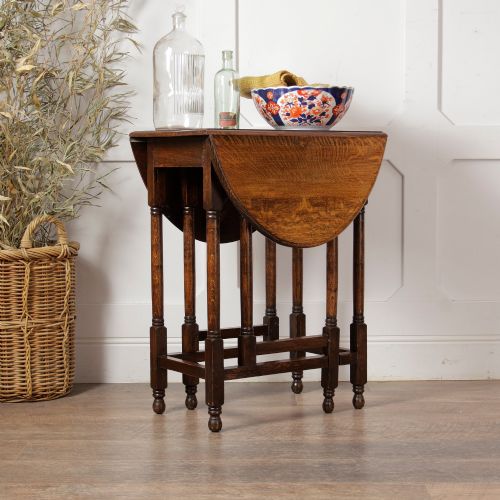
Turned legs, slender columns, and drop-leaf mechanisms required skilled lathe work and careful hinge fitting, particularly on gateleg and Pembroke dining formats. Surfaces were frequently hand-planed and left unpolished or lightly waxed, allowing the natural grain and figuring of the timber to dominate.
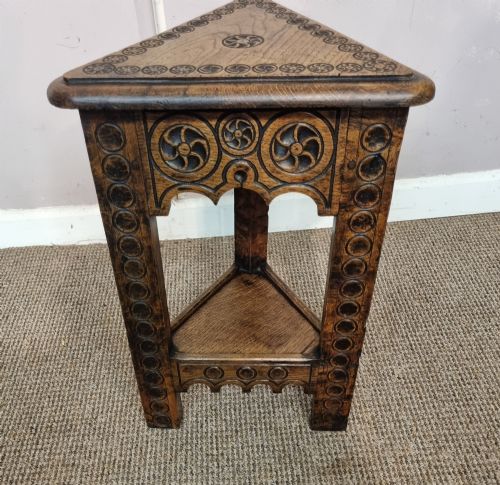
Carved details on later revival pieces demonstrate surface ornamentation, while earlier domestic items prioritise structural integrity through thick plank tops secured with wooden cleats or butterfly keys.
Listings feature oak alongside elm, fruitwood, and pine across dining, serving, and occasional forms.
What varies in quality
The integrity of the timber selection dictates the primary tier of quality, separating tables built from dense, quarter-sawn boards with deep medullary rays from those utilising plain-sawn secondary cuts. Originality of components also defines the upper range, where surviving untouched plank tops and matching bases command greater appreciation than heavily restored examples.
Proportion and scale influence desirability, as smaller side tables and slender-columned tripod pieces require delicate balancing of elements to avoid clumsiness. The depth of the patina built up through generations of polishing distinguishes superior examples that have aged gracefully in domestic settings.
Heals
The Early Oak Table Glossary
- Refectory table
- A long, narrow dining table originally built for monastic dining rooms and later adopted in large country houses. These pieces typically feature heavy rectangular tops supported by four legs connected by low stretchers.
- Lowboy
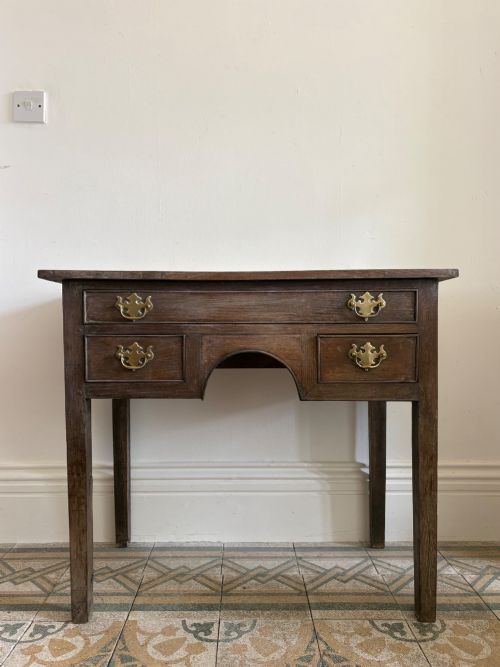
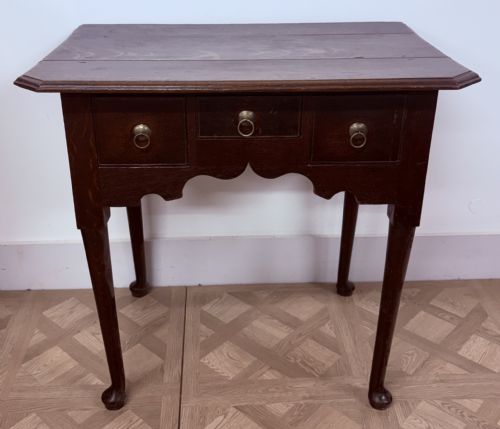
- A small oak or fruitwood dressing table or side table featuring a single or triple drawer configuration beneath a flat top. They generally date from the seventeenth and eighteenth centuries and stand on cabriole or straight legs.
- Cricket table
- A small, three-legged occasional table featuring a round wooden top supported by splayed legs. This utilitarian country form provides stability on uneven stone floors.
- Gateleg table
- A drop-leaf table with hinged flaps supported by hinged legs that swing outward like a gate. This design allows the surface area to expand or contract according to domestic needs.
- Medullary ray
- A ribbon-like cellular structure radiating outward from the centre of a tree trunk that becomes visible on quarter-sawn oak furniture. Collectors prize prominent ray figuring as an indicator of superior timber selection.
Early Oak Table: Frequently Asked Questions
How do I date an early oak table?
Dating relies on observing construction methods, joinery types, and the wear patterns present across the timber. Hand-cut pegs, adze marks on underside planks, and the profile of turned legs provide clear chronological markers.
Stylistic influences, such as the cabriole legs of the Queen Anne period or the heavy turned stretchers of Jacobean designs, help narrow the window of origin when combined with overall patination.
Were these tables used for dining?
Many large formats, including refectory, wake, and gateleg tables, served primary dining functions in historical households. Smaller iterations like cricket tables and side tables were intended for writing, serving, or general display.
Their robust construction allowed multi-purpose use in busy kitchens, taverns, and farmhouse dining rooms over centuries of daily domestic life.
How should I care for antique oak?
Maintaining these surfaces requires simple dusting with a dry or slightly damp cloth followed by occasional applications of a traditional beeswax. Avoiding direct sunlight and sudden temperature shifts preserves the historic finish and prevents the timber from splitting.
Harsh chemical sprays should be avoided entirely to protect the deep natural patina accumulated across decades of handling.
What is a lowboy used for today?
A lowboy functions effectively as a compact writing desk, a hallway console, or a dressing table in modern bedrooms. Its modest footprint and useful drawer space make it adaptable for smaller rooms.
Placed beneath a mirror or used to display lamps and decorative objects, it provides practical surface space without dominating a room.