
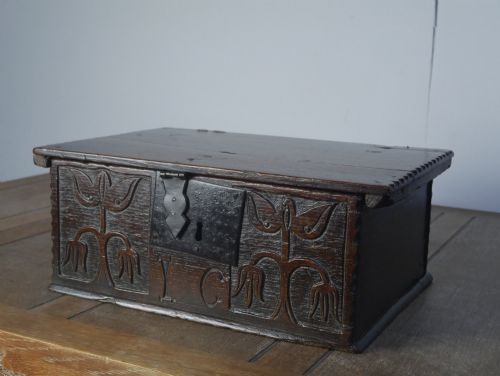


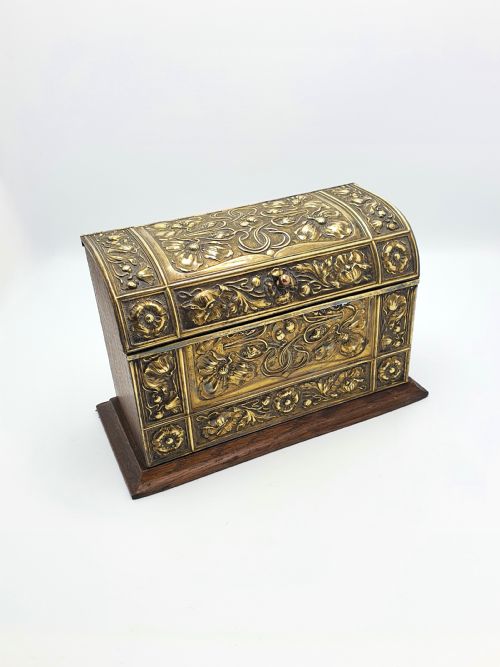


English Oak Document Box
An English oak document box brings sturdy seventeenth-century utility into a modern room, offering heavy timber construction and secure storage for papers.
English Oak Document Box
An English oak document box is a timber chest designed to safeguard papers, deeds, and texts in domestic or ecclesiastical settings. The listings on this page centre on seventeenth- and eighteenth-century examples, alongside later Victorian and Edwardian interpretations.
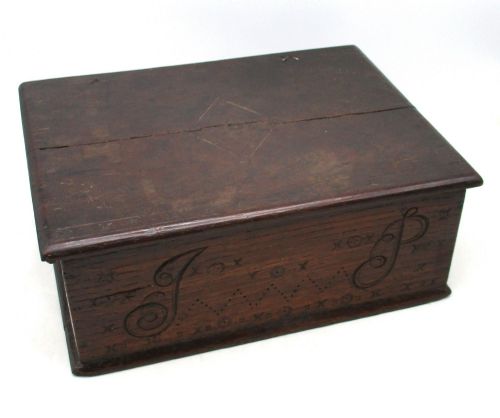
Buyers encounter forms described as desk boxes, Bible boxes, deed boxes, and wall organisers. These pieces range from plain utilitarian containers to richly carved examples bearing initials and dates.
Origins span English and Welsh workshops, reflecting regional carpentry traditions in durable native hardwoods. The survival of such containers points to their original purpose as portable strongboxes for valuable documents.
How they were made
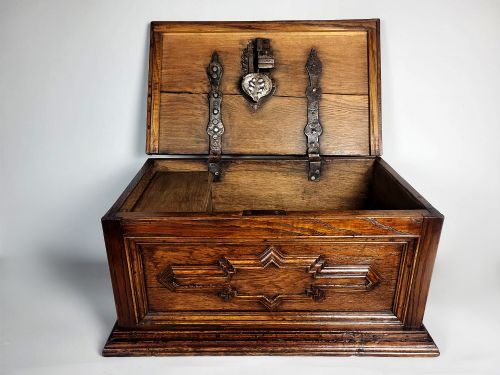
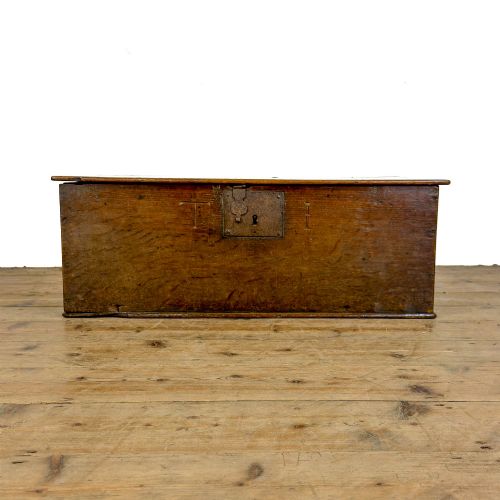
Makers utilised solid oak boards joined with traditional methods, often incorporating iron, steel, and brass hardware. Hinges, strap work, and complex locks provide structural reinforcement as well as security.
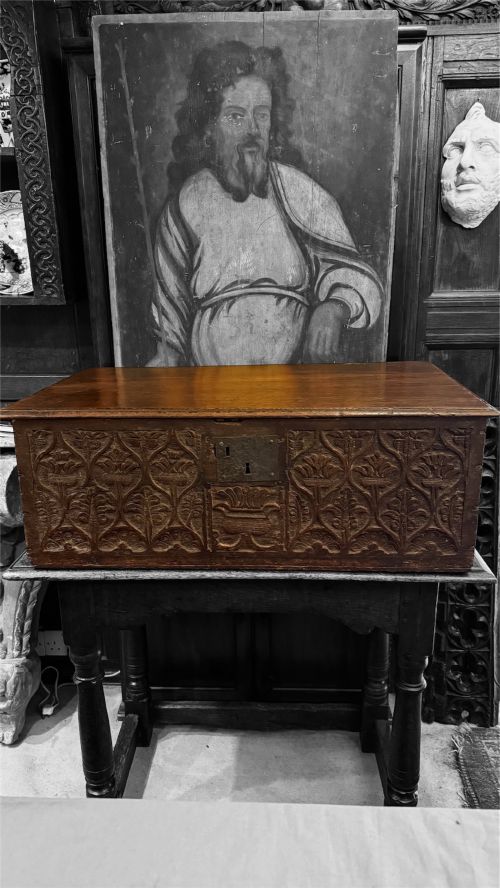
Surface decoration relies on carving, moulding, and panel construction rather than applied veneer. Iron and steel mechanisms are frequently original to the piece, showing hand-forged detail.
Object types range from standard deed boxes to specific ecclesiastical Bible boxes, wall organisers, and Welsh writing boxes.
What varies in quality
The degree of original hardware survival distinguishes different examples, particularly the presence of complex steel locks and working keys. Original hinges and ironwork contribute significantly to the integrity of a piece.
Carving depth and execution vary between vernacular workshops and more accomplished urban centres. Timber selection and the preservation of original patination also govern the character of each box.
The English Oak Document Box Glossary
- Bible box
- A small desk-top box originally intended to hold a family Bible or devotional texts. Many served dual purposes for general correspondence and important papers.
- Deed box
- A secure container designed for legal documents, land indentures, and financial records. These boxes frequently feature robust iron locking mechanisms.
- Charles II
- A stylistic period dating to the late seventeenth century, associated with distinctive chip-carving and geometric moulding on oak furniture. Pieces from this era often display dynamic surface decoration.
- Wrought iron
- Iron beaten into shape by hand, commonly used for strap hinges, lock plates, and corner brackets on early boxes. This material shows the hammer marks of the blacksmith.
- Welsh oak
- Oak timber sourced from Welsh workshops, characteristic of regional seventeenth-century cabinet making. These pieces often exhibit distinct local construction traits.
English Oak Document Box: Frequently Asked Questions
What is an English oak document box used for?
These boxes were historically built to store legal deeds, personal letters, and religious texts securely. Today, they serve as practical desktop storage or decorative accent pieces.
Their sturdy construction makes them well suited for holding modern stationery, photographs, or small personal items while adding historical character to a room.
How do I date an antique document box?
Dating relies on construction methods, timber patination, and stylistic details such as carved motifs or hardware design. Seventeenth-century examples often display pegged frame-and-panel construction and heavy mouldings.
Later pieces from the Victorian or Edwardian eras show different manufacturing techniques and modified proportions. Comparing the lock mechanism and hinge style also helps establish the period.
Were these boxes locked?
Yes, security was a primary function of a document box, and many retain their original iron or steel locks. Contemporary owners relied on these mechanisms to protect confidential papers and valuables.
Some surviving pieces include complex internal locking systems or specialised compartments. The survival of a working lock and key adds notable interest to a piece.
Where should I place a document box in my home?
These boxes sit well on sturdy desks, side tables, or deep windowsills where their timber surfaces can be appreciated. Wall organisers from later periods are designed to be hung directly.
Positioning them away from direct heat sources and strong sunlight protects the antique oak and maintains the condition of the wood.