

English Oak Console Table
An English oak console table brings centuries of rich timber and sturdy craft into a hallway or living space.
English Oak Console Table
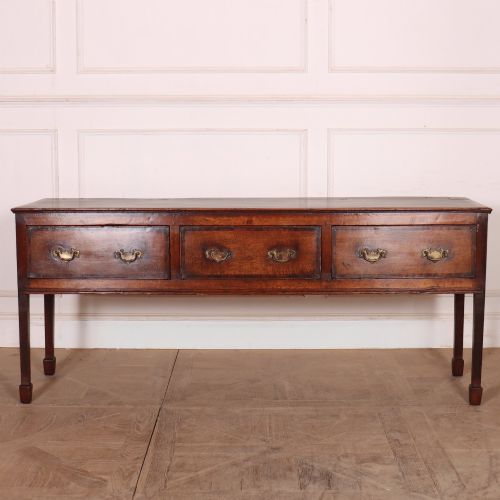
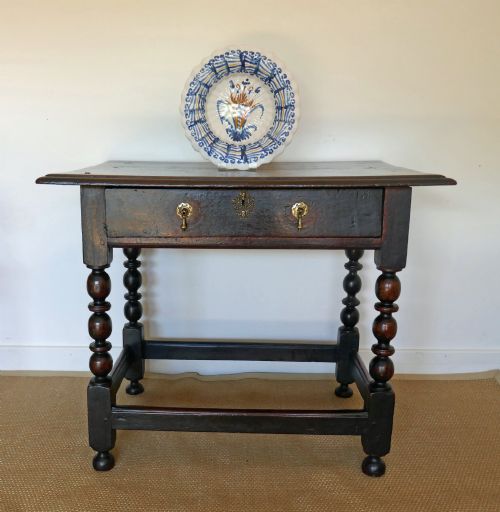
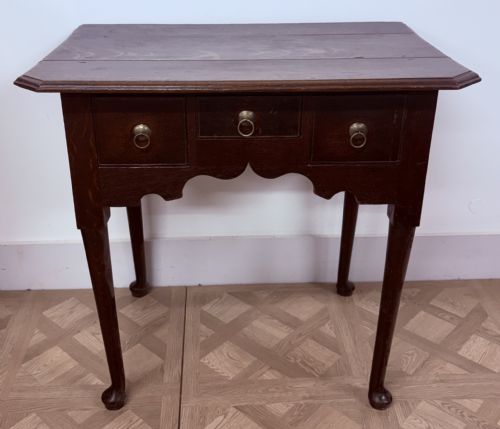
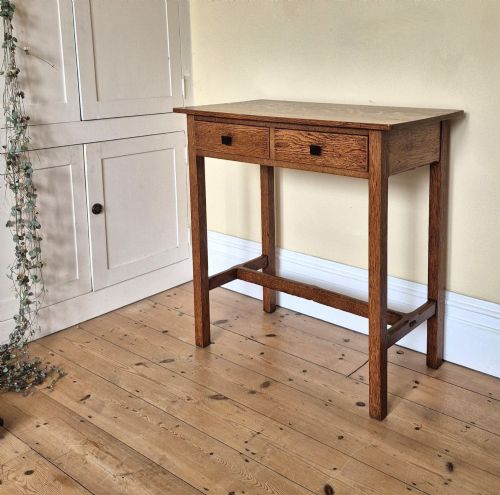
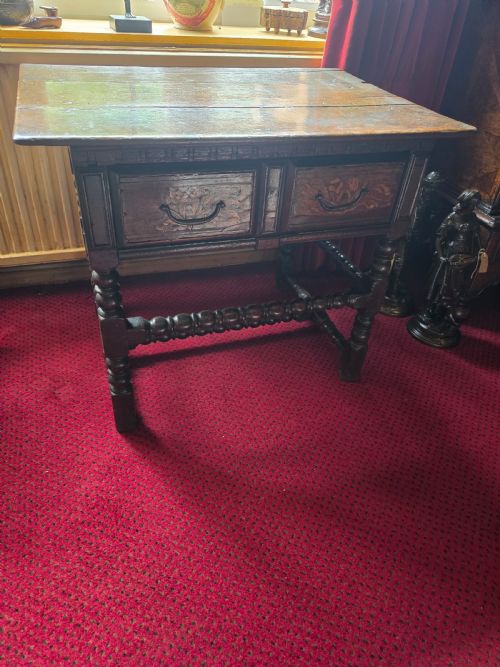
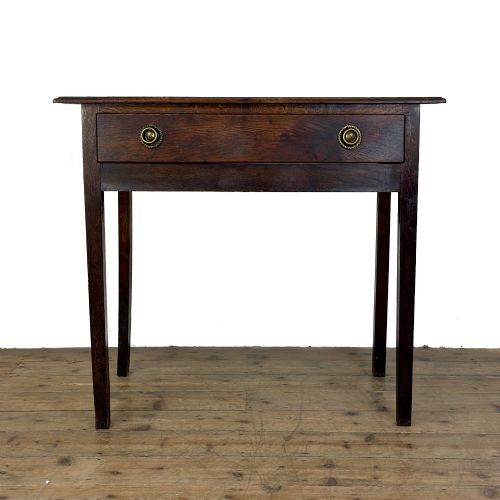
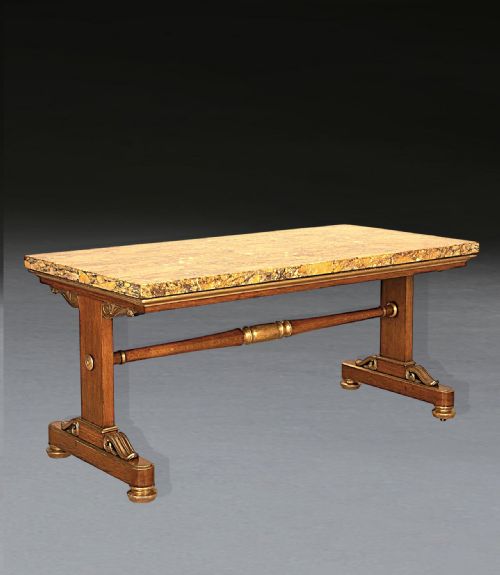
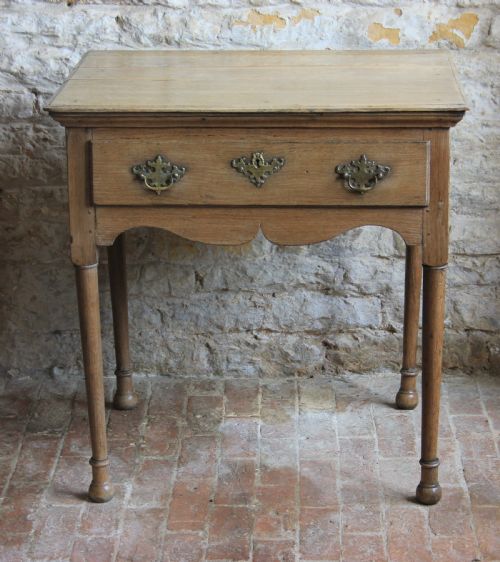
An english oak console table typically presents as a side table, dresser base, lowboy, or lamp table originating from periods spanning the 17th century through the 19th century and into the early 20th century. These forms serve practical surface needs in halls and living spaces while showing the sturdy utility expected from vernacular and formal cabinet work.
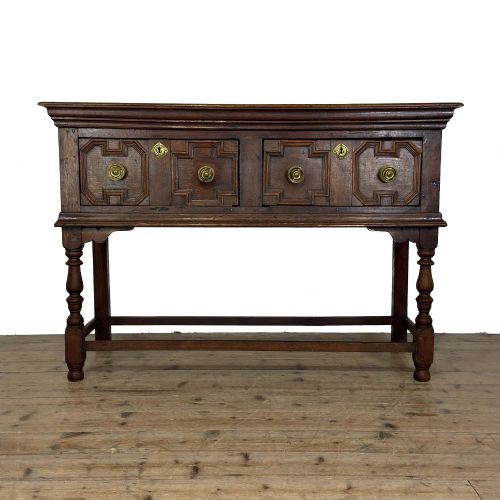
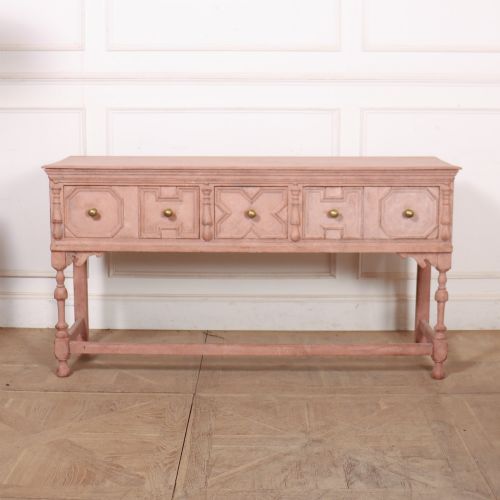
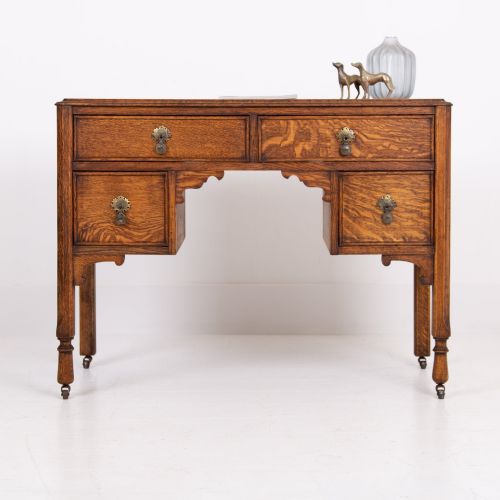
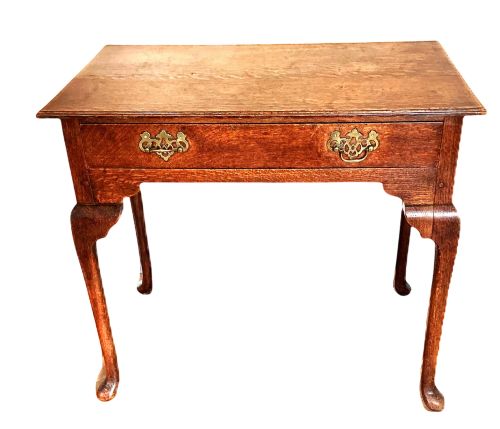
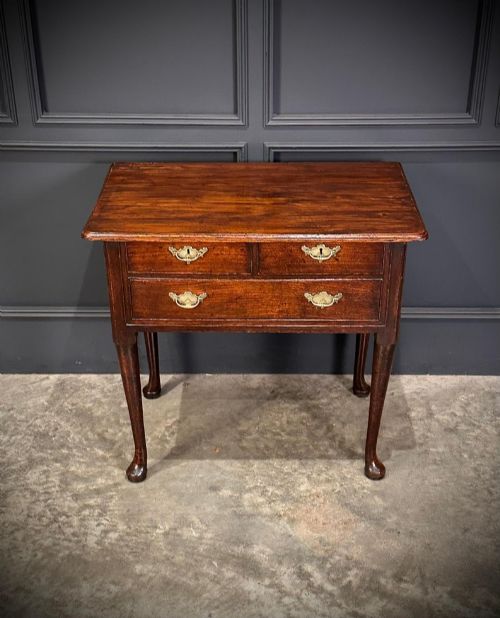
The pieces appearing most frequently across these records range from simple 18th-century side tables and lowboys to expansive dresser bases and revival pieces drawing on Charles II and Jacobean motifs. Oak dominates the material record, often paired with brass or iron hardware, and occasionally finished with paint or bleached surfaces.
What varies in quality
Quality rests upon the crispness of timber selection and the retention of original structural members rather than later replacements. Pieces with well-figured grain and honest patination stand apart from those altered extensively over subsequent centuries.
The sophistication of joinery and carved detail dictates distinction across the range, separating utilitarian surfaces from pieces commissioned with bold proportions and refined hardware.
Makers occasionally hid geometric mouldings and concealed drawers within 17th-century server tables to keep valuables safe.
Hubert Simpson of Kendal·Holland & Sons
The English Oak Console Table Glossary
- Lowboy
- A small oak table featuring drawers, commonly used as a dressing or writing surface in 18th-century interiors. It typically stands on four slender legs.
- Dresser base
- A long, low sideboard fitted with multiple drawers beneath the primary surface. These pieces formed a staple of country house utility.
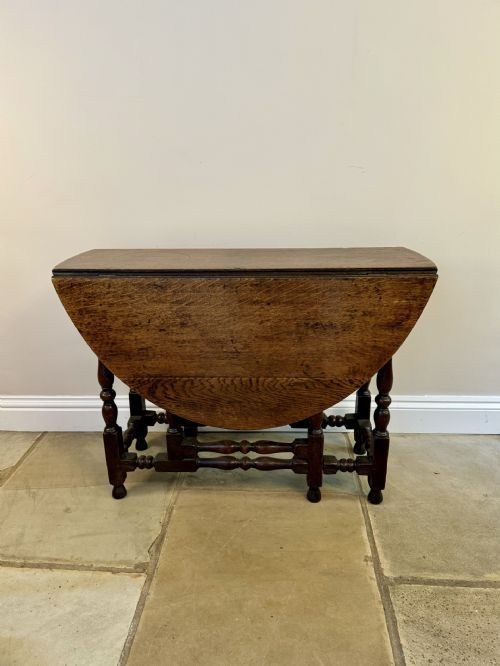
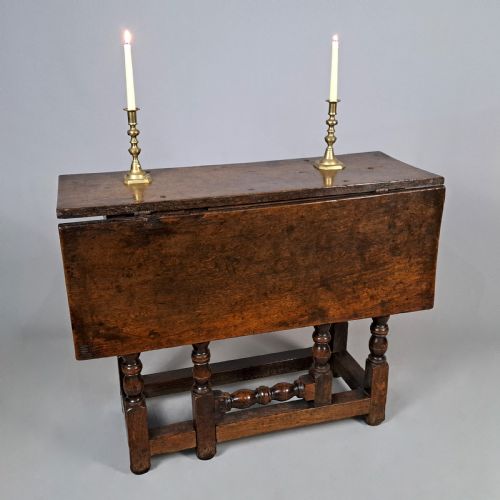
- Credence table
- A folding table with a semicircular or polygonal top supported by a swinging leg gate. They often date to the 17th century and feature rich turned woodwork.
- Bleached oak
- Timber treated to lighten its natural dark tone, a finish seen across several 19th-century and later interpretations. This process softens the visual weight of heavy wood.
- Cabriole leg
- A furniture leg that curves out and then in, mimicking animal limbs. This form became popular during the early 18th century.
English Oak Console Table: Frequently Asked Questions
Where should I place an english oak console table?
These pieces suit entrance halls, narrow corridors, or living rooms where a surface is needed without blocking circulation. Their shallow depth allows them to sit flush against walls.
They pair well with mirrors or lamps, adding a grounded architectural presence to domestic spaces.
How do I date an antique oak table?
Dating relies on examining the construction methods, joint types, and timber preparation visible beneath the top and inside the drawers. Hand-cut dovetails and pegged joints generally indicate earlier periods.
Secondary woods used in linings, along with the style of any mouldings or turned legs, provide further clues to the decade of manufacture.
What is the difference between a lowboy and a side table?
A lowboy is specifically a small table equipped with one or more rows of drawers, historically used for personal grooming or writing. Standard side tables might lack drawers entirely or serve broader utility functions.
Both share similar proportions and timber construction traditions.
Are painted oak tables original?
Some pieces feature historic paint layers applied during the 18th or 19th centuries to update older timber furniture. Others represent deliberate revival styles from the Victorian era.
Examination of the pigment adherence and underlying wear helps determine the age of the painted surface.