



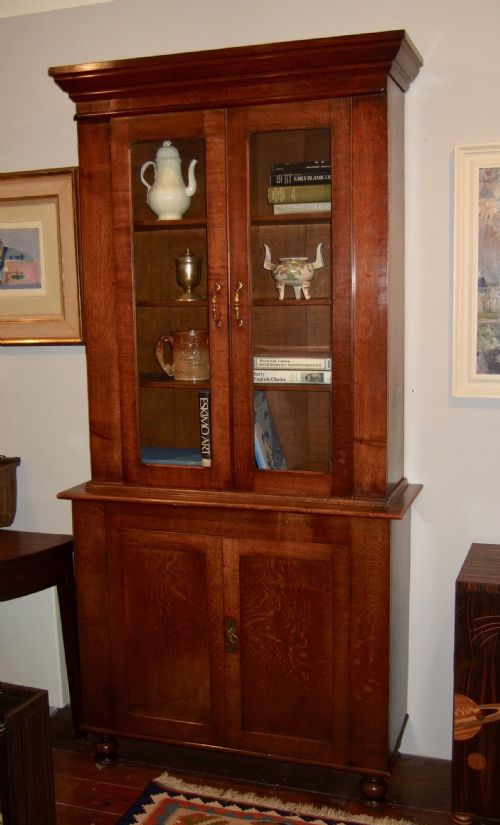


English Oak Bookcase Cabinet
An English oak bookcase cabinet brings traditional storage and display to a room, offering sturdy timber housing for books alongside glazed or panelled cupboard doors.
English Oak Bookcase Cabinet
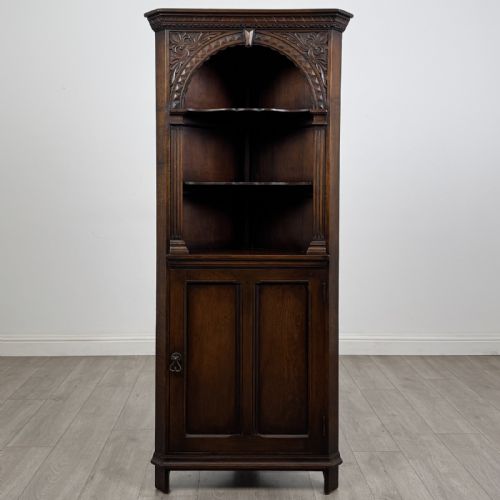
An english oak bookcase cabinet combines upper shelving for volumes with a lower enclosed cupboard base, serving generations of domestic libraries and studies. The pieces span centuries of cabinet-making, reflecting shifts from formal architectural proportions to robust regional vernacular designs.
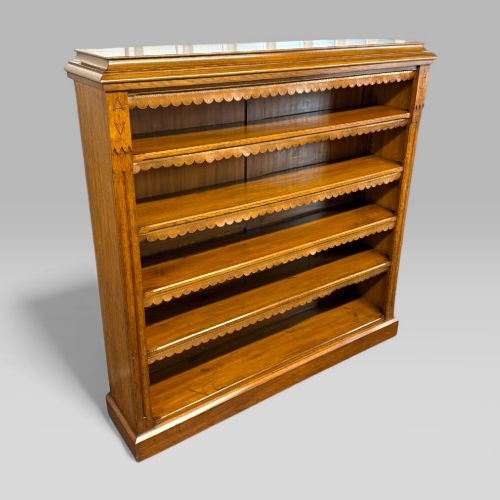
Buyers meet examples ranging from nineteenth century library pieces to early twentieth century glazed display cabinets. These items balance practical shelving with enclosed storage, appearing in both open front formats and glazed door configurations.
Materials and construction
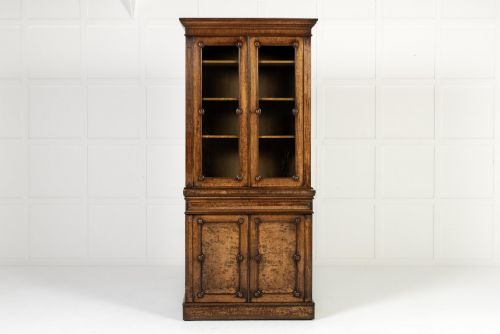
Makers utilised solid timber alongside figured veneers such as pollard oak, framing panes of glass within sturdy doors and incorporating brass hardware for handles and escutcheons. Joinery methods relied on traditional frame and panel construction to house heavy volumes without warping the primary timber.
Secondary decorative touches occasionally introduced contrasting woods like ebony alongside carved surface details. The structural integrity depends upon sound timber selection and precise joints designed to support substantial weight.
English Oak Bookcase Cabinet Retail Price Guide 2026
Typical asking prices for english oak bookcase cabinet among the pieces listed under this phrase on Sellingantiques today, from the lower quarter to the upper quarter. They describe what is for sale here now, not the wider market.
Among the functional library cupboards hide specialised laboratory and estate pieces originally built for headmasters and quiet study spaces.
Assessing build quality
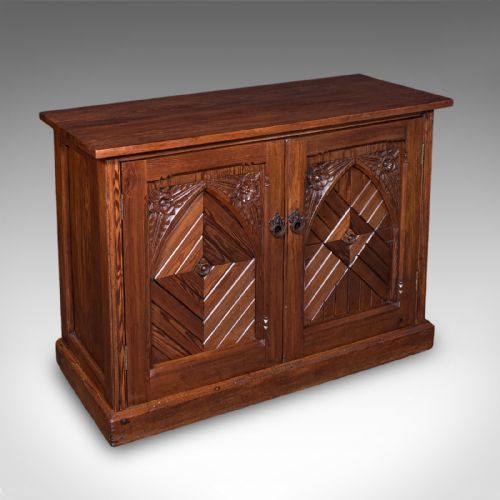
Superior quality rests in the selection of the timber grain, the crispness of any carved enrichment, and the proportion of the cornice and base mouldings. Finer pieces demonstrate careful timber matching across the doors and drawers, maintaining structural balance without excessive heaviness.
Hardware selection and internal shelf adjustment mechanisms further separate standard utilitarian cupboards from library pieces commissioned for grander interiors. Original glass panes and intact brass fittings elevate the integrity of the surviving furniture.
The English Oak Bookcase Cabinet Glossary
- Cornice
- The moulded projection that crowns the top of a bookcase cabinet. It provides an architectural finish to the upper section.
- Escutcheon
- A protective plate surrounding the keyhole of a cabinet door or drawer. These brass fittings often coordinate with the hinges and handles.
- Pollard oak
- Oak timber taken from trees that were pollarded, producing a highly decorative and dotted grain pattern. Cabinet-makers used this for dramatic veneered surfaces.
- Bureau bookcase
- A hybrid form featuring a fall-front writing desk compartment combined with upper shelving. It provides a compact workspace alongside storage.
English Oak Bookcase Cabinet: Frequently Asked Questions
How do I date an oak cabinet?
Dating relies upon construction methods, timber preparation marks, and stylistic indicators such as brass hardware or carved motifs.
Early pieces display hand-sawn timber traits and vernacular joinery, whereas twentieth century examples reveal more standardised manufacturing techniques.
Are these cabinets suitable for small rooms?
Many tall and narrow configurations exist specifically to maximise vertical storage without occupying excessive floor space.
Wall standing and library formats provide substantial capacity whilst maintaining a relatively modest footprint in domestic settings.
How should I care for the oak?
Maintaining solid timber involves keeping pieces away from direct heat sources and sudden humidity shifts that cause wood movement.
Applying a traditional wax polish periodically helps nourish the grain and protects the surface from everyday wear.
What is the difference between open and glazed?
Open formats provide immediate access to volumes without doors, suiting everyday working libraries and accessible study spaces.
Glazed versions utilise glass panelled doors to protect valuable bindings from dust whilst maintaining full visibility of the collection.