





English Miniature Chest
These English miniature chest pieces are small scale works of cabinet making that offer practical tabletop storage and domestic charm.
English Miniature Chest
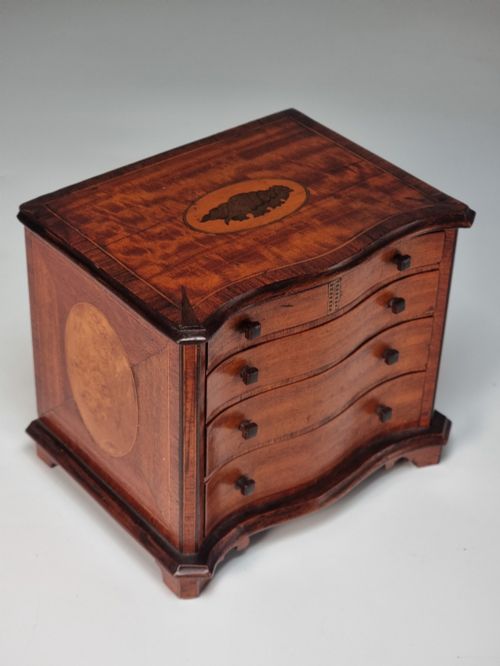
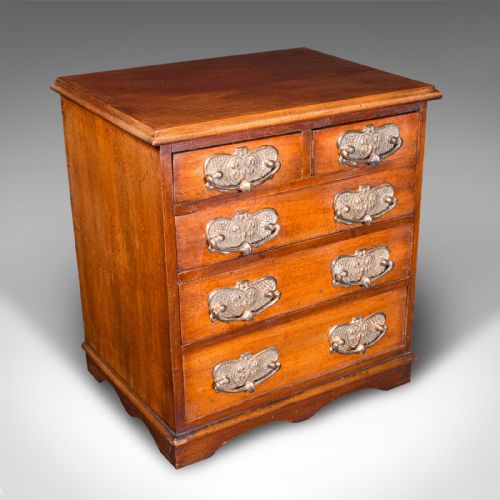
An english miniature chest covers a variety of small scale forms including diminutive chests of drawers, apprentice pieces, specimen cases and tabletop cabinets. These objects served functional purposes for storage or display, alongside demonstration pieces made by craftsmen.
The pieces encountered on this page span several eras from the eighteenth century through to the Victorian period and the early twentieth century. Mahogany and oak form the backbone of these selections, alongside occasional specialist variations in satinwood and rosewood.
Forms range from simple drawer units and collector cabinets to specialised pieces like watchmaker cabinets, spice cupboards and tea caddies styled as chests. Georgian and Victorian examples dominate the available selection, reflecting domestic interests in collection and display.
Materials and construction
Cabinet makers utilised dense hardwoods such as mahogany and oak, often pairing them with decorative veneers like satinwood and rosewood. These timbers provided the stability required for small scale joinery while offering polished surfaces for domestic interiors.
Decoration relied on fine details including shell inlay, penwork, hand painting, and contrasting brass drawer pulls. Carpenters built these small items with the same dovetail joinery and panel construction found in full sized furniture of the Georgian and Victorian periods.
English Miniature Chest Retail Price Guide 2026
Typical asking prices for english miniature chest among the pieces listed under this phrase on Sellingantiques today, from the lower quarter to the upper quarter. They describe what is for sale here now, not the wider market.
Listings feature mahogany, oak, satinwood, and rosewood, alongside brass hardware and hand painted finishes.
Distinctions in quality
The standard of a piece rests in the precision of its small scale joinery and the choice of timber figuring. Superior examples display carefully matched veneers, tight drawer fits, and refined brass hardware rather than coarse assembly.
Decorative elements set finer items apart, such as intricate penwork, hand painted surfaces, or delicate inlay work. Pieces that maintain their original hardware and surface finish demonstrate higher integrity than altered items.
A. F. Lloyd, Bideford
The English Miniature Chest Glossary
- Apprentice piece
- A small scale furniture item traditionally created by a woodworker to demonstrate mastery of a craft before gaining guild admission. These items mirror full sized chests in their structural joinery.
- Specimen cabinet
- A small chest fitted with multiple shallow drawers designed for organising natural history samples or small collections. Collectors prize these for their specialised internal configurations.
- Court cupboard
- A compact storage unit featuring tiered shelving or enclosed compartments used historically for plate and provisions. Early examples utilise solid oak construction.
- Wellington chest
- A tall narrow set of drawers secured by a locking side flap that fastens over the drawer edges. This Victorian form provides secure vertical storage.
- Penwork
- A surface decoration technique utilising inked drawings on wood, often finished with varnish to protect the detailed imagery. This method creates intricate patterns without carving.
English Miniature Chest: Frequently Asked Questions
What is an english miniature chest?
These objects are small scale reproductions or specialised cabinets built by traditional woodworkers to mirror full sized furniture.
They function as desktop storage, tea caddies, or collector cases for small items.
How were apprentice pieces used?
Apprentice pieces served as practical tests of skill for woodworkers seeking to demonstrate their proficiency to master craftsmen.
Over time, they transitioned into decorative domestic items placed upon tables and desks.
How do I identify a Victorian specimen chest?
Victorian specimen chests feature numerous shallow drawers designed to hold natural history collections, coins, or small curiosities.
They frequently appear in mahogany or oak with brass pulls and fitted interior compartments.
What timbers were used for these chests?
Cabinet makers relied primarily on mahogany and oak for structural stability and durability in small scale pieces.
Finer examples incorporate decorative veneers like satinwood, rosewood, and ebony for visual contrast.