




English Mahogany Longcase Clock
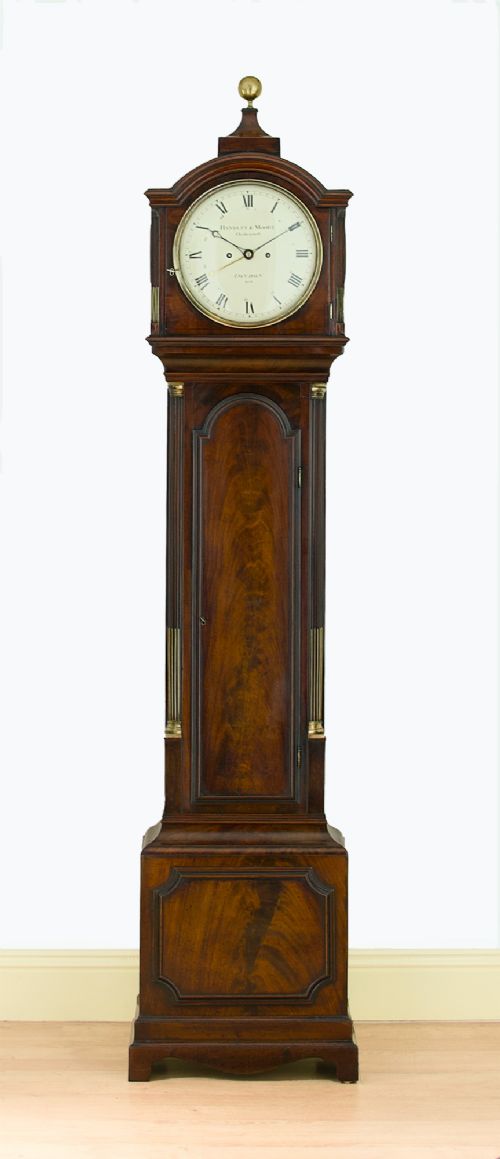
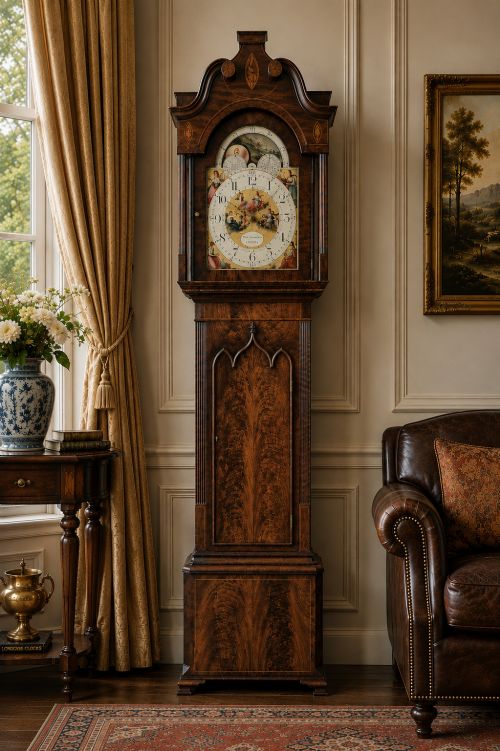
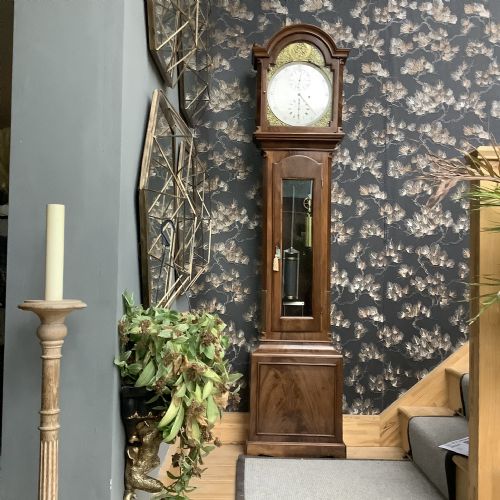
An English mahogany longcase clock stands as a towering piece of horological history, bringing mechanical mastery and stately presence to a room.

English Mahogany Longcase Clock
An English mahogany longcase clock combines tall wooden cabinetry with an intricate weight-driven movement to tell time through swinging pendulums and rotating dials. When searching for an english mahogany longcase clock, buyers encounter floor-standing timepieces spanning the Georgian, Regency, and Victorian periods.
How They Were Made
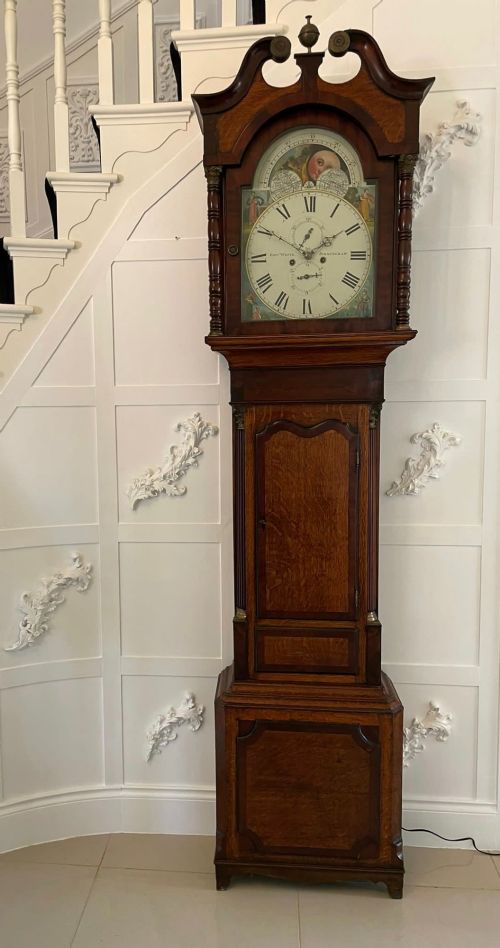
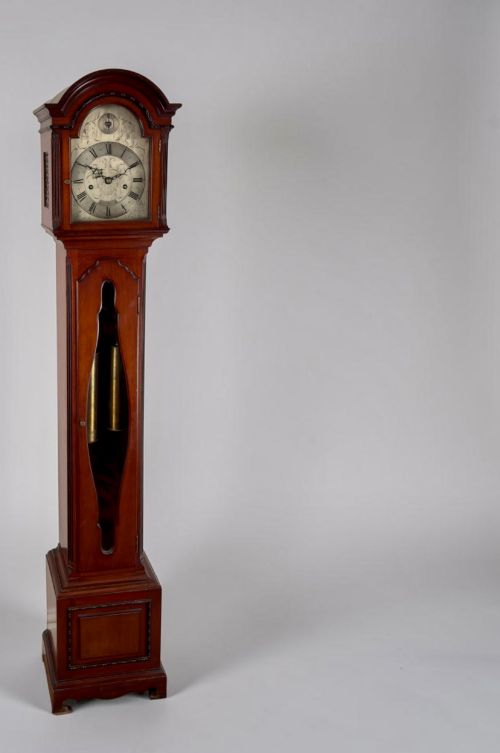
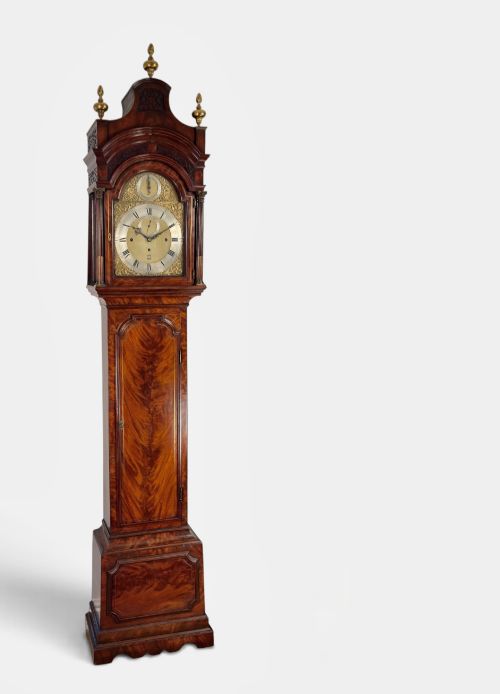
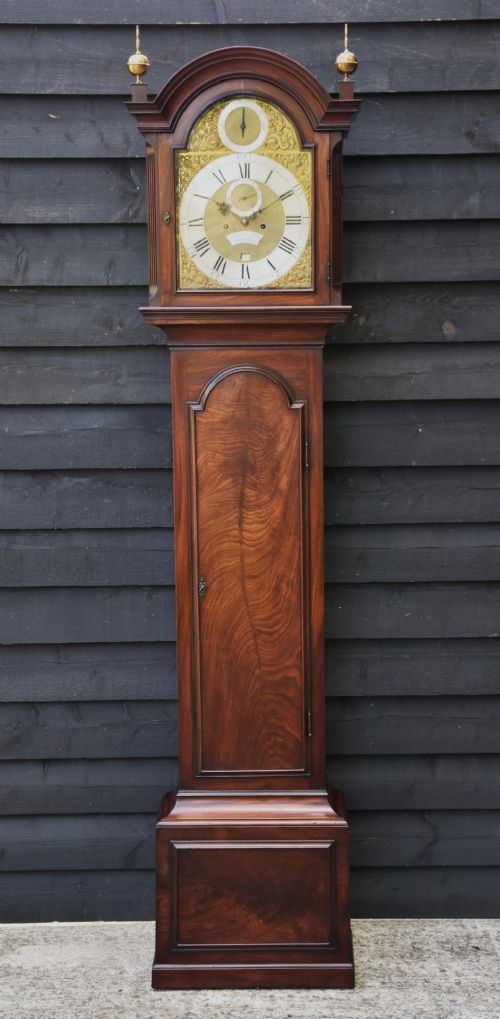
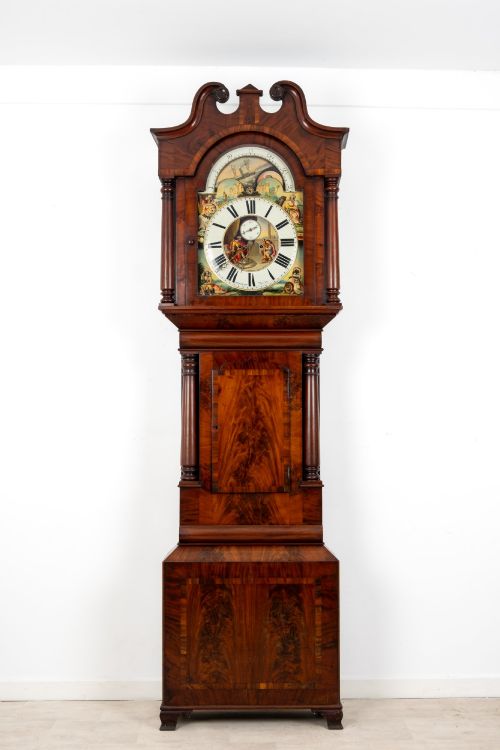
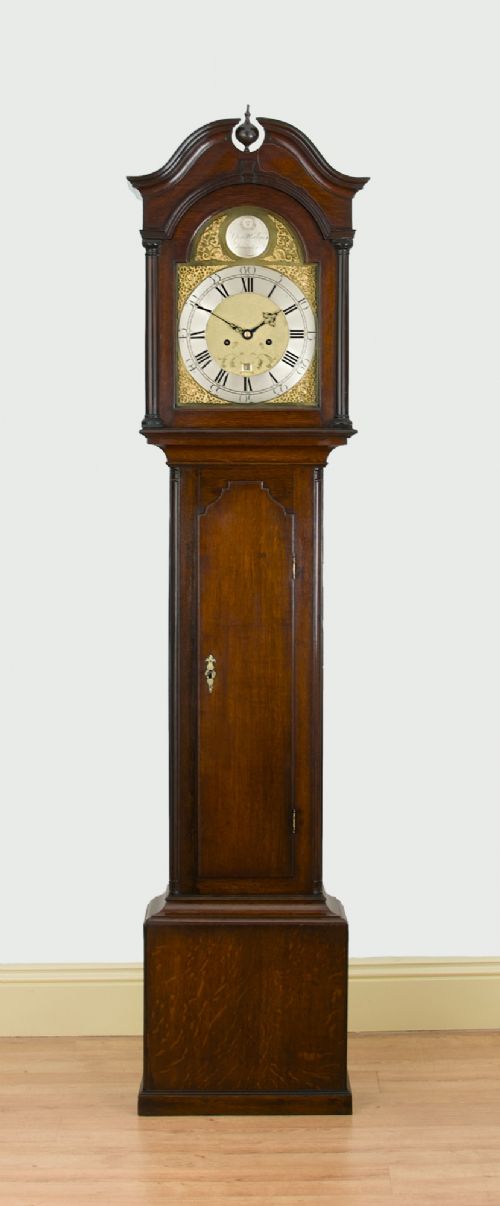
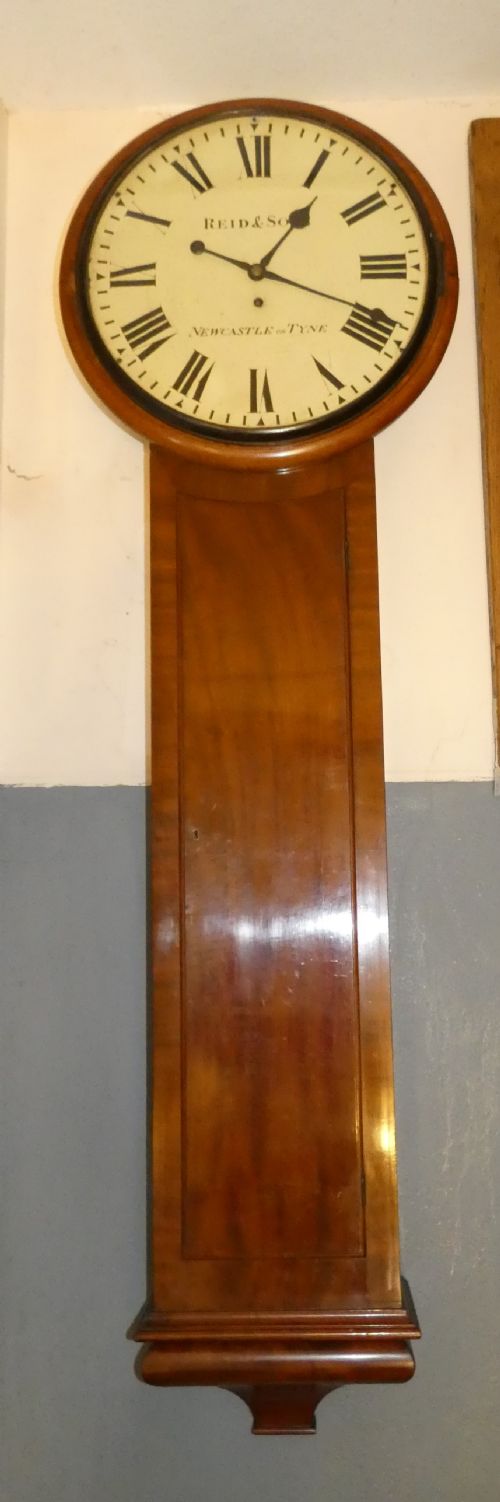
Cabinet makers built the tall wooden housings using mahogany, frequently employing flame mahogany veneer for rich grain patterns alongside secondary woods like oak. Metal components such as brass dials, steel wheels, and glass face covers completed the mechanical housing.
Clockmakers fitted brass or painted iron dials into the hoods, connecting them to weighted gear trains that sat within the trunk. Dial decoration involved hand-painted moon phases, subsidiary seconds rings, and engraved signatures recording the maker and town.
Keep an eye out for Father Time rocking back and forth on the dial while the pendulum swings below.
What Varies in Quality
The distinction between standard timepieces and superior examples lies in the complexity of the movement and the refinement of the cabinet work. Elaborate mechanisms featuring quarter-striking trains, automata, or rolling moon dials separate advanced works from simple time-only or standard eight-day movements.
Case construction dictates visual standing, where well-figured flame mahogany veneer, balanced proportions, and crisp inlay distinguish finer examples from plain constructions. The reputation of the recorded horologist signing the dial also establishes the horological standing of the piece.
Gillett and Johnston of Croydon·John Ellicott of London·Handley and Moore·Samuel Kellett of Bredbury·Parkinson Bros Batley·George Hallifax of Doncaster·Thwaites London·John Denbigh Merton Park·William Moon London·William Allam·John Rainsford Leicester Square·Nevitt of Bristol·Wightman of London·John Thompson London·John Salmon Nantwich·Thomas Lees Bury·Hay Wolverhampton·Furnival Oldham·Stanyer Nantwich·Dwerrihouse and Carter·James Bullock of London·Packer of Reading·Dent of London·Francis Perigal London·Richard Gibbs London
The English Mahogany Longcase Clock Glossary
- Longcase clock
- A tall, weight-driven pendulum clock housed in a wooden floor-standing case. These pieces are frequently referred to as grandfather clocks.
- Moonphase
- A dial mechanism tracking the lunar cycle through a rotating disc showing the phases of the moon. This complication appears on select Georgian and 19th-century dials.
- Flame mahogany veneer
- A sliced wood layer displaying a flamy, figured grain pattern applied to the primary case surfaces. This decorative technique created striking visual depth on high-grade cabinets.
- Quarter-striking
- A movement design that chimes the quarters of the hour on bells or gongs in addition to sounding the full hour. Such complex mechanisms demonstrate advanced clockmaking skill.
- Regulator
- A high-precision clock designed for exact timekeeping and used as a standard to set other watches and clocks. These movements often feature heavy pendulums and dedicated dials.
English Mahogany Longcase Clock: Frequently Asked Questions
How do eight-day movements work?
Eight-day movements utilise two suspended weights that descend slowly down the interior of the trunk as the clock runs. This design requires the owner to wind the gear train via the dial face using a key once every week.
Most traditional longcase clocks adopt this configuration to balance mechanical accuracy with practical maintenance.
Where were these clocks made?
These timepieces originated in workshops across London and various provincial English towns, signed by local horologists. Makers stamped or engraved their names and locations directly onto the brass or painted iron dials.
Regional centres from Yorkshire to the West Country produced distinct cabinet styles and dial artworks tailored to local tastes.
How do you date a longcase clock?
Dating a longcase clock involves examining the dial style, case proportions, and signature engraving against known working periods of the maker. Painted iron dials generally point towards the late 18th and 19th centuries, while brass square dials often suggest earlier Georgian periods.
Cabinet design shifts from restrained architectural lines in early pieces to more exuberant veneers and inlays in later Regency and Victorian examples.