




English Mahogany Dining Set
An english mahogany dining set brings together centuries of cabinet-making craft to anchor the room where people gather.
English Mahogany Dining Set
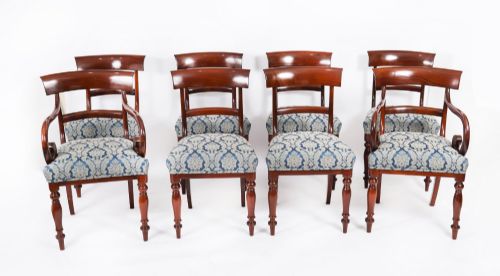
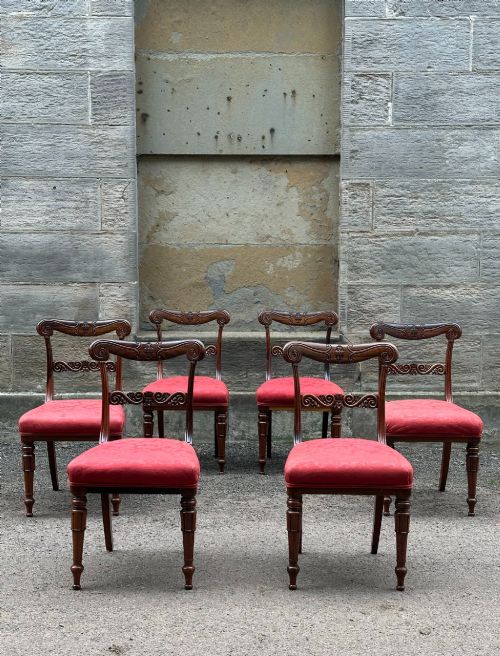
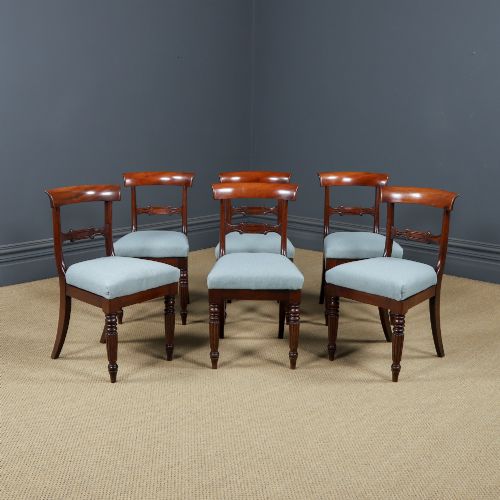
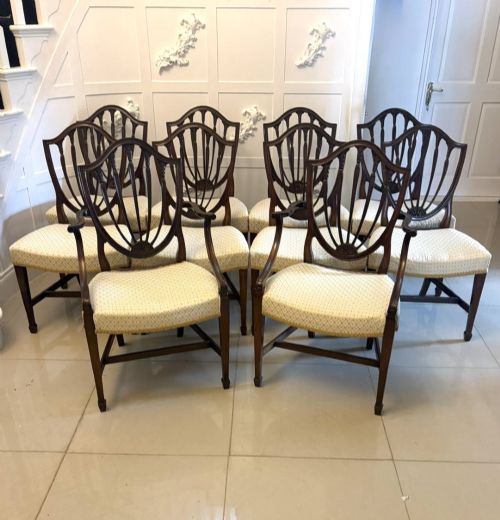
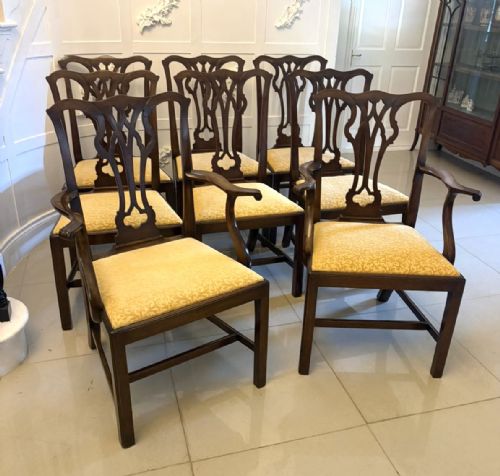
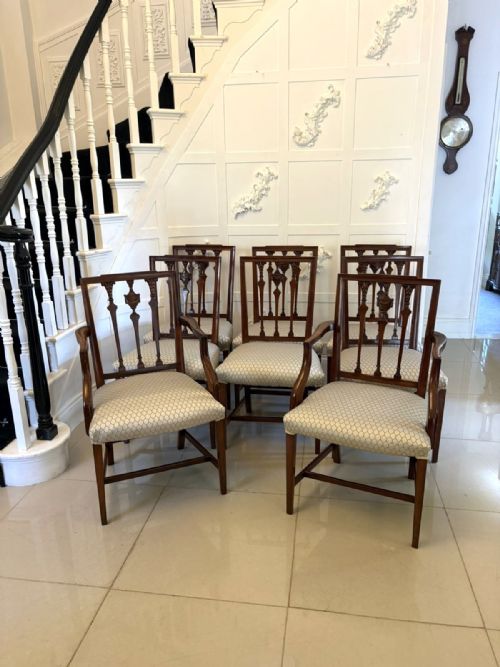
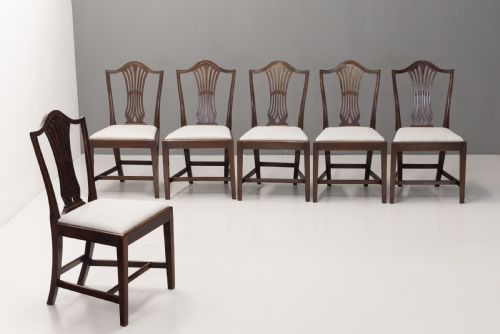
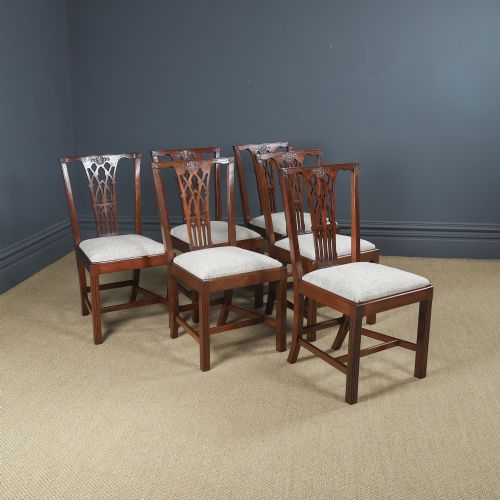
An english mahogany dining set typically comprises multiple seating pieces gathered from the Georgian, Regency, William IV, and Victorian periods. Sets range from intimate groups of four up to grand gatherings of eighteen chairs, frequently incorporating a mix of single side chairs and armchairs known as carvers.
The configurations reflect the changing domestic habits of centuries, moving from the straight lines of the eighteenth century to the curved balloon backs of the mid-nineteenth century. Buyers encounter everything from strict George III originals to later revival styles referencing Chippendale, Hepplewhite, and Queen Anne.
While tables are occasionally implied, the sets themselves consist of dining chairs designed for formal or everyday dining rooms. These groups survive in matched quantities because makers produced them together for specific houses.
Materials and Construction
The structural timber across these pieces is dense tropical mahogany, selected for stability and deep colour, occasionally complemented by secondary woods or rosewood and maple in specific details. Joinery relies on traditional mortise and tenon construction, secured by hand-cut dowels and corner blocks that withstand generations of daily sitting.
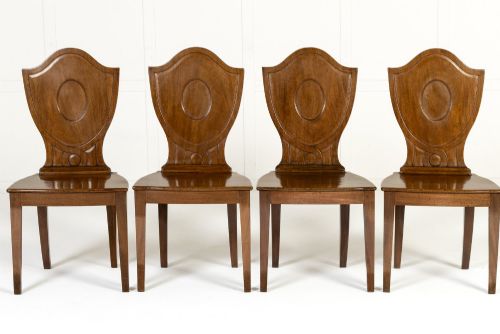
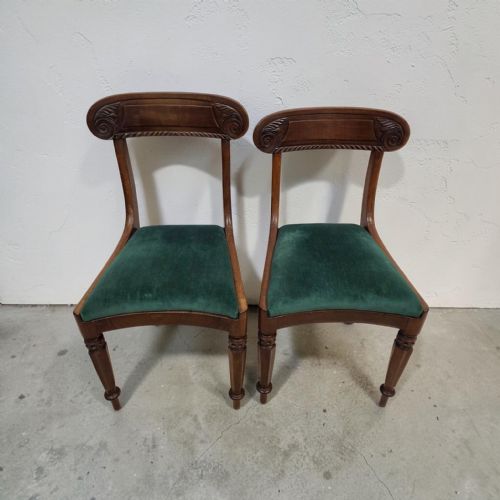
Seating portions are built with webbed frames designed to support drop-in or upholstered pads covered in leather, velvet, horsehair fabric, or contemporary textiles. Carved motifs - such as rope twists, acanthus leaves, shield backs, and bar backs - demonstrate the hand-chiselled execution characteristic of pre-industrial workshops.
Some nineteenth-century diners must have possessed remarkably slim elbows to fit comfortably between the arms of those early carver chairs.
The Markers of Excellence
Quality rests in the crispness of the timber carving and the integrity of the frame construction rather than mere age. Master workshops executed details with razor-sharp edges on reeded legs and deeply undercut foliage, whereas lesser output relied on softer mouldings and mechanical replication.
The survival of original timber patination without excessive stripping dictates the visual stature of a set. Sets that retain their full complement without later mismatched replacements or structural repairs command the highest regard among collectors.
Gillows·Maple and Co·Holland and Sons·Shoolbred·Thomas Chippendale
The English Mahogany Dining Set Glossary
- Carver
- An armchair designed with armrests, traditionally placed at the head of a dining table or paired alongside single side chairs.
- Balloon back
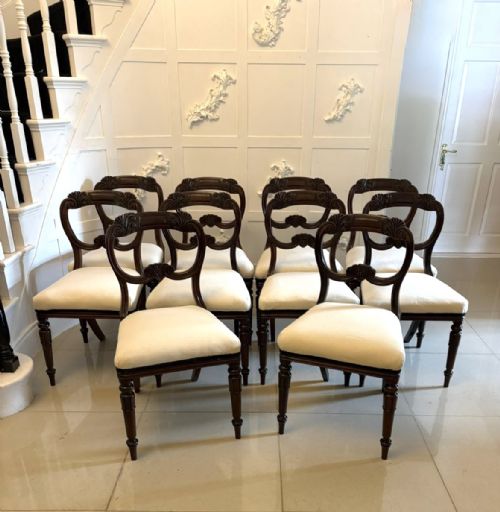
- A rounded, oval-shaped chair back introduced during the Victorian era that resembles the profile of a hot-air balloon.
- Bar back
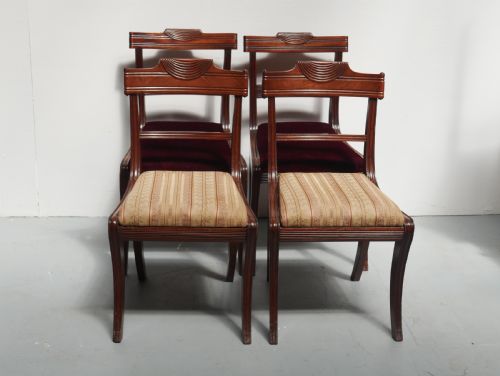
- A horizontal wooden splat spanning the uprights of a chair back, frequently found on Regency and William IV examples.
- Shield back
- A heart-shaped chair back popularised in the eighteenth century by designers such as Hepplewhite.
- Rope twist
- A carved decorative moulding resembling twisted cord, often seen across the cross rails of Regency chairs.
English Mahogany Dining Set: Frequently Asked Questions
How do I count carvers in a set?
Carvers are the armed chairs included within a larger grouping, typically positioned at either end of a long dining table. A notation such as six plus two indicates six standard side chairs alongside two armed carvers.
Sellers record this breakdown because carvers require more intricate woodwork to shape the armrests and supports. Ensuring the arm heights clear your table apron is essential before placing them.
How do I distinguish Regency from Victorian sets?
Regency chairs favour architectural lines, sabre legs, brass inlay, and horizontal bar backs inspired by classical antiquity. They project a leaner, sharper silhouette than their nineteenth-century successors.
Victorian pieces embrace rounded upholstery forms, balloon backs, and cabriole or turned legs with heavier proportions. Examining the curve of the top rail and the turning of the front legs reveals the shift in taste.
Can I mix chairs with an antique table?
Historic dining chairs rarely share a precise provenance with every table they encounter, but matching the primary timber tone creates visual harmony. Mahogany deepens with age, so look for similar reddish-brown hues rather than identical grain patterns.
Pay attention to seat height to ensure guests sit comfortably relative to the table apron. Most antique chairs maintain standard proportions that accommodate standard dining clearances.
How should I care for antique upholstery?
Upholstery fabrics range from period-appropriate leather and velvet to modern woven textiles fitted over traditional webbing. Protect them from direct sunlight to prevent fading of dyed fibres and leather surfaces.
Vacuum seat crevices gently with a soft brush attachment and treat leather periodically with appropriate conservation wax. Avoid harsh chemical cleaners that strip natural moisture from antique hides and textiles.