


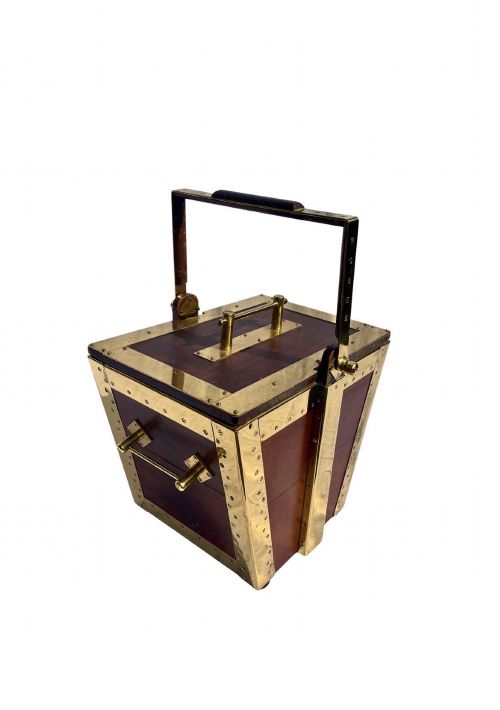


English Mahogany Box
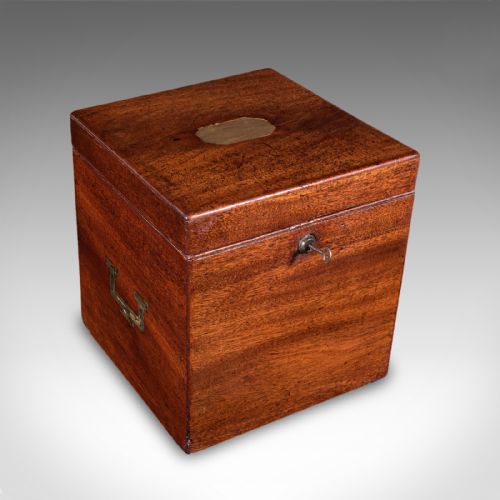
An english mahogany box carries decades of functional history in sturdy timber, serving collectors as a practical container or a handsome desktop display piece.
English Mahogany Box
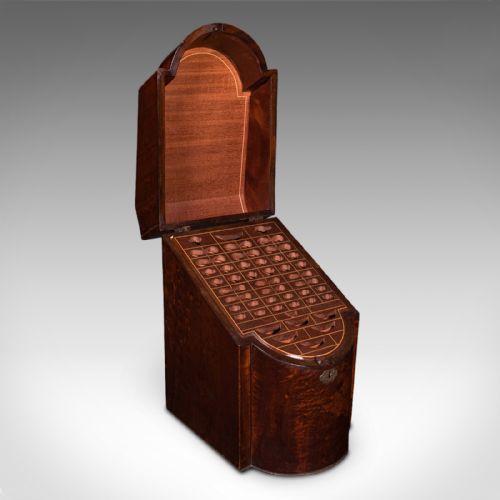
An english mahogany box encompasses a diverse array of utilitarian and decorative containers spanning the Georgian, Regency, and Victorian periods. These pieces range from tea caddies and knife boxes to campaign writing slopes, apothecary cases, and specialist storage cabinets.
Makers designed these timber vessels for specific domestic, professional, or travel purposes, incorporating fitted interiors with compartments, drawers, and brass hardware. Buyers encounter items intended for correspondence, grooming, dining storage, and scientific instruments.
Dating conventions place the majority of these examples across the nineteenth century, reflecting periods when fine hardwoods formed the backbone of quality cabinet making. The selection bridges formal parlor accessories and rugged campaign equipment used on travels.
How They Were Made
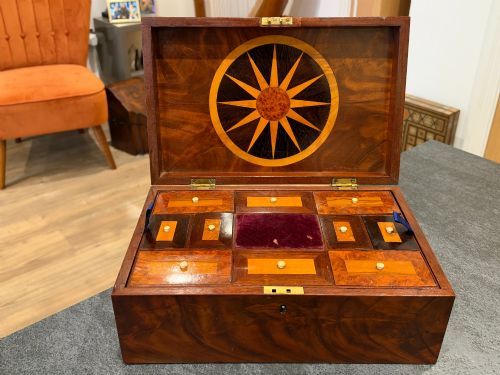
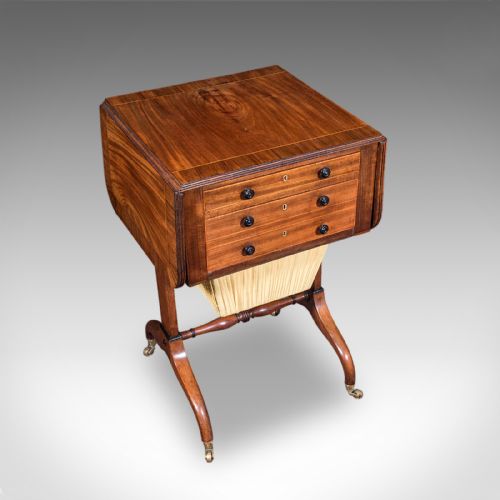
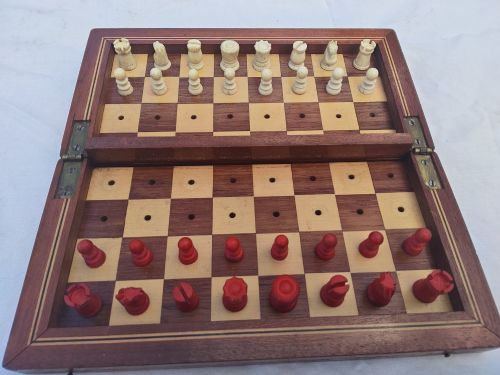
Cabinet makers constructed these pieces primarily from solid mahogany or flame mahogany veneers applied to secondary timbers, often accentuating the grain with contrasting boxwood stringing and wood inlay. Structural integrity relied on precise dovetail joints at the corners.
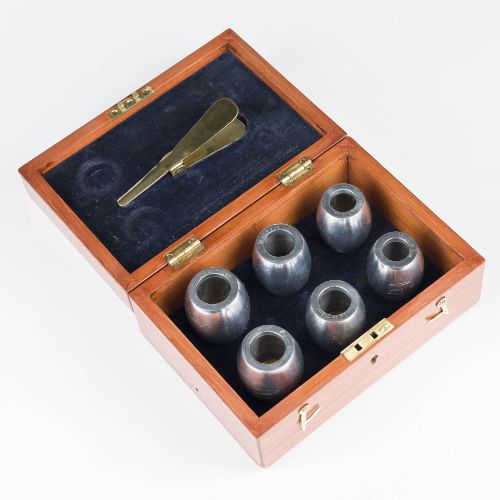
Metal mounts in brass provided reinforcement for travel-heavy items such as campaign writing boxes and apothecary chests, frequently featuring flush-fitting drop handles and secure lockplates. Interior linings utilised velvet, leather, or fabric to protect delicate instruments and tableware.
Surface finishing involved hand-polished wax or shellac friction polishes that highlighted the deep reddish-brown tones and natural figure of the timber. Skilled artisans fitted complex internal mechanisms, secret drawers, and segmented compartments by hand.
English Mahogany Box Retail Price Guide 2026
Typical asking prices for english mahogany box among the pieces listed under this phrase on Sellingantiques today, from the lower quarter to the upper quarter. They describe what is for sale here now, not the wider market.
Listings span Georgian, Regency, Victorian, and Edwardian periods, utilising mahogany, brass, glass, bone, wood inlay, walnut, velvet, and fabric.
What Varies in Quality
The selection of timber grain defines much of the visual merit, with highly figured flame mahogany or burl walnut commanding attention over plain sawn planks. Cabinet makers who matched veneer patterns across lid panels and drawer fronts demonstrated superior skill.
The complexity and completeness of internal fittings distinguish standard storage from exceptional bespoke commissions. Original brass hardware, functioning locks with matching keys, and intact velvet or leather linings elevate the status of a piece.
Joinery execution reveals the workshop standards, visible in tight corner dovetails, smooth drawer actions, and flush-fitting lids that maintain alignment over centuries of humidity shifts. Hand-cut stringing and precise inlay work separate mass production from master craftsmanship.
De Grave Short And Co·Litherland Davies Of Liverpool·Gillows·Mappin And Webb·Stanley London·C Roberson And Co Ltd·Rudolph Ackermann·George Rowney·Walter Jones Sloane Street
The English Mahogany Box Glossary
- Cellarette
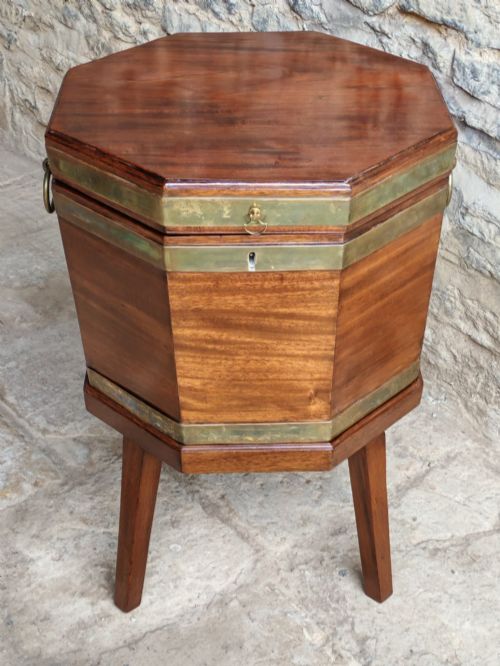
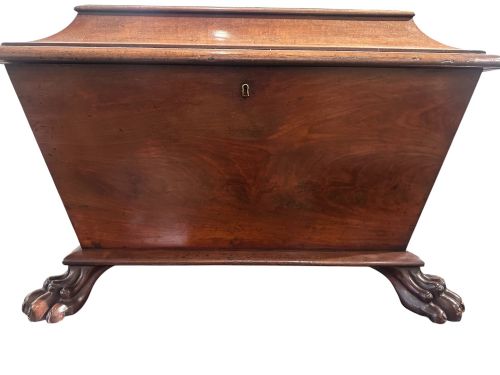
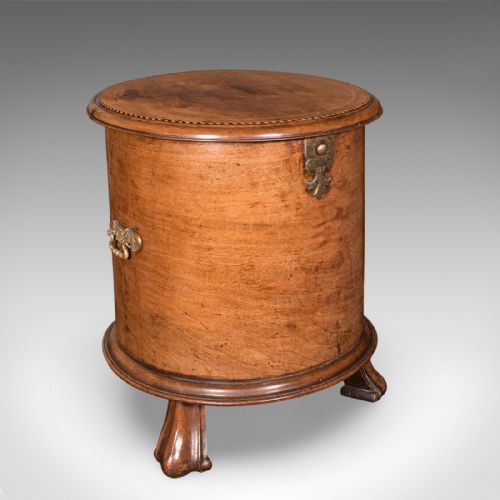
- A freestanding or tabletop wine cooler designed to hold bottles securely near the dining table. Georgian and Regency examples often feature lead linings and internal dividers.
- Campaign box
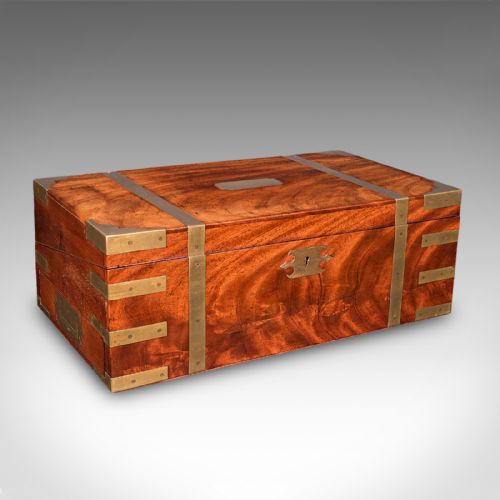
- A portable container made for military officers or travellers featuring recessed brass handles, corner brackets, and robust construction to withstand long journeys.
- Writing slope
- A desktop box with a hinged, slanted lid that opens to reveal a velvet or leather writing surface, inkwell compartments, and hidden document storage.
- Tea caddy
- A lidded container built to store loose tea leaves securely away from moisture, frequently fitted with internal mixing bowls and multiple lidded canisters.
- Flame mahogany
- A decorative timber veneer cut from the branch junctions where the grain swirls into a distinctive torch-like pattern. Cabinet makers reserved this material for primary display surfaces.
English Mahogany Box: Frequently Asked Questions
What is a tea caddy?
A tea caddy is a lidded box designed to protect expensive loose tea leaves from light and humidity. These vessels often include internal glass mixing bowls and lockable compartments.
Regency and Georgian examples display intricate wood inlay and divided interiors tailored for black and green tea varieties.
How do I identify a campaign box?
Campaign boxes feature robust construction with flush-fitting brass corner brackets, recessed drop handles, and secure locking mechanisms. Officers utilised these portable containers during military deployments.
The heavy brass hardware protected the edges from impact during transport across rough terrain.
What is flame mahogany?
Flame mahogany is a highly figured wood veneer cut from specific sections of timber where the grain creates a dramatic, rippling pattern resembling flickering fire. Makers placed these veneers on primary lid surfaces to catch the light.
This decorative finish indicates high-status furniture production during the Georgian and Regency eras.
How were writing slopes used?
Writing slopes served as portable desks containing slanted surfaces for correspondence, inkwell recesses, and hidden stationery drawers. Owners could lock their private letters and financial documents securely inside.
Victorian and Georgian versions often incorporate leather writing pads and secret compartments activated by concealed timber pins.