


English Imari Pattern Plate
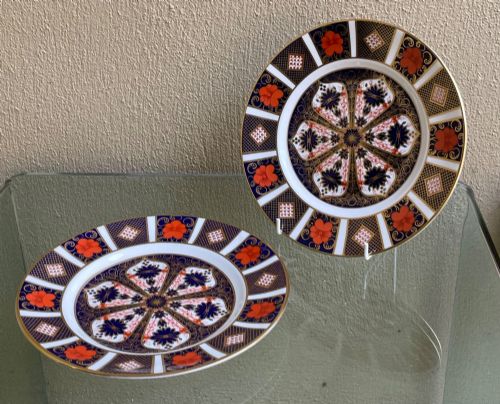
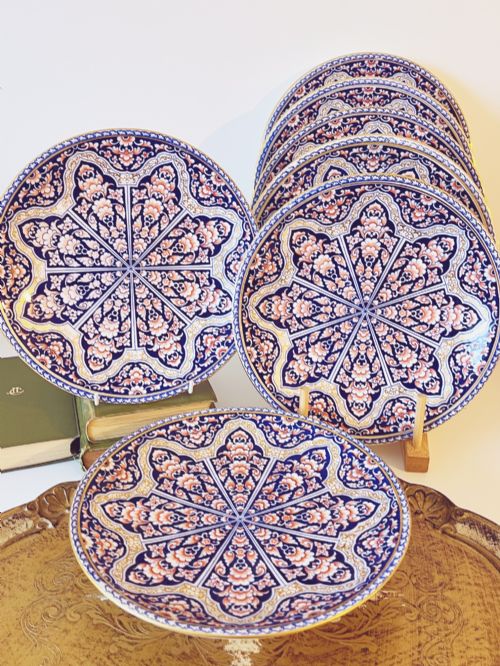
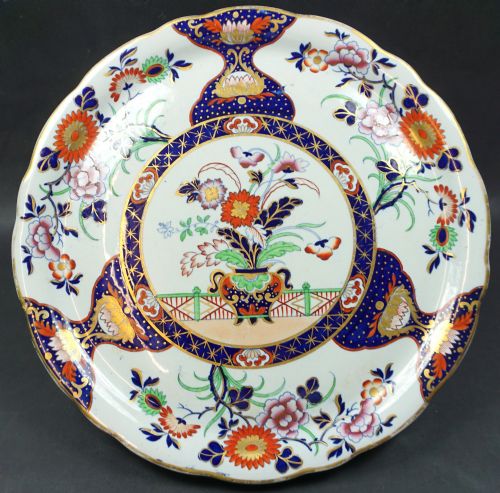
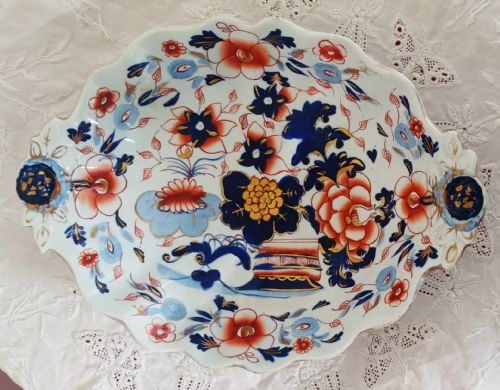
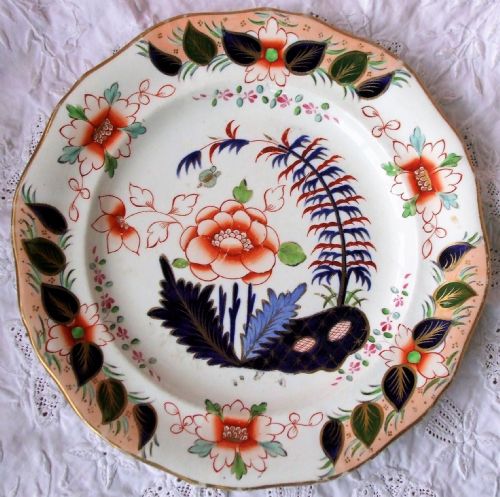
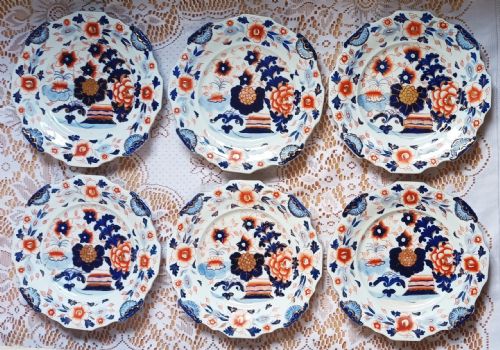
An English imari pattern plate brings vibrant cobalt blue, iron red and gold leaf from East Asian ceramics into traditional British dining rooms.
English Imari Pattern Plate
An english imari pattern plate represents a rich tradition of ceramic decoration spanning the eighteenth, nineteenth and twentieth centuries, heavily inspired by Japanese export porcelain. Buyers searching this phrase typically encounter robust ironstone and refined bone china vessels produced by celebrated English manufactories.
Earlier eighteenth-century wares appear alongside mid-nineteenth and twentieth-century productions, showing how decorators adapted oriental motifs across successive periods. Forms range from simple earthenware plates to elaborate dessert services decorated with dragon, kylin and floral patterns.
Qualities of Distinction
Quality rests upon the precision of the hand-coloured brushwork and the crispness of the transfer-printed outlines beneath the glaze. Superior pieces display carefully managed enamel layers that sit evenly across the ceramic or ironstone surface.
The application of gold leaf distinguishes finer cabinet plates and dessert services from utilitarian wares, as does the clarity of the underlying porcelain or ironstone body. Maker attribution also plays a role, with established factories achieving greater uniformity in their firing and glazing processes.
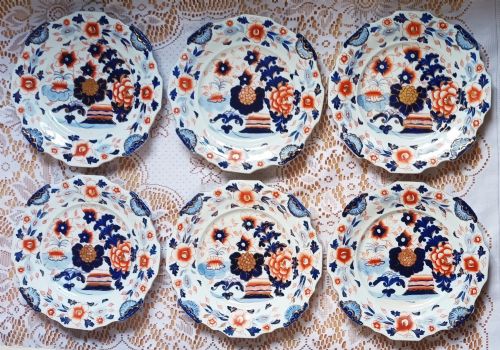
The selection includes individual plates, complete dessert services, and low comports spanning the Georgian and Victorian periods.
Royal Crown Derby·Hicks & Meigh·John Davenport of Longport·Flight Barr And Barr·John Ridgway·Chamberlain Worcester·Minton·Mason·Old Derby
The English Imari Pattern Plate Glossary
- Ironstone
- A dense, heavy type of ceramic patented in the nineteenth century for its durability and resistance to chipping. It served as a robust alternative to porcelain for everyday dining wares.
- Imari Style
- A decorative approach adopting the cobalt blue, iron red and gold palette associated with Japanese export porcelain. English potters interpreted these motifs freely across various forms.
- Comport
- A raised dish or bowl used for serving fruit and desserts as part of a formal table service. These pieces frequently match the smaller plates in a set.
- Bone China
- A soft-paste porcelain incorporating calcined bone ash to create a brilliantly white and translucent body. It allowed makers to produce thinner, more refined plates and tea wares.
- Enamel
- Opaque vitreous colours applied over the fired glaze and fixed in a second, lower-temperature kiln firing. This technique permitted a wider and brighter palette than underglaze painting alone.
English Imari Pattern Plate: Frequently Asked Questions
What is an english imari pattern plate?
An english imari pattern plate is a ceramic or ironstone dish decorated in the distinctive red, blue and gold style inspired by Japanese exports. English potteries produced these wares across the eighteenth and nineteenth centuries for practical dining and display.
These pieces reflect a long-standing European fascination with Eastern ornamentation, adapted by local craftsmen using traditional British materials like bone china and heavy ironstone.
How were these plates used originally?
Households used these vessels for formal dining, serving desserts, and displaying sweets on matching comports during the Georgian and Victorian eras. Many formed part of larger service sets designed to impress guests at the dinner table.
Over time, plates intended for active service transitioned into decorative cabinet pieces valued for their bright colours and intricate pictorial motifs.
Can I use antique plates for dining?
While these pieces were originally created for food service, most collectors prefer to exhibit them as cabinet plates or use them gently for special occasions. Nineteenth-century ironstone is relatively robust, but overglaze enamels and gold leaf can wear down with frequent washing.
Hand washing in lukewarm water without harsh detergents helps preserve the delicate enamel colours and metallic gilding found on these historic surfaces.
How do I tell different periods apart?
Differentiating periods relies on observing the ceramic body, glaze characteristics, and factory marks stamped or painted on the reverse. Early pieces often feature softer paste porcelain bodies, whereas nineteenth-century items typically employ heavy ironstone or bone china.
Stylistic shifts also provide clues, as Georgian examples tend toward hand-painted oriental scenes, while Victorian pieces sometimes incorporate transfer-printing beneath the enamels.