


English Glass Stemware
English glass stemware brings tactile history to the table, offering drinking vessels shaped by centuries of changing social rituals.
English Glass Stemware
When you search for english glass stemware, you encounter drinking vessels spanning several centuries of social history and design. The selection centres heavily upon eighteenth-century forms alongside nineteenth-century examples and later revivals.
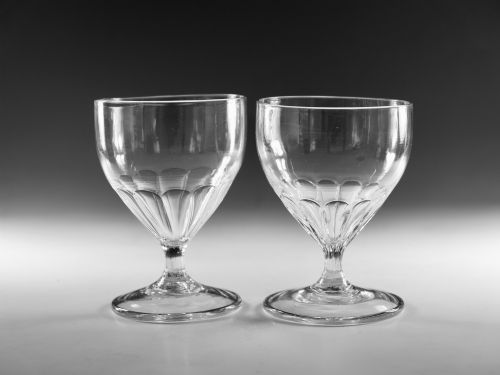
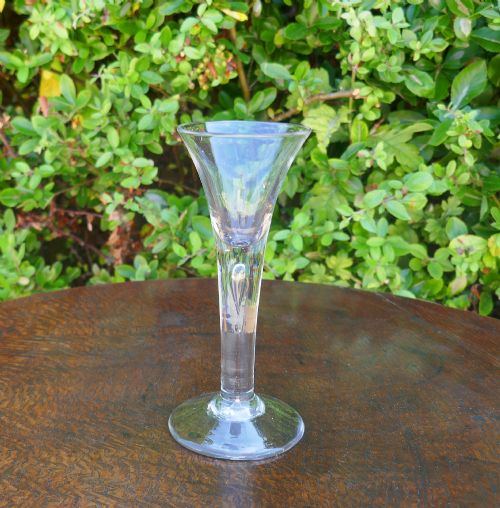
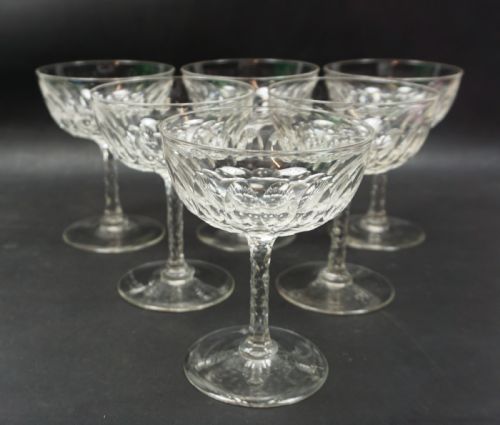
Wine glasses, ale glasses, rummers and champagne coupes dominate the offerings. These vessels served distinct drinking customs, from formal toastings to everyday dining, across periods spanning the Georgian era to the early twentieth century.
Eighteenth-century examples often display intricate stem formations, while later Victorian and Edwardian periods introduce larger scales and facet cutting. The variety reflects shifts in domestic entertaining and manufacturing capabilities over hundreds of years.
How They Were Made
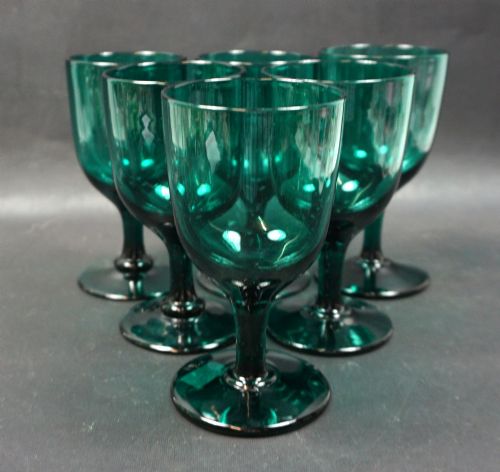
Makers utilised lead glass, lead crystal, flint glass and clear glass to achieve brilliance and weight in these drinking vessels. Hand-blown techniques allowed artisans to manipulate molten material into complex internal formations.
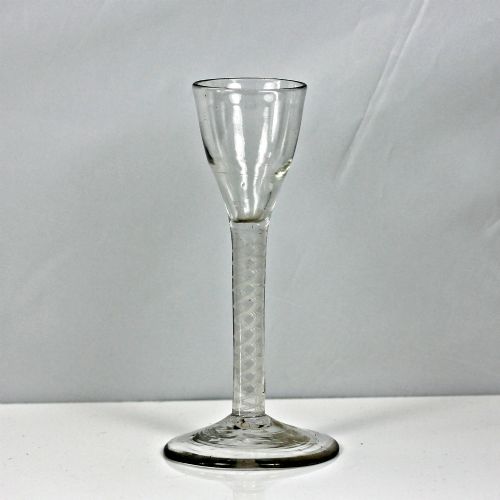
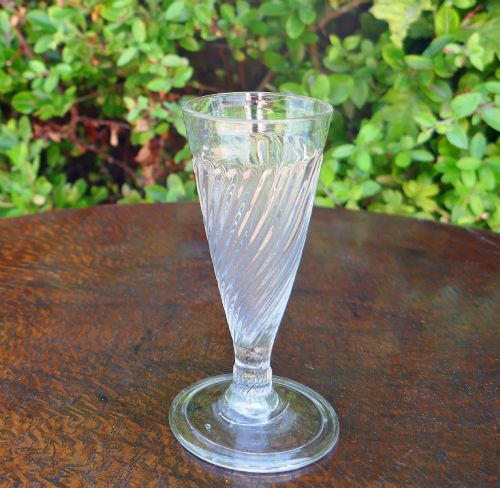
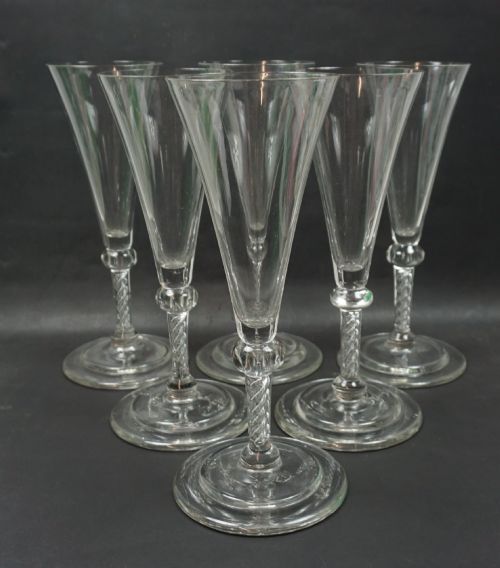
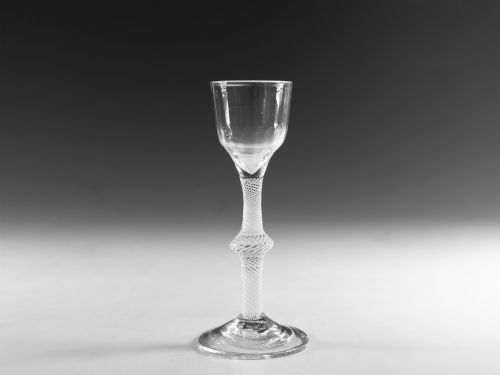
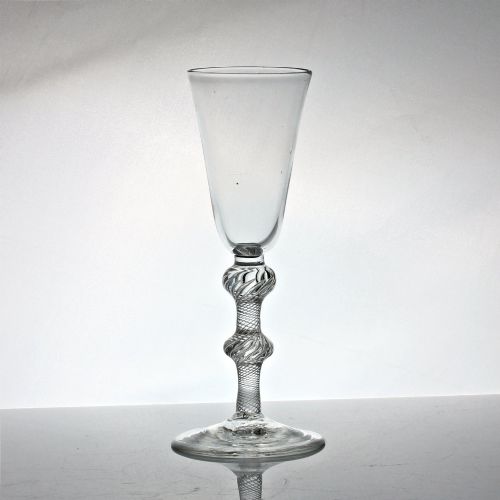
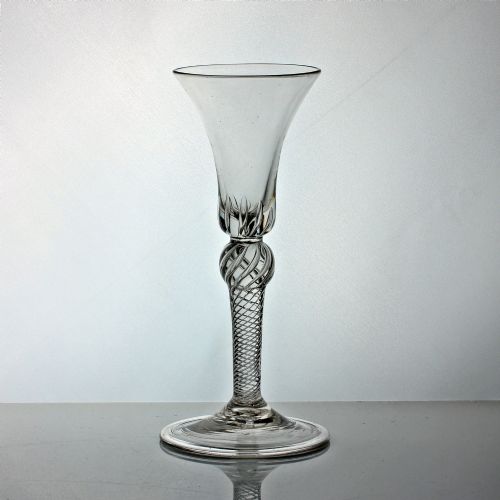
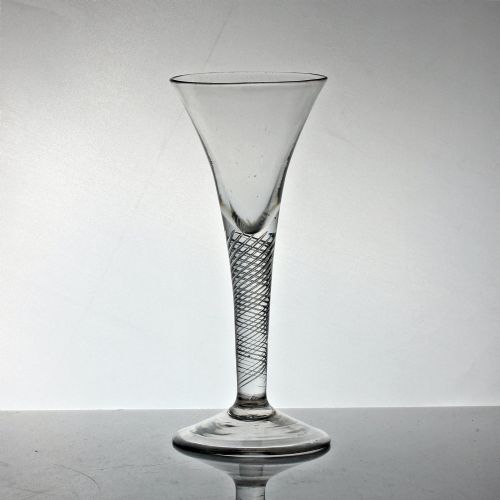
Stems required specialist skill, incorporating enclosed air bubbles, opaque white enamel twists or mixed twist configurations. Additional elements such as folded feet and rib-moulded bowls provided structural stability and decorative texture.
The listings span from the eighteenth century through the Georgian, Victorian, Regency and Edwardian eras into the nineteen-thirties.
What Varies in Quality
Clarity of the metal and precision in the stem formation separate exceptional pieces from standard examples. The complexity of twist threads inside the stem requires immense technical mastery from the glassblower.
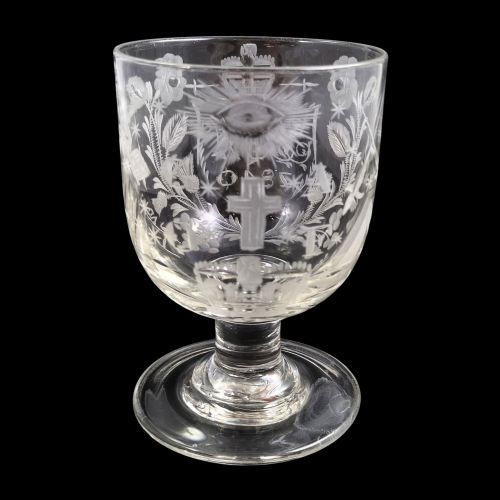
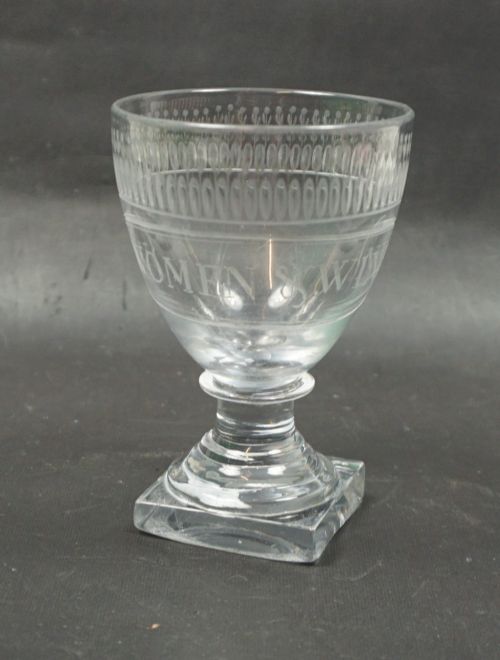
Proportion and balance dictate the aesthetic success of a vessel, particularly when comparing heavy rummers to delicate wine flutes. Surface decoration, such as fine engraving or intaglio work, adds another layer of distinction.
The English Glass Stemware Glossary
- Air twist
- A stem containing spiral threads of elongated air bubbles trapped within the glass. This technique gained popularity during the mid-eighteenth century.
- Opaque twist
- A stem featuring white enamel threads twisted into various patterns inside the clear metal. These threads contrast sharply against the transparent body.
- Folded foot
- A base edge turned underneath to create a thickened rim for added strength. This feature appears frequently on earlier drinking vessels.
- Knop
- A knob or swelling on the stem of a glass, serving both decorative and structural purposes. Multiple knops can appear on a single stem.
- Rummer
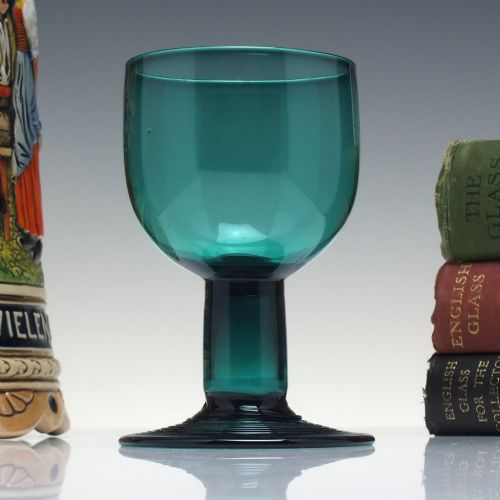
- A large, sturdy drinking glass originating in the Georgian period, typically featuring a short stem and a capacious bowl. They accommodated ale, wine or punch.
English Glass Stemware: Frequently Asked Questions
How do I identify an air twist?
Look closely inside the stem for spiralling threads of air trapped within the glass.
These channels catch the light and create a delicate, silvery appearance when rotated.
Were these glasses used daily?
Many examples served utilitarian functions at the table, though fragile specimens likely saw reserved use during toasts.
Heavier rummers and ale glasses handled robust everyday dining routines.
What is a folded foot?
The rim of the base is tucked underneath during manufacture to form a smooth, rounded edge.
This method added physical weight and structural durability to the base of the vessel.
How do I date antique stemware?
Examine the bowl shape, the composition of the metal and the specific formation of the stem.
Eighteenth-century pieces typically feature distinct twist configurations and pontil marks on the underside.