


English Glass Decanter
An English glass decanter brings functional elegance to the table, combining heavy lead crystal or glass with silver and pewter mounts.
English Glass Decanter
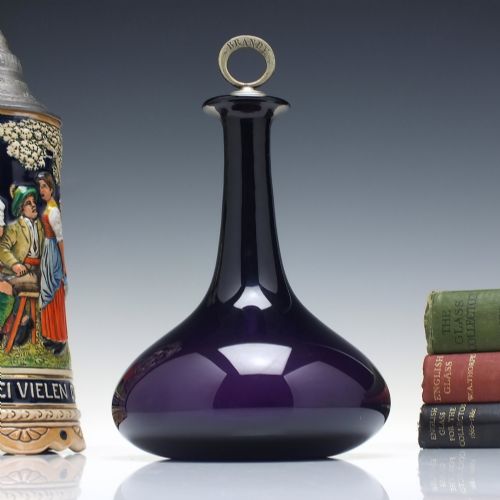
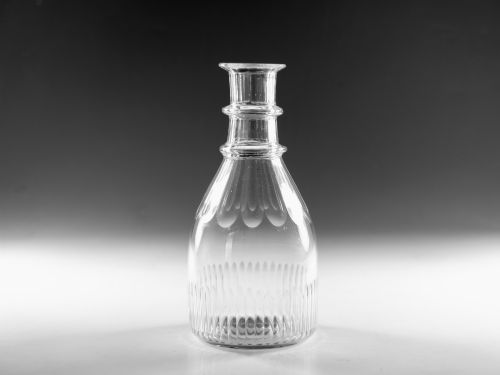
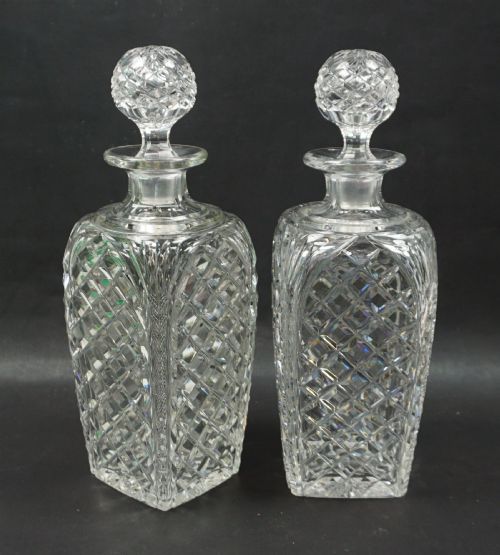
When searching for an english glass decanter, a buyer encounters vessels designed for serving wine, spirits and liqueurs across multiple eras. The selection spans Georgian heavy lead glass and Regency ship's decanters to Victorian cut crystal and Edwardian spirit bottles.
Forms range from mallet and taper shapes to square section vessels and champagne jugs. Everyday options include simple three ring wine decanters alongside mounted whisky noggins and silver plated claret jugs.
Materials and technique
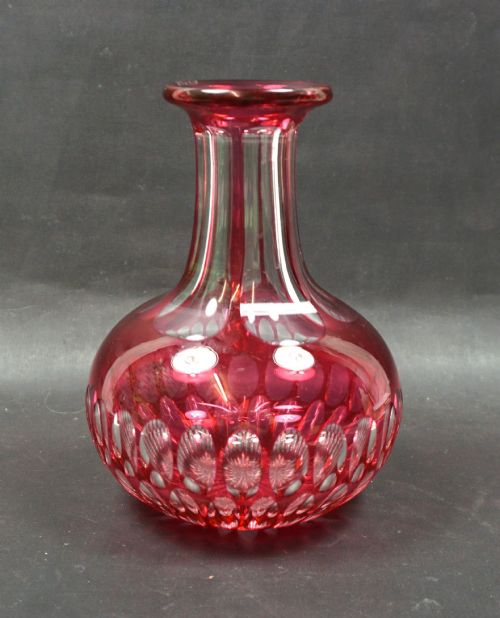
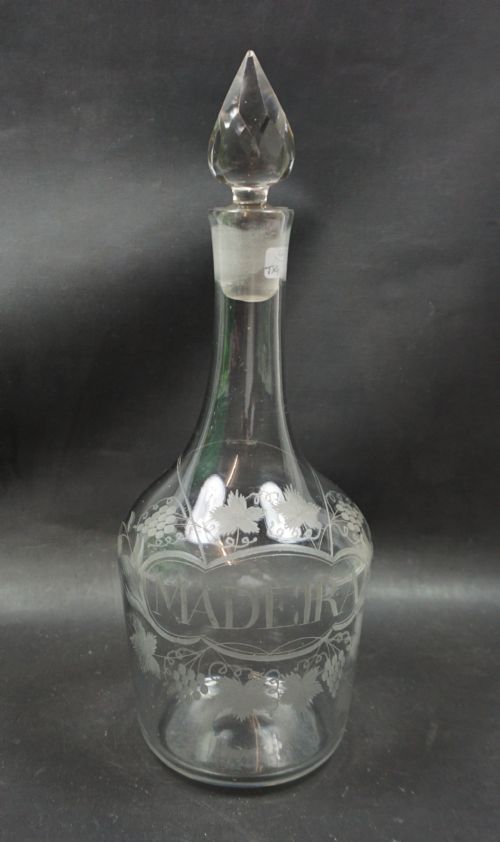
Maker workshops utilised lead glass and crystal, often shaped by blowing and finished with wheel cutting, pillar cutting or facet cutting. Overlay techniques introduced layers of cranberry, amethyst, ruby or dark green glass over a clear core.
Metal mounts incorporate sterling silver, silver plate and pewter. Craftsmen added engraved labels, star motifs, vines and silver collars with hallmarks.
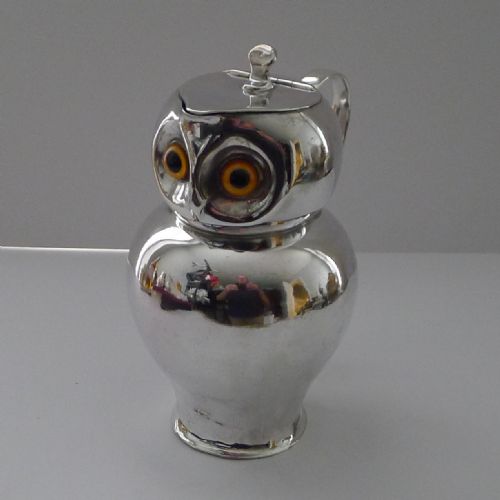
A silver plated owl jug stares back with glass eyes, ready to pour.
Evaluating the pieces
Quality rests upon the clarity and weight of the glass, the crispness of the wheel cutting and the integrity of any metal mounts. Heavy lead crystal with deep, sharp facets sits at the upper end of production.
The relationship between the glass body and its stopper matters greatly, as original matching stoppers elevate a piece. Engraving depth and the presence of clear hallmarks on silver collars further distinguish finer examples.
Liberty Co England·Mappin and Webb·Richardsons Birmingham·Barnsley and Co
The English Glass Decanter Glossary
- Ship's decanter
- A wide based vessel with a low centre of gravity designed to stay stable on a rolling table at sea.
- Noggin
- A small vessel used for serving a single measure of spirits, frequently fitted with a silver lip and handle.
- Neck rings
- Raised horizontal bands encircling the neck of a bottle to provide a secure grip for pouring.
- Overlay
- A layer of coloured glass applied over a clear body and partially cut away to reveal the contrast underneath.
English Glass Decanter: Frequently Asked Questions
How do I date an old decanter?
Dating relies on shape, manufacturing technique and accompanying silver hallmarks. Early Georgian examples often feature mallet profiles and hand blown pontil marks, while later Victorian and Edwardian pieces display machine cut facets and dated assay marks.
Changes in neck ring style and stopper geometry also help narrow down the decade of production. Comparing the vessel to known dated examples in archives provides the clearest guide.
Are ship's decanters only for boats?
Despite the name originating from marine use, these wide based vessels became popular in landlocked dining rooms because their broad footprint prevented tipping.
They function just as well on modern sideboards as they did on naval vessels. The flared profile offers exceptional stability during lively dinner parties.
What is a whisky noggin?
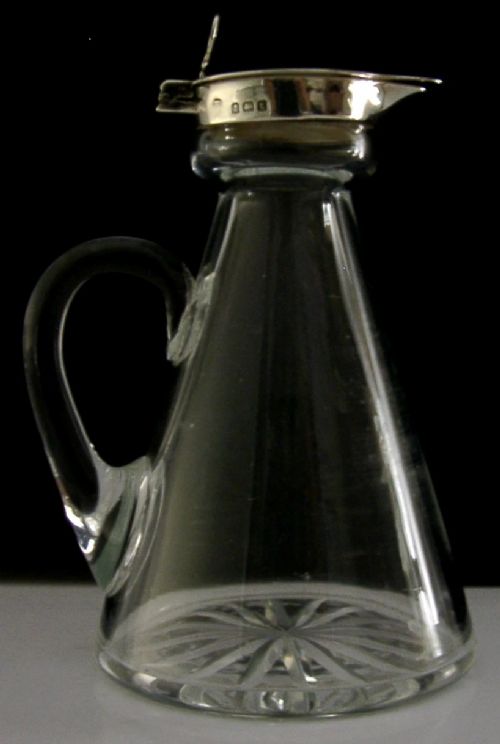
A whisky noggin is a miniature serving jug designed for individual portions of spirits. They typically feature a glass body with a sterling silver rim and a hinged lid or open spout.
These small vessels sat on barware trays alongside larger decanters in Edwardian homes. They were intended for personal pours rather than general table sharing.
How do I clean inside a cloudy decanter?
Cloudiness inside old glass comes from mineral deposits or chemical etching over decades of holding liquid. Gentle washing with warm water and specialised cleaning beads often removes surface film without scratching.
Harsh abrasives and sudden temperature changes must be avoided to protect the historic glass body. Stubborn internal haze sometimes remains permanent if the glass itself has degraded.