



English Farmhouse Dining Table
An English farmhouse dining table brings honest proportions and sturdy domestic history into the daily life of a room.
English Farmhouse Dining Table
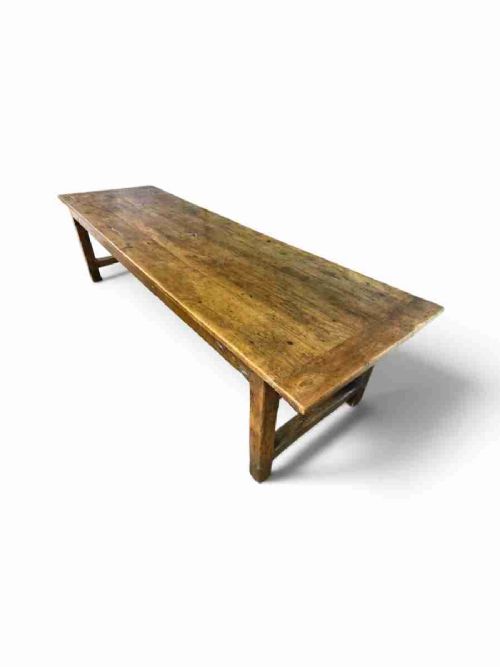
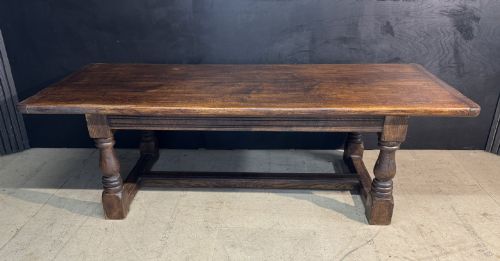
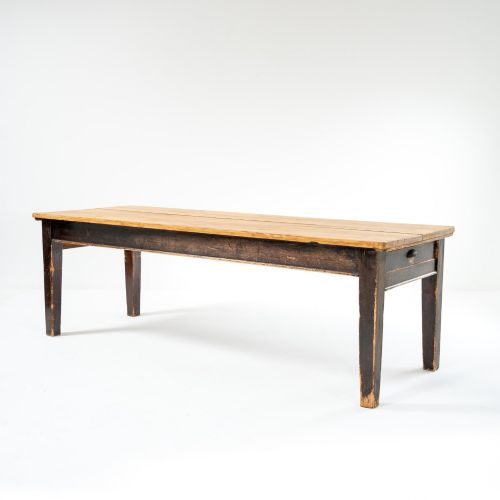
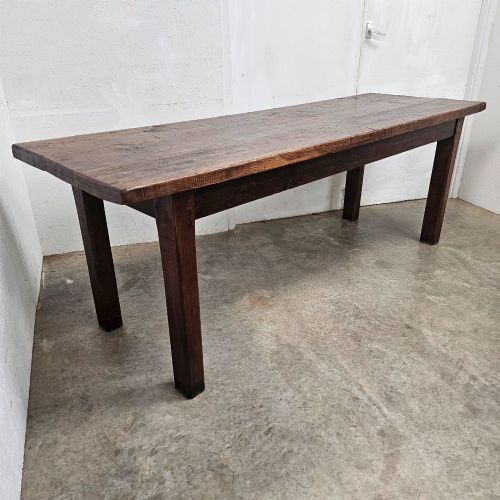
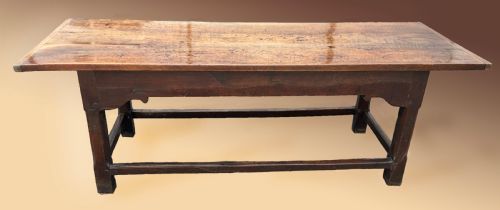
An English farmhouse dining table is a heavy, functional board designed for daily household labour and large family meals. When searching for this phrase, buyers encounter substantial oak refectory forms from the eighteenth and nineteenth centuries alongside more accessible Victorian pine kitchen tables.
The materials span resilient native timbers, with oak dominating the earlier periods and pine appearing frequently in later Victorian examples. These boards show considerable variety in length, accommodating anything from four to twelve diners.
Origins trace through Georgian and Victorian country houses, taverns, and rural kitchens. The surviving pieces carry the marks of utilitarian service, often surfacing in rustic farmhouse or simpler country styles.
How they were made
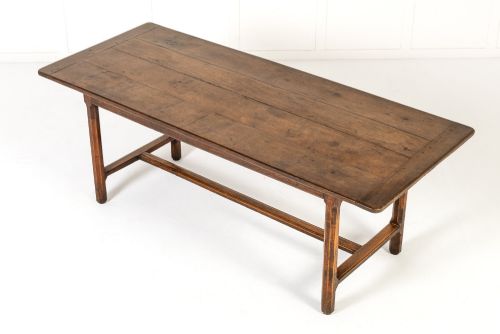
Construction relies heavily on solid native timbers such as oak, elm, and pine, frequently joined by substantial stretchers and thick plank tops. Carpenters utilised durable regional hardwoods like beech and ash for structural legs and framework.
Surface finishes vary from unadorned scrubbed pine to richly patinated oak boards showing the grain of centuries. Brass elements appear occasionally in structural hardware or extending mechanisms on later examples.
Some nineteenth century kitchen tables still carry faint ink stains and flour scars from generations of pastry rolling.
What varies in quality
The distinction between ordinary and exceptional tables rests in the integrity of the timber and the depth of its earned patina. Three-plank oak tops and untouched native elm surfaces command greater appreciation than heavily restored or later composite assemblies.
Proportion and scale also dictate worth, as unusually deep or long formats remain scarcer than standard domestic sizes. The honesty of the construction, free from excessive modern intervention, separates utilitarian survivors from decorative reproductions.
The English Farmhouse Dining Table Glossary
- Refectory table
- A long, narrow dining table originally built for communal eating in monasteries or large halls. These examples often feature substantial length and supportive side stretchers.
- Harvest table
- A large utility table traditionally utilised during seasonal gathering periods. These versions frequently employ pine and offer generous seating capacity.
- Gate leg table
- A drop-leaf table with hinged flaps supported by swing-out legs. This format allows the table to expand or contract according to space requirements.
- Plank top
- A surface constructed from several wide boards joined lengthwise. Quality pieces often highlight specific timber selections like three distinct oak planks.
English Farmhouse Dining Table: Frequently Asked Questions
How do I care for an old timber top?
Maintenance requires simple routines using natural beeswax and soft cloths to nourish the dry wood grain without sealing it entirely. Avoid excessive moisture and direct heat sources that can warp ancient planks.
Regular polishing preserves the accumulated patina built over generations of domestic use. Gentle cleaning keeps the historical surface stable for continued daily dining.
Were these tables used only in kitchens?
Original deployment varied widely across country houses, farmhouses, and village taverns depending on the household scale. They served for food preparation, daily dining, and general family administration.
Over time, many migrated from working kitchens into formal dining rooms or open-plan living spaces. Their sturdy build accommodated every domestic task imaginable.
How can I tell pine from oak examples?
Oak timber appears darker, denser, and displays prominent medullary rays across the surface grain. It belongs predominantly to earlier centuries and substantial refectory designs.
Pine is softer, lighter in weight, and often shows a paler hue unless bleached or scrubbed. It dominates Victorian kitchen tables and harvest variations.
Do these tables suit modern dining chairs?
Mixing historic boards with contemporary seating works well provided clearance under the apron allows comfortable legroom. The simple lines of country furniture adapt easily to various chair styles.
Measuring the height from the floor to the underside of the table remains essential before selecting seats. Older tables often feature lower clearances than modern manufactured furniture.