









English Drinking Vessel
An English drinking vessel carries centuries of social ritual in glass, silver, pewter, and porcelain.
English Drinking Vessel
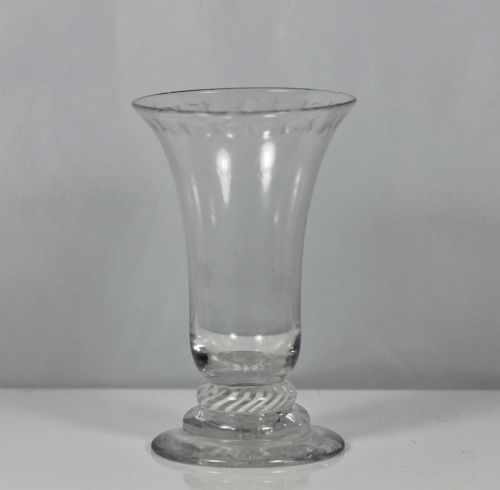
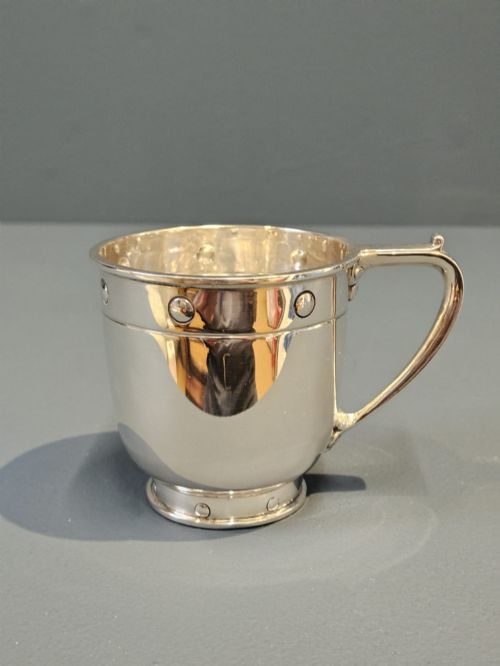
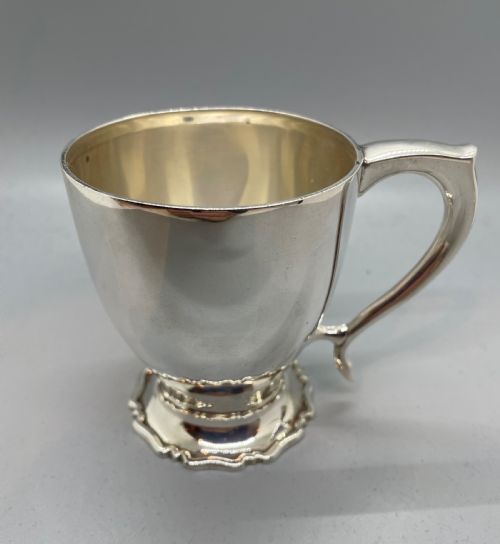
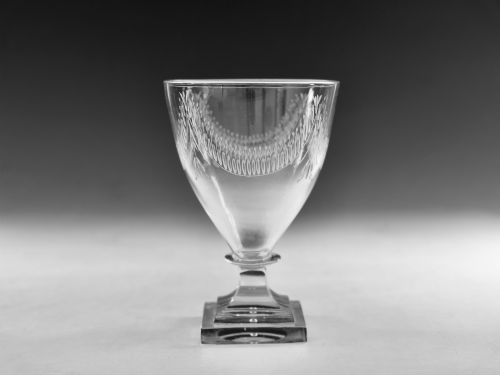
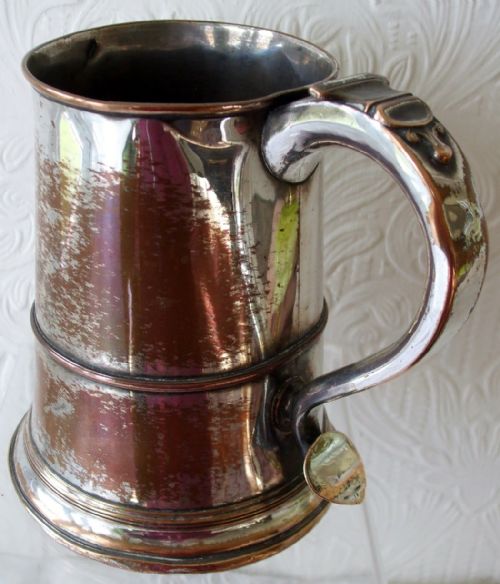
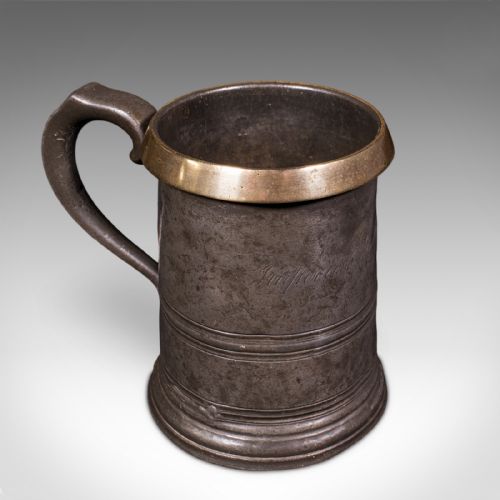
An English drinking vessel spans centuries of social and domestic use, encompassing wine glasses, rummers, tankards, and mugs. When searching for an English drinking vessel, collectors frequently encounter eighteenth-century lead glass stems and nineteenth-century silver or pewter tankards.
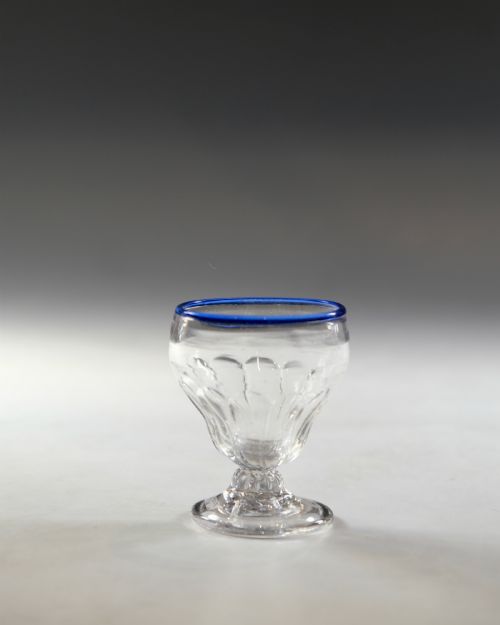
The material evidence on this page ranges from Georgian lead crystal and opaque twists to Victorian public house pewter and mid-century sterling silver. Forms extend from delicate jelly and dram glasses to heavy quart jugs and stirrup cups.
Materials and Technique
Glass vessels rely on lead glass and flint glass manipulated through techniques such as air twists, opaque twists, and facet cutting, often featuring folded feet and bell bowls. Metal vessels utilise sterling silver, Old Sheffield Plate, and pewter, shaped into mugs and tankards with plain bodies or intaglio engraving.
Ceramic examples demonstrate stoneware, salt glaze, and porcelain production, seen in pieces from Doulton Lambeth and Derby with painted or moulded details.
English Drinking Vessel Retail Price Guide 2026
Typical asking prices for english drinking vessel among the pieces listed under this phrase on Sellingantiques today, from the lower quarter to the upper quarter. They describe what is for sale here now, not the wider market.
Fox head stirrup cups ensured riders drank quickly because the vessels lacked flat bottoms and could not be put down.
Judging Quality
Quality rests on the precision of form, the clarity of the material, and the integrity of the manufacture. In glassware, the subtlety of a twist stem or the crispness of a moulded bowl dictates distinction.
For metal and ceramic pieces, the weight of the silver, the definition of an engraved crest, and the sharpness of a salt glaze or porcelain transfer separate standard utility items from works of notable craftsmanship.
Barker Bros·Burgum And Catcott·Doulton Lambeth
The English Drinking Vessel Glossary
- Opaque twist
- A glass stem formed by internal threads of white or coloured enamel glass. This technique gained popularity in mid-eighteenth-century English glassmaking.
- Baluster
- A heavy, swelling stem form reminiscent of architectural pillars. It defines many early Georgian drinking glasses.
- Quaich
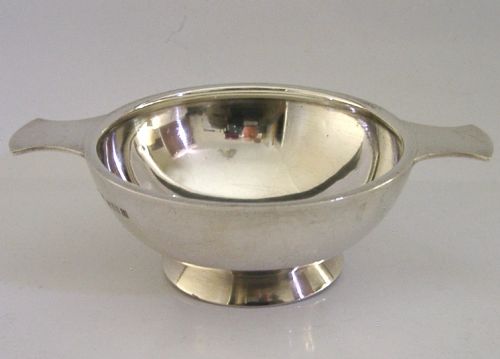
- A shallow two-handled drinking vessel originating in Scotland and adapted in silver. It is traditionally used for whisky.
- Folded foot
- A glass base where the outer rim is turned under to create a smoother, thicker edge. This adds weight and durability to the piece.
English Drinking Vessel: Frequently Asked Questions
How do I identify a Georgian rummer?
A Georgian rummer is a substantial glass goblet with a short, thick stem and a capacious bowl. They emerged around the late eighteenth century for serving heavier wines or ale.
The bowl is frequently round or bucket-shaped, sometimes decorated with intaglio engraving or fluting near the base.
What is a stirrup cup used for?
A stirrup cup is a ceremonial drinking vessel handed to riders before a hunt without them dismounting. They often take animal forms, such as fox heads.
These ceramic or metal vessels were designed with rounded or pointed bases so they could not be set down until emptied.
Are pewter tankards safe to use?
Antique pewter tankards serve primarily as display pieces or historical collections rather than daily tableware. Older compositions may contain lead.
Twentieth-century silver and modern pewter offer alternatives for actual use, while eighteenth-century examples are valued for their metal patination and touchmarks.