




English Delft Display Plate
An English delft display plate brings eighteenth-century tin-glazed earthenware and hand-painted blue and white or polychrome decoration directly onto the wall or dresser.
English Delft Display Plate
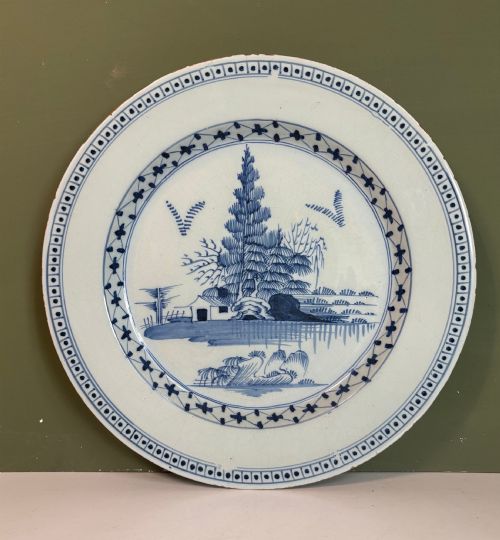
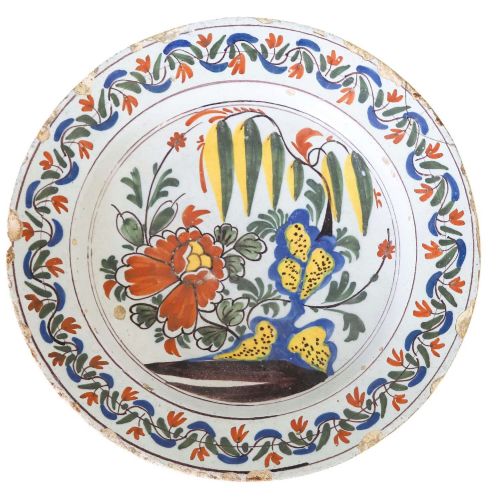
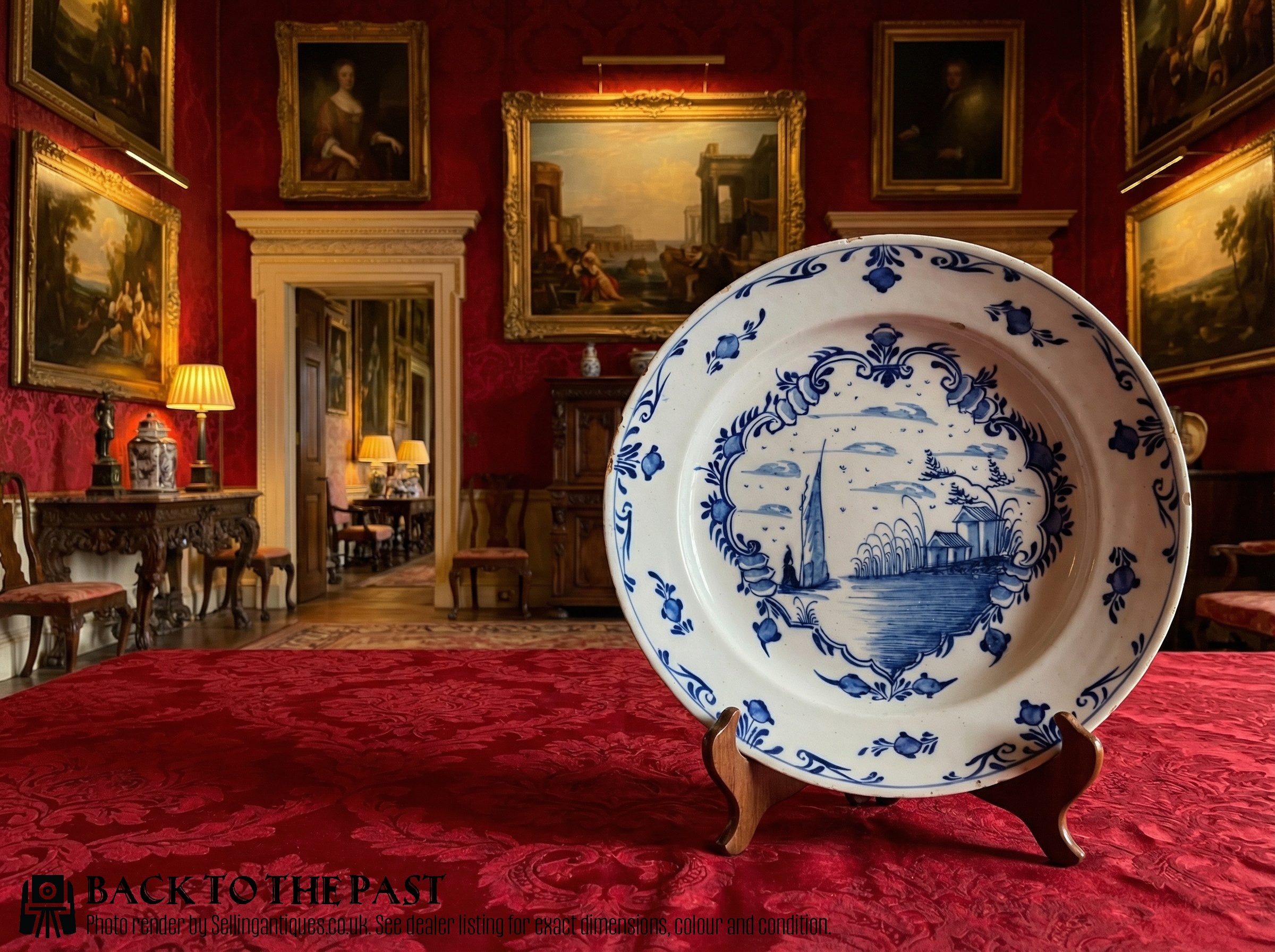
An English delft display plate is a tin-glazed earthenware piece designed primarily for visual impact rather than heavy daily dining use. When searching for an english delft display plate, collectors encounter chargers, standard plates, and larger decorative dishes dating from the eighteenth century. These items frequently feature hand-painted floral motifs, blue and white pigments, or polychrome Chinoiserie scenes.
Materials and construction
Potters shaped these vessels from local clay and earthenware, applying a tin glaze that produced an opaque white or cream surface suitable for painting. Artisans then hand-painted cobalt pigment and other coloured mineral oxides directly onto the raw glaze before firing.
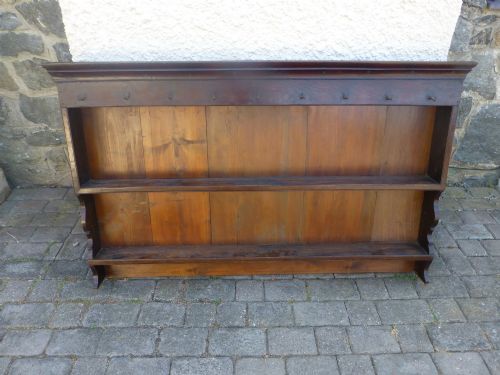
The complementary display furniture relies on traditional cabinet-making materials like solid oak and pine. These wall-mounted or freestanding racks utilise simple joinery to support the weight of heavy earthenware chargers.
English Delft Display Plate Retail Price Guide 2026
Typical asking prices for english delft display plate among the pieces listed under this phrase on Sellingantiques today, from the lower quarter to the upper quarter. They describe what is for sale here now, not the wider market.
Corinthian columns support country pine racks built to hold plates that outlived the empires that baked them.
Factors of quality and execution
The fineness of the hand-painted decoration largely distinguishes the execution of an english delft display plate, separating loose, hastily rendered brushwork from precise botanical or Chinoiserie detailing. Cobalt pigment application ranges from deep, crisp blues that remain stable in the kiln to blurred runs where the colour bleeds into the tin glaze.
Integrity of the glaze surface and the crispness of the earthenware body also dictate the standard of a piece. Larger chargers require greater technical skill from the potter to prevent warping during the high-temperature firing process.
The English Delft Display Plate Glossary
- Tin Glaze
- An opaque white ceramic glaze containing tin oxide, which provides a smooth background for painted pigments.
- Charger
- A large decorative plate, typically measuring twelve inches or more across, intended for display on a wall or dresser rack rather than table service.
- Polychrome
- Decoration utilising multiple distinct colours applied by hand, as opposed to a single monochrome pigment like cobalt blue.
- Chinoiserie
- European artistic interpretations of Chinese and East Asian decorative motifs, frequently found on eighteenth-century earthenware.
- Delftware
- Tin-glazed earthenware produced in England, the Netherlands, and other European centres during the seventeenth and eighteenth centuries.
English Delft Display Plate: Frequently Asked Questions
How were these plates displayed originally?
Eighteenth-century households typically arranged these earthenware plates and chargers on wooden plate racks mounted to walls or integrated into dresser furniture. This kept fragile ceramics visible while protecting them from everyday wear.
Today, collectors continue to use antique oak or pine racks or wall-mounting wire hangers to exhibit these colourful chargers in living spaces.
What is the difference between a plate and a charger?
Chargers are significantly larger than standard dining plates, usually measuring twelve inches or more in diameter. Their substantial size made them ideal centrepieces for visual display on dresser shelves.
Standard plates were produced in smaller formats for occasional service or grouped display alongside the larger chargers.
How do I identify polychrome decoration?
Polychrome pieces incorporate several different coloured pigments, such as reds, yellows, and greens, alongside or instead of traditional blue and white cobalt. Artisans painted these mineral colours directly onto the unfired tin glaze.
This multi-coloured technique allows collectors to date certain plates to specific mid-eighteenth-century workshops, including production centres like Lambeth.
Are these plates suitable for daily use?
Tin-glazed earthenware is relatively soft and prone to chipping, and historic glazes can be sensitive to moisture and modern detergents. These pieces are meant for visual appreciation and careful display rather than active dining.
Proper care involves keeping them secure in plate racks or hanging them safely away from high-traffic household areas.