




English Cut Crystal Decanter
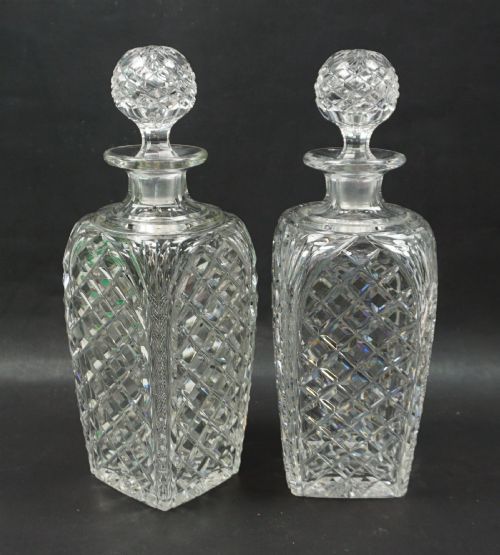
An english cut crystal decanter brings heavy lead glass, deep wheel-cut facets and polished silver mounts to the sideboard.
English Cut Crystal Decanter
An english cut crystal decanter sits squarely within a domestic tradition of serving spirits, wine and liqueurs from the Georgian era through to the mid-twentieth century. The selection ranges from wide-bottomed ship's decanters designed to hold steady at sea to slender claret jugs and square-section spirit bottles fitted with sterling silver or silver-plated collars.
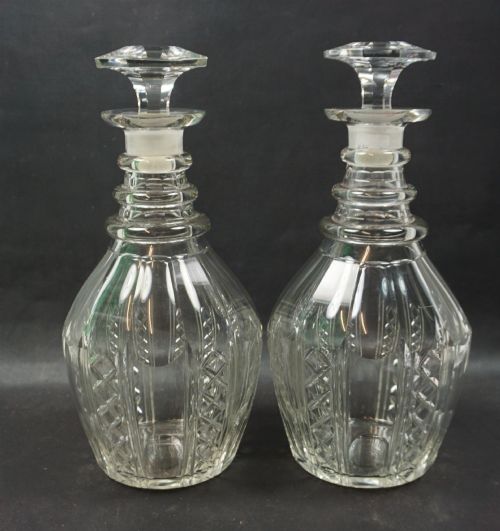
Georgian and Regency examples rely on heavy lead glass blown into moulds and hand-cut with geometric flutes, pillar panels and concentric neck rings. These early forms often present simple stoppers matching the body cut, prioritising weight and optical clarity over elaborate surface engraving.
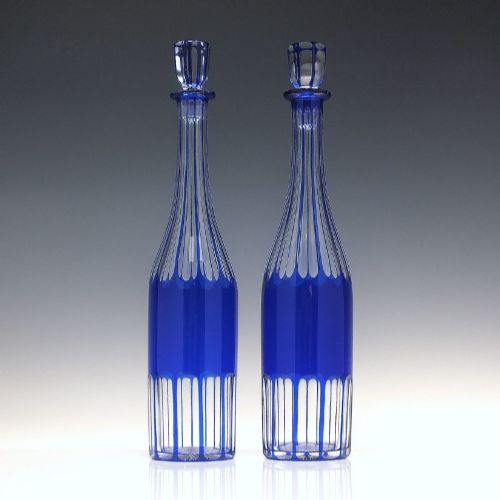
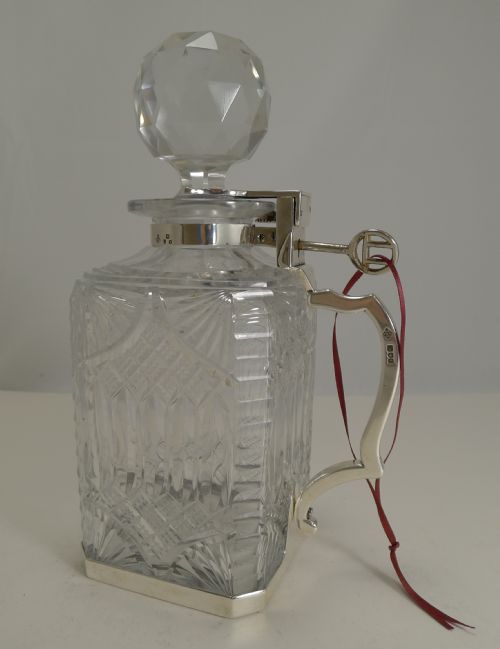
Victorian and Edwardian iterations introduce more varied silhouettes, including ruby overlay glass, engraved floral motifs, and mechanical locking frames known as tantalus sets. Later pieces from the Art Deco period lean into clean geometric lines paired with stark sterling silver mounts, shifting the visual weight towards crisp industrial angles.
Materials and construction methods
The body of an english cut crystal decanter is formed from heavy lead glass, molten and blown into iron or wooden moulds before undergoing intensive hand-cutting on a stone wheel. The high lead content gives the glass its dense weight, resonance and refractive sparkle, allowing artisans to grind deep facets that catch the light from every angle.
Metalwork forms an integral part of many pieces, with sterling silver and silver-plated collars, mounts and stoppers added by silversmiths to secure the neck and mount hinged pouring lips. These metal mounts frequently carry full hallmarks indicating the assay office and date of manufacture, grounding the glassware in a precise year and maker's workshop.
English Cut Crystal Decanter Retail Price Guide 2026
Typical asking prices for english cut crystal decanter among the pieces listed under this phrase on Sellingantiques today, from the lower quarter to the upper quarter. They describe what is for sale here now, not the wider market.
Several pieces include locking tantalus frames, originally designed to keep the servants from sampling the master's whisky.
Distinguishing quality across the range
Quality rests upon the crispness of the wheel-cutting and the physical substance of the glass itself. Superior examples demonstrate deep, sharp facets with polished floors where the grinding wheel met the surface, whereas lesser pieces show shallow, rounded cuts with dull, unpolished troughs.
The weight and balance of the vessel dictate its standing, with finer decanters possessing a thick, stable base and a matching numbered stopper ground specifically to fit that individual neck. The quality of the accompanying metalwork - whether solid sterling silver with clear assay marks or plated mounts - further elevates the piece from a simple utility container to a formal service item.
Richardsons·Barnsley & Co·Mappin & Webb·Hukin and Heath
The English Cut Crystal Decanter Glossary
- Lead crystal
- Glass containing a significant proportion of lead oxide, which increases the material's weight, refractive index and softness for deep cutting. This composition allows artisans to achieve high optical clarity and brilliant light dispersion.
- Ship's decanter
- A form characterised by a broad, heavy base that tapers outward toward the bottom to prevent tipping on rolling ocean vessels. The low centre of gravity made these practical for dining at sea during the Regency period.
- Neck rings
- Horizontal protruding bands encircling the neck of a decanter, typically numbering two or three. They provide a secure grip for the hand when pouring heavy liquids.
- Ruby overlay
- A dual-layer glass technique where a thin casing of red glass is fused over a clear crystal core before being cut through to reveal the transparent layer beneath. This method creates high-contrast geometric and floral patterns.
- Tantalus
- A locking wooden or metal frame designed to secure spirit decanters against unauthorized access while keeping the contents visible. The locking mechanism traps the stoppers so the bottles cannot be removed without a key.
English Cut Crystal Decanter: Frequently Asked Questions
How do I date an english cut crystal decanter?
Dating relies primarily on the silhouette of the body, the shape of the stopper, and any accompanying silver hallmarks. Early nineteenth-century pieces often feature thick lead glass with three distinct neck rings and hand-ground pontil marks.
Later Victorian and Edwardian examples may carry silver collars stamped with date letters, while Art Deco pieces display streamlined profiles and stark geometric cutting.
Are ship's decanters stable on modern tables?
The exceptionally wide base designed to keep the vessel upright during rough seas makes these pieces remarkably stable on any flat surface. Their low centre of gravity prevents accidental tipping during lively dinner parties.
This practical geometry ensures they remain functional for daily service as well as display.
What is the difference between a decanter and a claret jug?
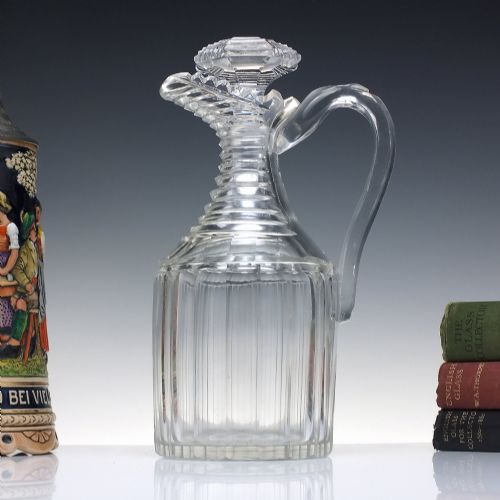
Decanters generally feature a fitted glass stopper and a straight or slightly tapered neck intended for long-term storage and serving of spirits or fortified wines. Claret jugs incorporate a hinged silver or metal pouring spout with a handle for immediate table service.
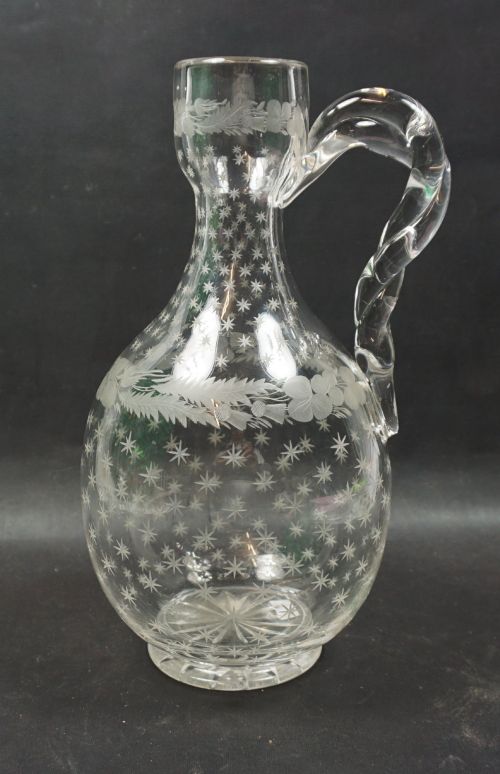
Jug forms often showcase elaborate engraving on the crystal bowl to complement the metal mount.
How should I clean inside a cloudy decanter?
Cloudiness caused by mineral deposits or old wine residue is best treated with non-abrasive cleaning methods rather than harsh chemical agents. Gentle swirling with warm water, mild detergent, and specialised cleaning beads helps lift stubborn film without scratching the inner surface.
Allow the vessel to air dry completely upside down on a specialised drying rack before inserting the stopper.