




Vintage Crystal Claret Jug
A vintage crystal claret jug brings poured red wine to a formal dining table with cut glass weight and silver mounts.
Vintage Crystal Claret Jug
A vintage crystal claret jug is a vessel designed specifically for serving red wine, combining a glass body with a metal pourer and handle. When you search for a vintage crystal claret jug, you encounter pieces spanning from the nineteenth century through the Edwardian period and into the Art Deco era.
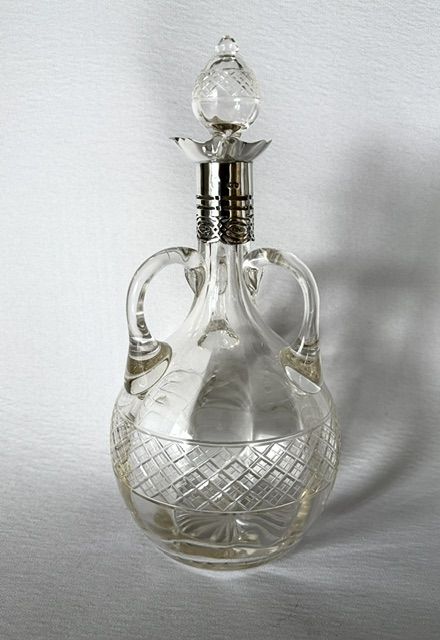
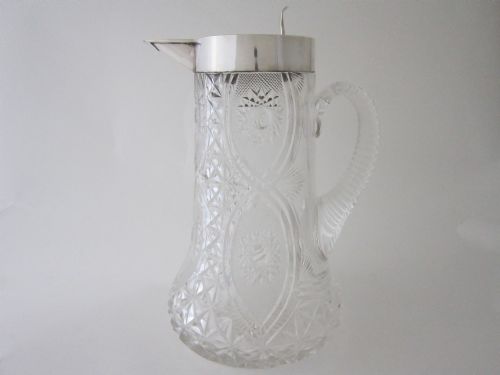
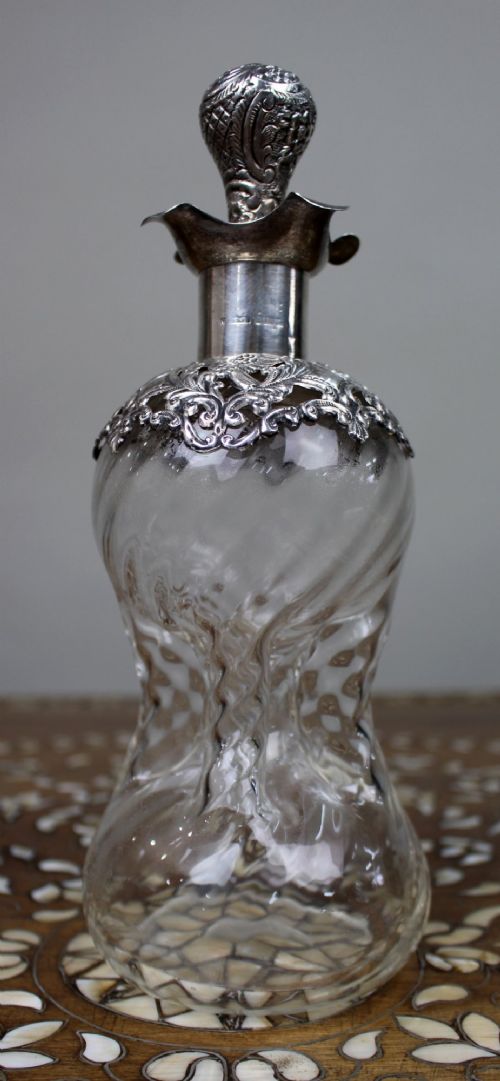
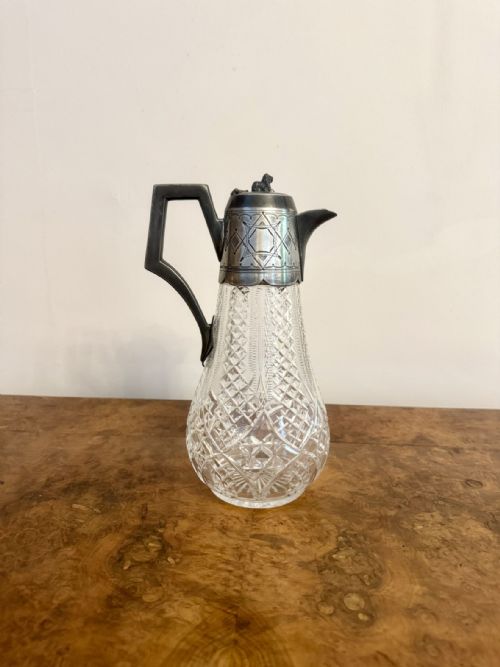
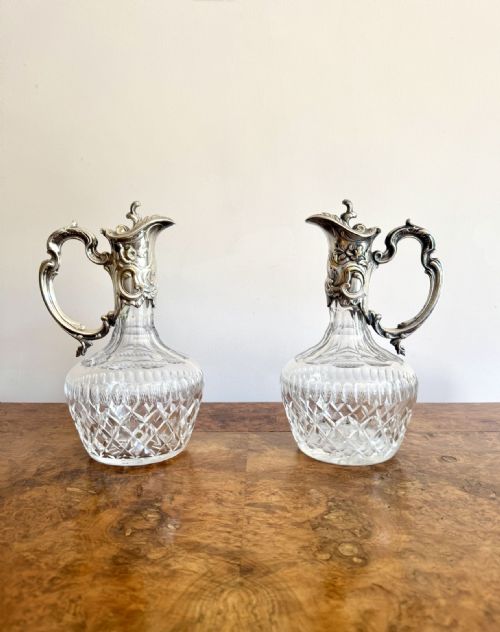
The most common examples on this page date from the Edwardian period and the late nineteenth century. These items typically feature heavy cut glass bodies paired with silver plate or sterling silver mounts.
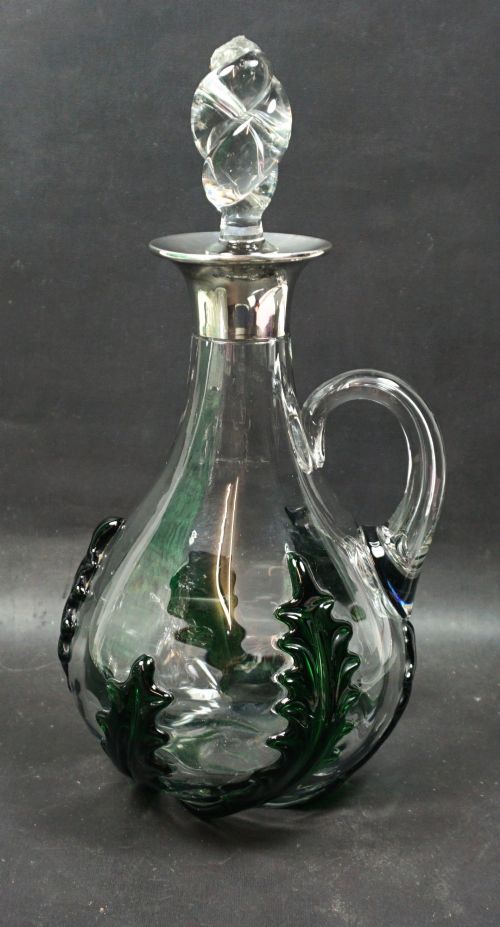
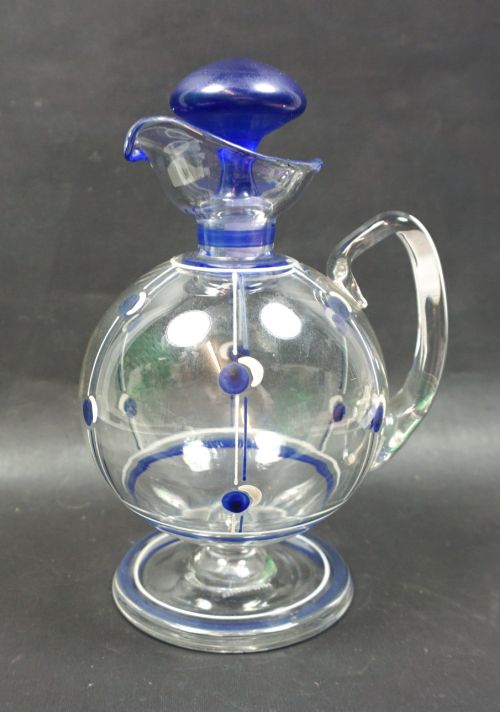
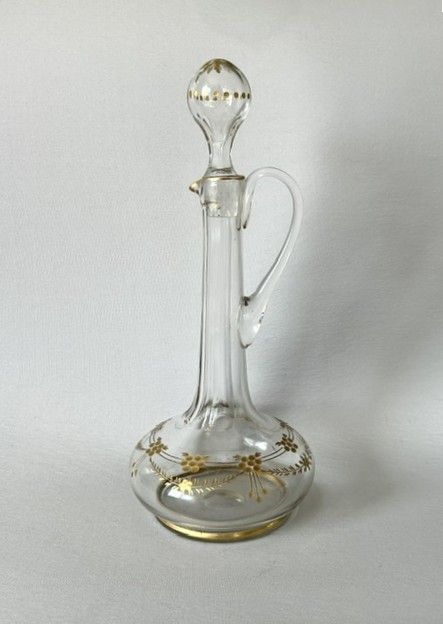
Makers produced these serving vessels in various forms, including ewers, decanters, and dedicated claret jugs. Alongside British examples, pieces from Bohemia and Czechoslovakia appear with coloured glass, enamel decoration, or gilding.
Materials and construction
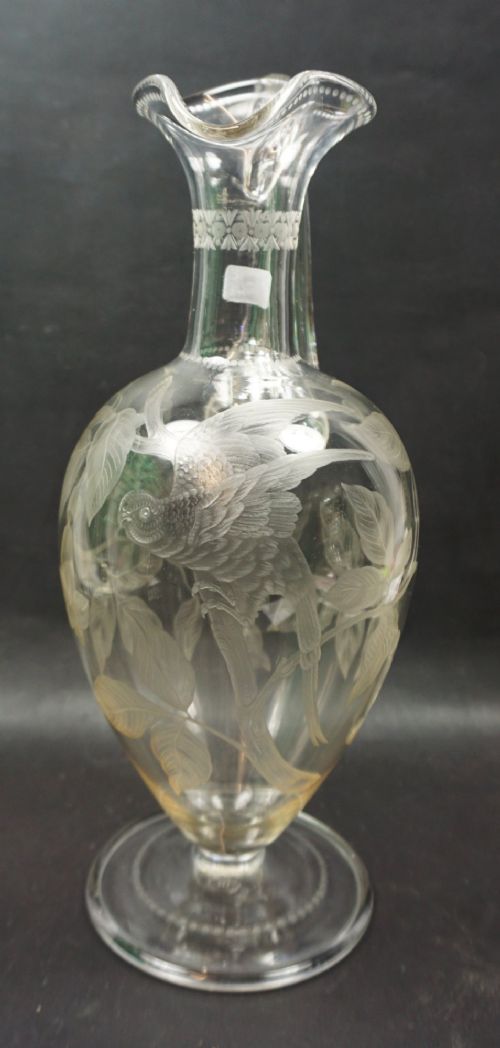
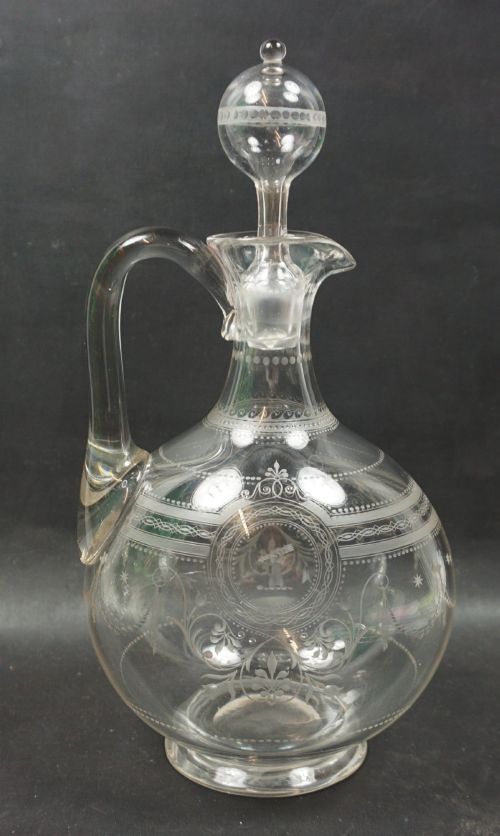
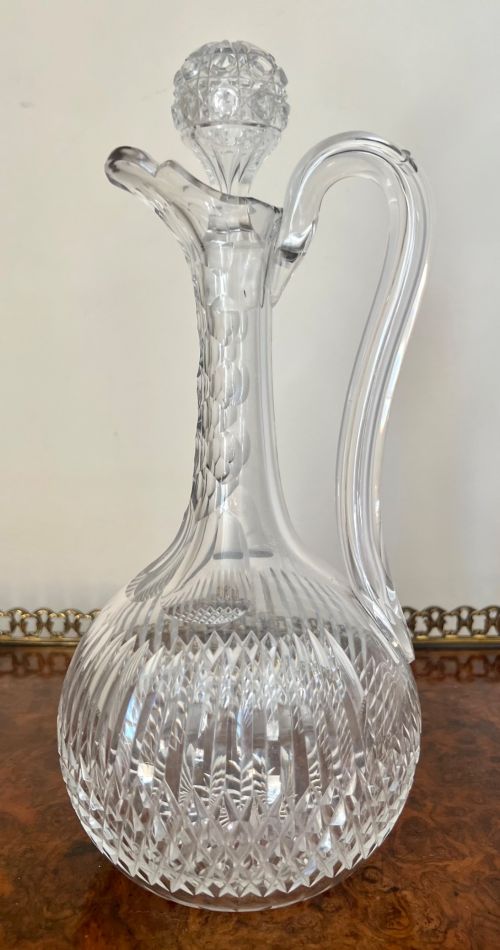
Makers formed the bodies of these jugs from clear or coloured crystal and glass, often utilising heavy wheel-cutting techniques to create geometric patterns, pillars, and prisms. Artisans also decorated the glass surfaces with hand-engraved motifs such as dolphins, grapes, and fruiting vines.
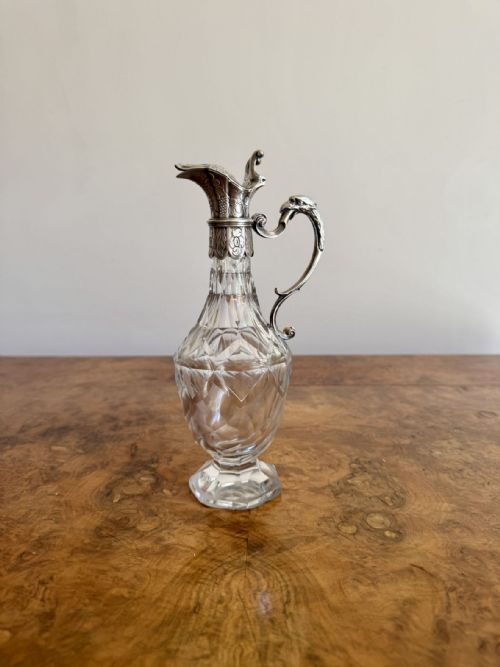
Metalworkers fitted the glass bodies with mounts, hinged covers, and handles made from sterling silver or silver plate. These mounts were secured around the neck and lip, often incorporating spouts shaped like faces or birds alongside thumbpieces for one-handed pouring.
Vintage Crystal Claret Jug Retail Price Guide 2026
Typical asking prices for vintage crystal claret jug among the pieces listed under this phrase on Sellingantiques today, from the lower quarter to the upper quarter. They describe what is for sale here now, not the wider market.
Factors of quality
Quality in these serving vessels rests upon the depth and crispness of the glass cutting and the weight of the crystal body. Sharp, deep facets refract light cleanly and provide a tactile heft absent in lighter press-moulded glass.
The standard of the metal mount also dictates the calibre of the piece. Heavy gauge silver plate or solid sterling silver mounts with tight hinges and well-balanced handles distinguish superior examples from standard production.
Richardsons·Tiffany
The Vintage Crystal Claret Jug Glossary
- Ewer
- A large jug with a wide spout and an ornate handle. This form frequently appears in nineteenth-century dining silver and glassware.
- Silver plate
- A layer of silver fused to a base metal such as copper or Britannia metal. Many Victorian and Edwardian serving jugs utilise this technique for durability.
- Pillar and prism cut
- A style of heavy linear glass cutting that creates vertical flat planes. This technique enhances the refractive quality of nineteenth-century crystal.
Vintage Crystal Claret Jug: Frequently Asked Questions
How were claret jugs used?
These vessels served to decant and present red wine at formal dining tables during the nineteenth and twentieth centuries. Hosts used them to aerate the wine before pouring it into individual glasses.
The hinged lid kept the contents covered between pours while allowing the server to operate the vessel with a single thumb press.
How do I clean a crystal jug?
Cleaning requires warm water and mild detergent, avoiding sudden temperature changes that can crack old glass. A bottle brush helps reach the interior base where sediment collects.
Silver mounts should be polished carefully with a cloth, keeping cleaning pastes away from the glass surface.
Can I use these for modern wine?
These jugs function effectively for serving contemporary red wines at dinner parties. The wide bowl and pouring spout perform the same aeration function today as they did in the Victorian era.
Care must be taken with the antique metal mounts when washing and handling the filled vessel.
How do I date a glass jug?
Dating relies on stylistic clues in the silver mounts, the depth of the glass cutting, and any engraved hallmarks. Victorian pieces often display heavy ornamentation and deep facet cutting.
Edwardian examples tend toward refined classical revivals, while Art Deco items introduce geometric enamel work and simplified silhouettes.