



Clear Crystal Jug Stopper
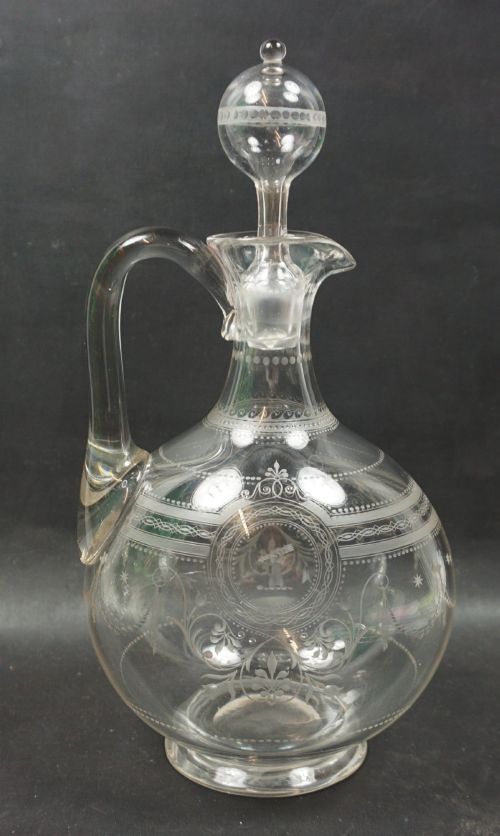
These clear crystal jug stoppers and the vessels they seal belong to an era of heavy cut glass, fine silver mounts, and enamelled decanters.
Clear Crystal Jug Stopper
A clear crystal jug stopper sits atop Victorian, Edwardian, and Art Deco glassware, sealing wine jugs, ewers, and decanters. When searching for a clear crystal jug stopper, a buyer often encounters complete vessels or replacement pieces originating from periods between eighteen eighty and nineteen thirty.
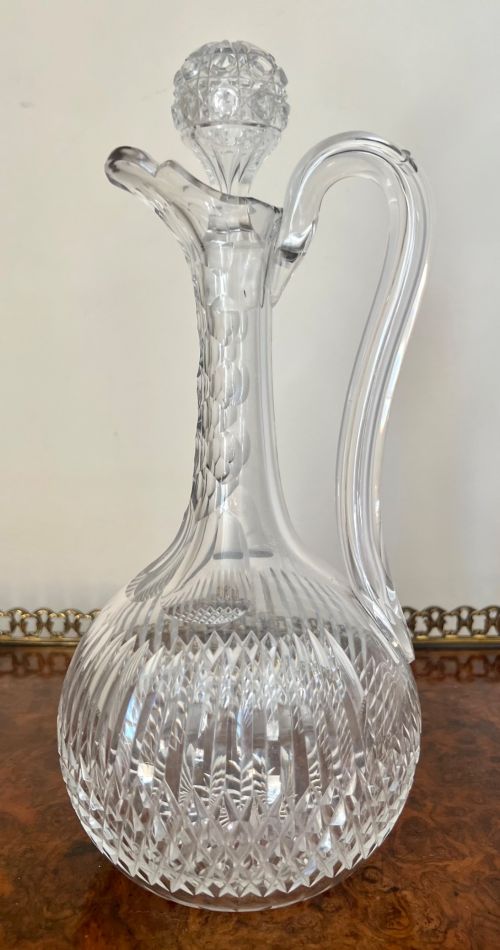
The inventory on this page spans Bohemian, Victorian, and Edwardian production, featuring cut glass and lead crystal bodies. Ewers and claret jugs dominate the forms, frequently accompanied by their original stoppers or metal mounts.
What varies in quality
The distinction between standard tableware and finer pieces rests on the crispness of the cutting and the weight of the metal. Deeply carved facets and heavy lead crystal create a more substantial feel in the hand than lighter pressed glass.
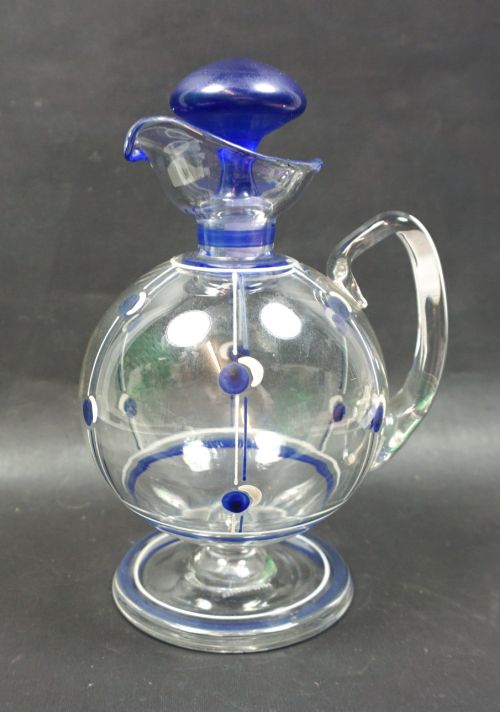
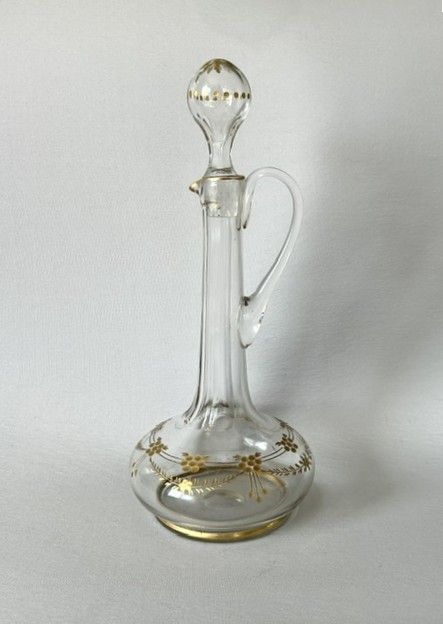
Additional refinement appears in the application of gold gilt and detailed enamel work, particularly on continental pieces from Czechoslovakia. The integration of silver mounts also elevates the status of a jug or decanter.
Clear Crystal Jug Stopper Retail Price Guide 2026
Typical asking prices for clear crystal jug stopper among the pieces listed under this phrase on Sellingantiques today, from the lower quarter to the upper quarter. They describe what is for sale here now, not the wider market.
Listings on this page span the Victorian, Edwardian, and Art Deco periods, featuring materials such as lead crystal, cut glass, gold gilt, and blue enamel.
The Clear Crystal Jug Stopper Glossary
- Cut glass
- Glass decorated by grinding facets and patterns into the surface using a rotating wheel. This technique creates sharp geometric edges that refract light.
- Lead crystal
- Glass containing metallic oxide to increase weight, brilliance, and workability. It allows for deeper cutting without fracturing.
- Ewer
- A large jug with a wide spout and a handle, historically used for pouring wine or water. Many examples include matched stoppers.
- Gilt
- A thin layer of gold applied to the surface of glass or metal for decoration. It is often found highlighting the rim or handle of a vessel.
- Enamel
- Opaque vitreous material fused to glass through firing. It adds permanent colour and pattern to the exterior.
Clear Crystal Jug Stopper: Frequently Asked Questions
What fits a clear crystal jug stopper?
Stoppers were individually ground to fit the neck of their specific vessel during manufacture. Finding a replacement requires matching the exact diameter and depth of the ground glass ground joint.
Because production methods varied across the Victorian and Edwardian eras, interchangeable stoppers are uncommon. Measuring the aperture carefully is essential for any replacement attempt.
How do I date a clear crystal jug stopper?
Dating relies on the style of the cutting, the weight of the glass, and any associated silver mounts or hallmarks. Victorian pieces often feature heavy star-cut bases and deep fluting.
Later Edwardian and Art Deco examples introduce cleaner lines or continental enamelling. Comparing the stopper to the body of the decanter helps confirm if they are a matched pair.
How were these jugs used?
These vessels served wine, water, and cordials at formal dining tables and sideboards throughout the nineteenth and early twentieth centuries. The stopper kept the contents fresh and prevented dust from entering between pours.
Silver mounts provided a secure collar for the handle and spout, protecting the glass rim during heavy use.
How do I clean antique glass?
Warm water and mild soap are best for washing antique crystal and glass vessels. Abrasive scourers must be avoided to protect the polished surface and any gold gilt.
Silver mounts require specialised polishing cloths kept well away from the glass body to prevent staining.