



Enamel Glass Pitcher
An enamel glass pitcher brings colour and hand-painted detail to a table, combining vibrant pigments with brilliant crystal or coloured glass.
Enamel Glass Pitcher
When you search for an enamel glass pitcher, you are looking at decorative vessels designed for serving wine, water, or spirits. The pieces available here span several decades, ranging from Georgian and Victorian examples to later twentieth-century designs.
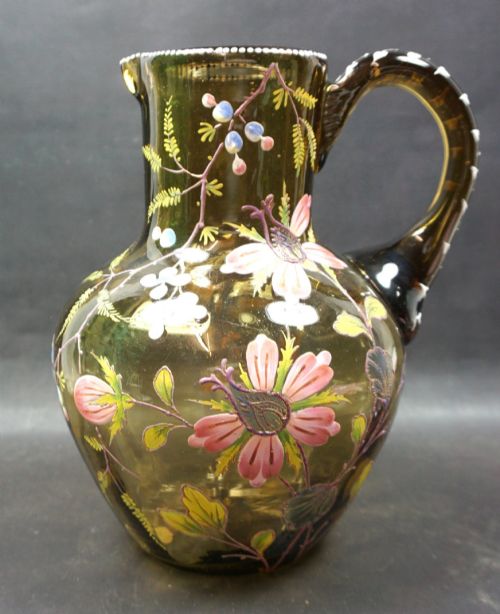
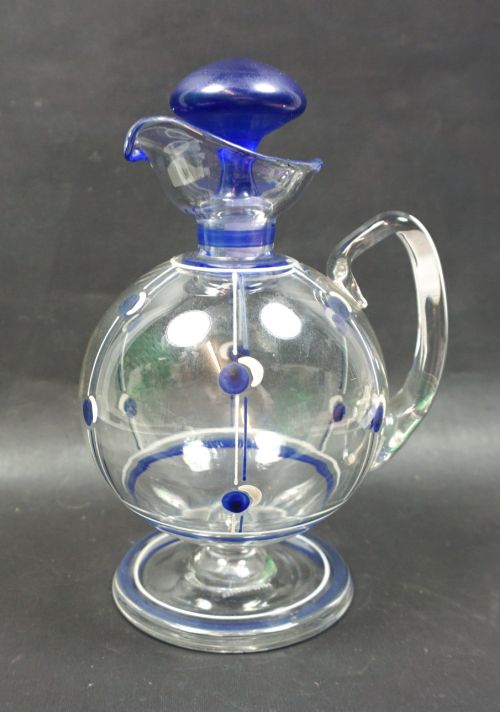
The Victorian period contributes heavily to the selection, often featuring green or cranberry glass adorned with painted enamel scenes. Alongside these, Art Deco examples from Czechoslovakia introduce geometric patterns and cocktail shakers into the mix.
How they were made
The foundational bodies are shaped from clear glass, crystal, or coloured metal-oxide glasses such as emerald and cranberry. Artisans then applied opaque or translucent enamels by hand, sometimes incorporating gold leaf for extra brilliance.
Techniques such as cameo glass carving also appear among the selections, alongside free-blown or moulded forms. Surface painting required steady brushwork and subsequent firing to bond the glass enamels permanently to the vessel.
Enamel Glass Pitcher Retail Price Guide 2026
Typical asking prices for enamel glass pitcher among the pieces listed under this phrase on Sellingantiques today, from the lower quarter to the upper quarter. They describe what is for sale here now, not the wider market.
A painted rooster watches over the cocktail hour from a vibrant Art Deco shaker.
What varies in quality
Quality rests in the precision of the hand-painted enamel work and the clarity of the underlying glass. Finer pieces display crisp brushwork, well-preserved gilding, and original stoppers that match the body.
The distinction between standard production and top-tier items involves the complexity of the painted motifs, such as detailed figures or winter landscapes, paired with heavy, well-balanced crystal.
Daum·Mary Gregory
The Enamel Glass Pitcher Glossary
- Ewers
- A large jug with a wide spout, traditionally used for holding water. These often feature elaborate handles and decorative enamel painting.
- Cranberry glass
- A rich red-pink glass created by adding gold chloride to the molten batch. It is frequently seen in Victorian tableware.
- Cameo glass
- A luxury glass art technique produced by etching or carving through fused layers of different coloured glasses. This creates a contrasting design in relief.
- Bristol blue
- A deep cobalt blue glass historically produced in the English city during the Georgian era. It provides a striking backdrop for white enamel decoration.
- Cocktail shaker
- A specialised vessel for mixing drinks, which became popular during the Art Deco period. These often incorporate enamelled animal motifs or geometric bands.
Enamel Glass Pitcher: Frequently Asked Questions
How are enamel glass pitchers dated?
Dating relies upon stylistic markers such as the geometric lines of Art Deco pieces or the romantic hand-painted motifs typical of the Victorian era. Form, colour palette, and manufacturing techniques also point toward specific decades like eighteen-eighty or nineteen-thirty.
Makers' marks or regional characteristics help narrow the origin further, particularly with twentieth-century items from Czechoslovakia.
Can I use an antique jug for serving drinks?
While these pieces were originally created for serving wine, water, or cream, many collectors prefer to display them safely on a shelf or sideboard. Hand-painted enamels and gold leaf require gentle handling and careful washing to preserve their condition.
Using them occasionally is entirely possible, provided you avoid hot liquids and harsh dishwashing detergents that might damage the surface.
What is Mary Gregory glass?
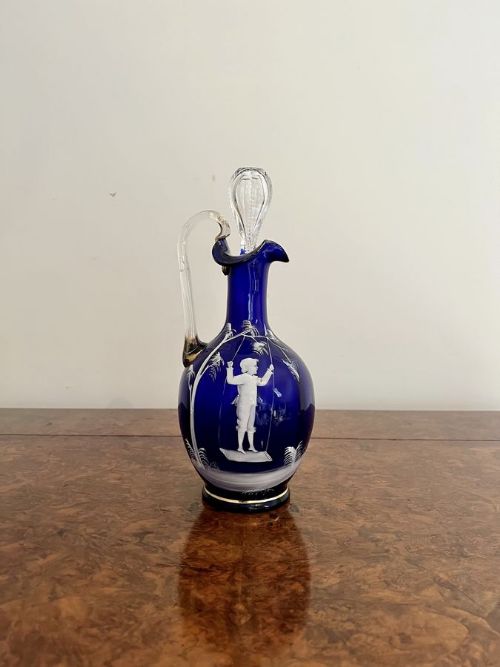
Mary Gregory pieces typically feature white enamel silhouettes of children playing in natural settings against a coloured glass background. This style became prominent during the Victorian period across various ewers, decanters, and water jugs.
Despite the traditional attribution, much of this distinctive glassware was produced in large quantities across Bohemia and other European regions.
How do I distinguish Victorian from Art Deco pieces?
Victorian examples generally showcase romantic painted scenes, heavily saturated colours like cranberry and emerald, and ornate gilding. The forms tend to be curvaceous and decorative.
Art Deco items shift towards streamlined silhouettes, Cockerel motifs, geometric patterns, and Czechoslovakian provenance, reflecting a distinct modernist aesthetic.