

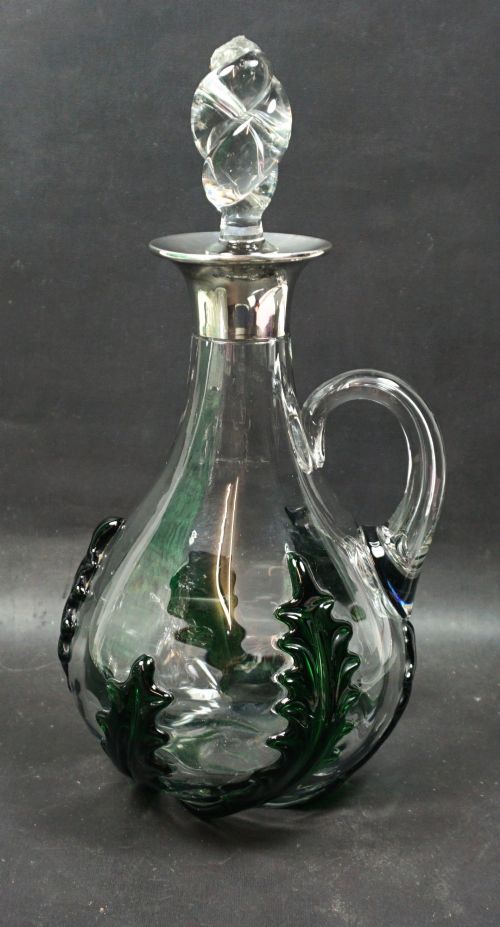
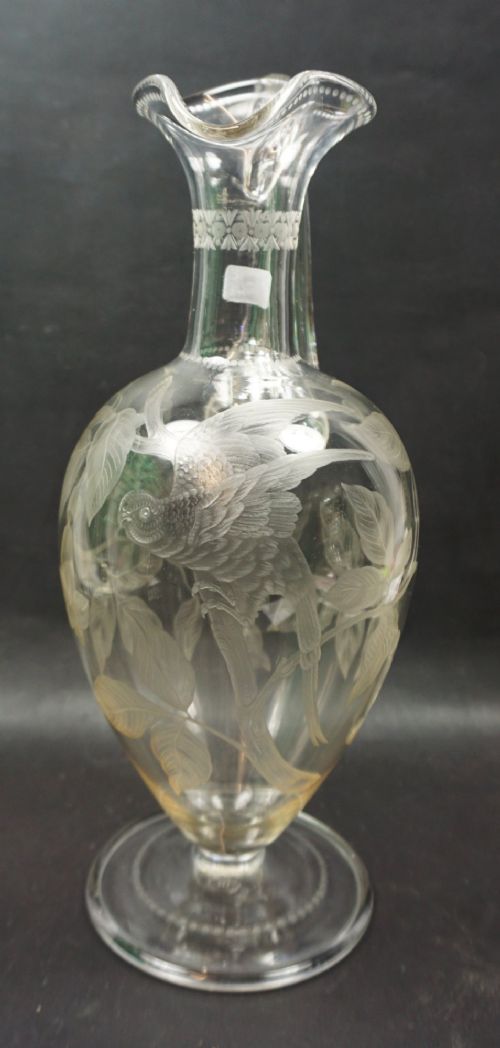
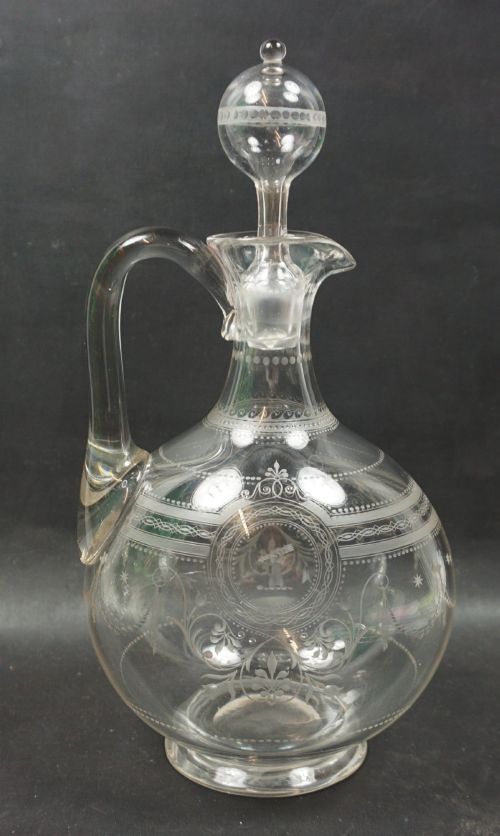
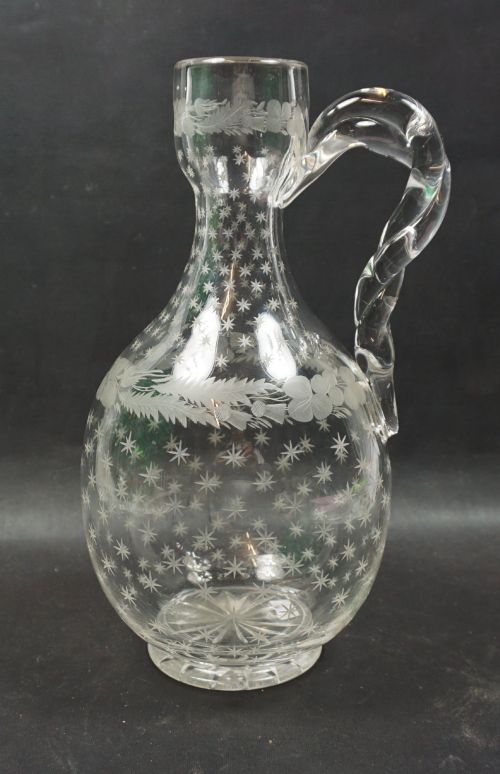


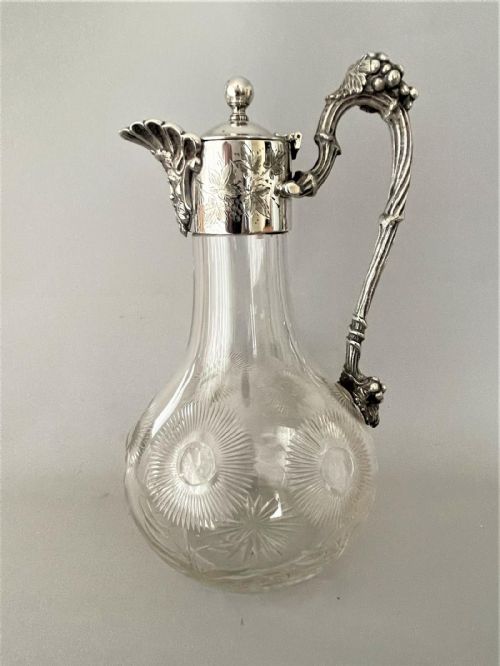
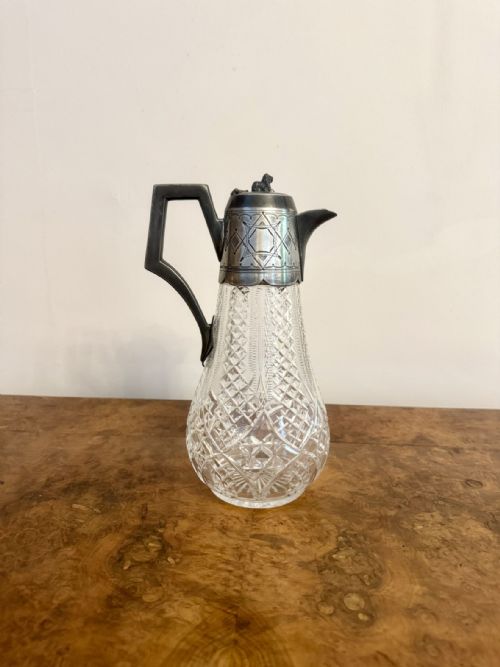

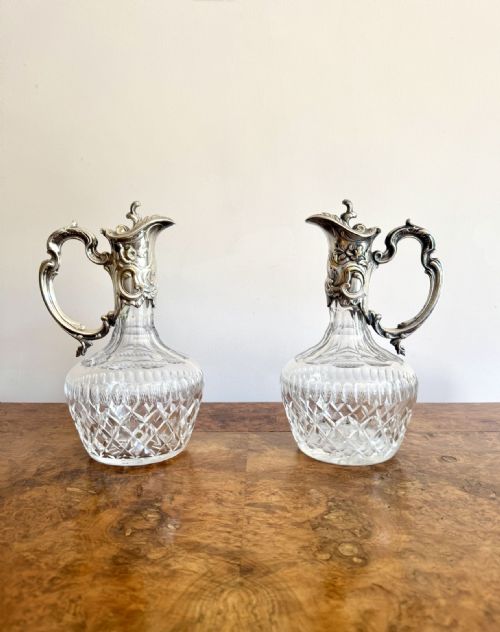
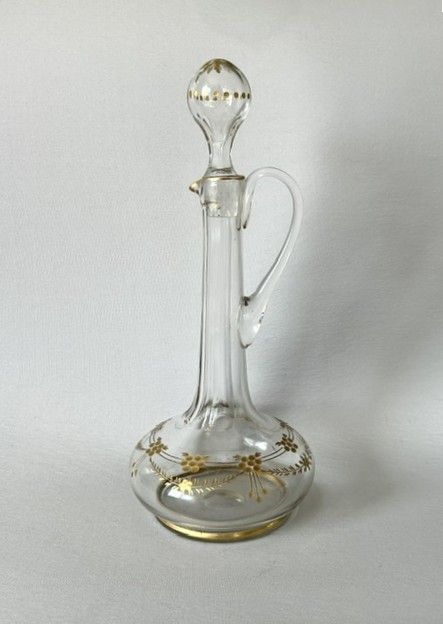
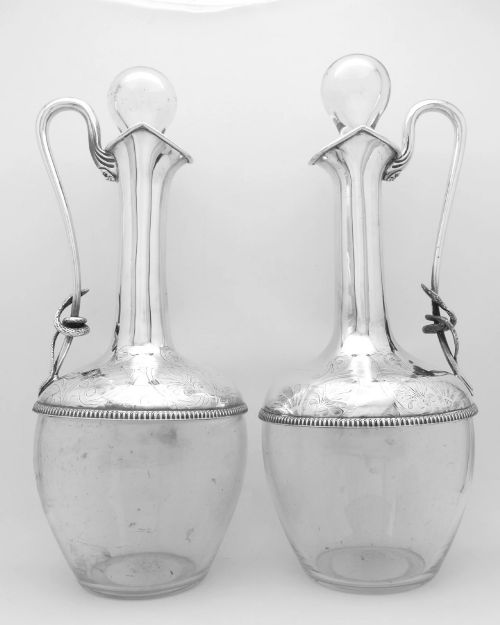
Crystal Wine Jug
A crystal wine jug brings table service from the Victorian and Edwardian periods into active use, combining heavy glass with silver or silver plate.
Crystal Wine Jug
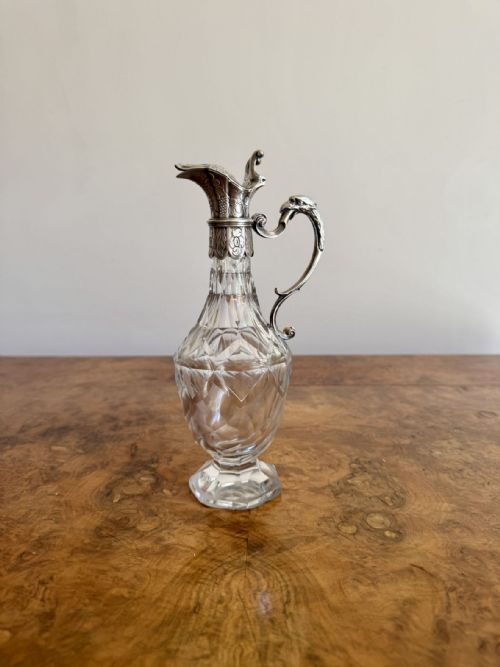
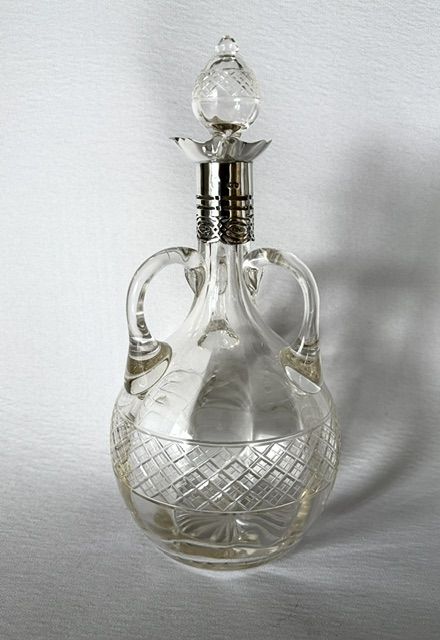
When you search for a crystal wine jug, you are looking at pouring vessels designed for claret, dessert wine, and water, spanning the nineteenth century through the Edwardian era. These pieces pair heavy glass or lead crystal bodies with metal mounts, handles, and hinged lids.
The versions most common on this page date from the Victorian and Edwardian periods, alongside earlier nineteenth-century examples and occasional mid-century items. They appear in forms described as claret jugs, ewers, decanters, and pitchers.
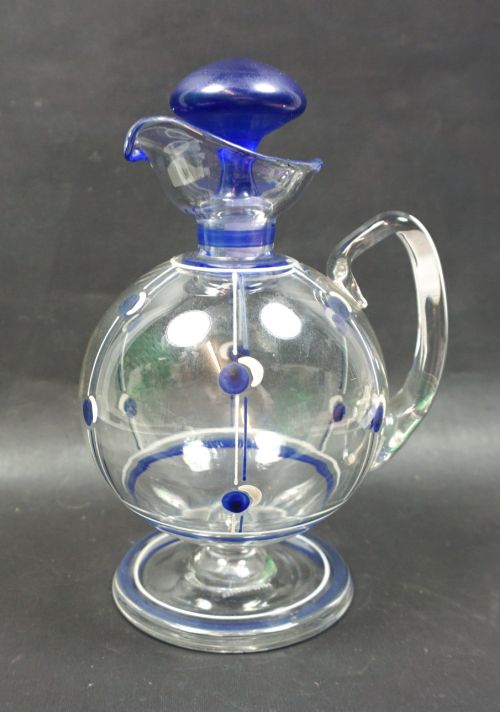
Makers utilised distinct regional styles, ranging from English silver-mounted crystal to Bohemian cut glass and continental enameled or latticinio pieces. Each configuration serves the single practical purpose of decanting and pouring wine at the dining table.
Materials and construction methods
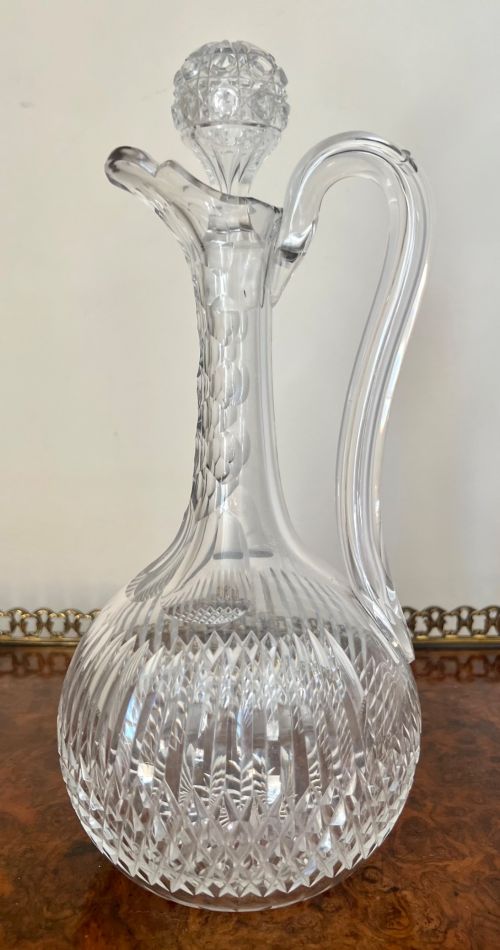
The body of a crystal wine jug relies on clear glass, lead crystal, or coloured glass, shaped by blowing and finished with deep pillar cuts, prism cuts, or wheel-engraved motifs such as fruiting vines.
Mounts, handles, and hinged lids consist of sterling silver, solid silver, or silver plate, often cast in figural forms like Bacchus masks and serpent handles, or hammered in Arts and Crafts styles.
Techniques from continental workshops include surface gilding, blue and white enamel decoration, and delicate latticinio glass threads encased within the vessel walls.
Crystal Wine Jug Retail Price Guide 2026
Typical asking prices for crystal wine jug among the pieces listed under this phrase on Sellingantiques today, from the lower quarter to the upper quarter. They describe what is for sale here now, not the wider market.
Several Victorian jugs feature serpent handles and Bacchus masks, ensuring diners face mythological beasts with every glass of claret.
Distinctions in standard and execution
Quality rests upon the crispness of the glass cutting and the weight of the crystal body, where deeper, sharper facets catch the light more effectively than shallow press-molded alternatives.
The metalwork dictates the upper tier of the range, distinguishing solid sterling silver mounts and detailed cast handles from standard silver-plated brass or base metals.
Proportion and balance define the superior pieces, ensuring that the heavy handle and hinged lid integrate harmoniously with the form of the cut glass vessel.
Asprey and Co. Ltd·Baccarat·Webb Corbett
The Crystal Wine Jug Glossary
- Crystal
- Glass containing lead oxide that increases the refractive index and weight of the material. This composition allows for deep, sharp wheel-cutting.
- Claret Jug
- A specific pouring vessel designed for serving red wine, typically fitted with a metal handle and hinged lid. They are prevalent in Victorian and Edwardian dining sets.
- Ewer
- A large jug with a wide spout and looped handle, historically used for water or wine. Antique examples often feature elaborate silver mounts.
- Latticinio
- A glassmaking technique involving opaque white or coloured glass threads embedded within clear glass. It appears in mid-nineteenth-century continental pieces.
- Silver Plate
- A thin layer of silver fused to a base metal such as copper or Britannia metal. It allowed makers to produce ornate mounts at a lower cost than solid silver.
Crystal Wine Jug: Frequently Asked Questions
How do I clean a crystal wine jug?
Wash the glass by hand using warm water and mild detergent, avoiding harsh abrasives that might scratch the surface or damage silver plate.
Dry the metal mounts promptly to prevent tarnishing, and store the vessel unstoppered to let air circulate inside.
Were these jugs only used for claret?
While the form developed primarily for serving red wine and claret during formal meals, makers also designed them for water, champagne, and cordial.
Victorian dining customs adapted these versatile vessels for whichever beverage the host chose to serve at the table.
How do I date a silver-mounted jug?
British silver mounts usually carry hallmarks stamped directly into the metal, indicating the assay office, standard, and date letter.
Stylistic cues such as heavy Victorian cutting or Edwardian silver-plate provide additional guidance when hallmarks are absent.
Can I use an antique jug today?
These pieces function reliably for serving wine and water during modern meals, provided you handle them with appropriate care.
The robust lead crystal and sturdy silver mounts withstand regular use, though hand washing remains essential.