


English Countryside Picture
An english countryside picture captures the quiet charm of rural life through the skilled hands of regional painters.
English Countryside Picture
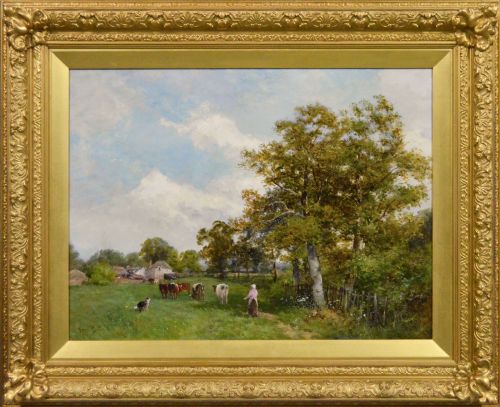
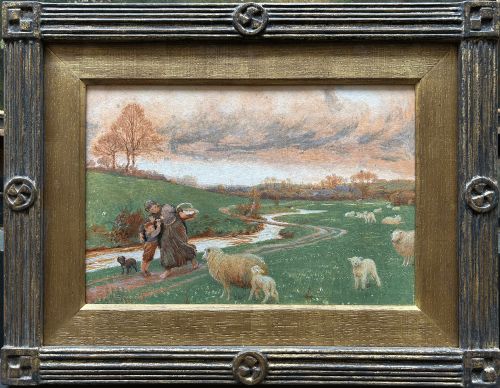
An english countryside picture typically portrays pastoral scenery, agricultural labour, and riverside vistas across rural Britain. The selections available encompass oil paintings and watercolours spanning the Victorian era through the mid twentieth century.
Buyers will encounter framed works depicting local villages, farming scenes, and coastal inlets rendered by regional artists. These traditional compositions record historical agrarian landscapes before modern development altered the terrain.
Materials and Construction
Artists painted primarily upon paper or stretched canvas, occasionally utilising wood panels for smaller panel studies. Pigments were applied with brushes to build atmospheric light, particularly in watercolours where transparent washes created luminous skies.
Original framing often involves gilt wood or moulded timber enclosures that protect the delicate paper or canvas surfaces. These historical frames complement the tonal balance of the painted rural subjects.
Numerous Victorian canvas views include steadfast farm dogs keeping watch while livestock graze nearby.
Factors of Distinction
The sophistication of brushwork and the artist's command of natural light differentiate superior compositions from standard decorative works. Stronger pieces display confident handling of atmospheric depth and convincing proportions in figures and animals.
Preservation of the original pigment vibrancy and the structural integrity of the paper or canvas influence overall desirability. Works retaining their period frames and clear provenance carry greater historical completeness.
David Bates·Frederick Walker·Hubert Wellington·Alfred George Morgan·Charles Walter Simpson·Charles Gregory·Henry Charles Fox·Cuthbert Crossley·Fred Lawson·Arthur Tucker·Frederick Septimus Lewis·James Orrock·J Phipps·M C Hider·Robert John Hammond·Robert Thorne Waite·Henry Bailey·Charles Faulkner·Robert Winchester Fraser·Frederick Waters Watts·George Arthur Fripp·John Wright Oakes·Henry H Parker·John Edward Bale·Basil Bradley
The English Countryside Picture Glossary
- Watercolour
- A painting method where fine pigment is suspended in a water-soluble binder and applied to paper. This medium allows for translucent washes that capture shifting weather and light.
- Oil on Canvas
- A technique involving pigmented linseed oil applied to woven fabric stretched over a wooden frame. This method permits rich texture and deep colour saturation.
- Wood Panel
- A rigid flat wooden support utilised by artists before canvas became standard. It provides a stable surface for detailed brushwork.
- Gilt Wood
- Carved wood coated with a thin layer of gold leaf or metallic gilt finish. It creates a decorative border that enhances the framed artwork.
English Countryside Picture: Frequently Asked Questions
What periods do these paintings cover?
The available artworks range from the early nineteenth century through the Victorian period and into the mid twentieth century. Most pieces reflect the Victorian and Edwardian interest in naturalistic rural views.
Creators during these decades documented specific regional landscapes across England, from Yorkshire valleys to West Sussex downs.
How should I hang watercolour paintings?
Watercolours require placement away from direct sunlight to prevent the fading of delicate pigments on paper. Glass protection shields the surface from atmospheric dust and moisture.
Stable indoor humidity levels ensure that both the paper support and the historical timber frame remain undamaged over time.
Are these paintings signed by the artists?
Many of the listed works feature signatures or monogram initials applied by the painter, often accompanied by a date. Documentation on the reverse or within framing occasionally provides further context.
Unsigned pieces rely on stylistic attribution and period materials to identify their probable regional origin and date.
What subjects are most common?
Rural tasks such as haymaking, sheep driving, and harvesting form the primary focus of these countryside compositions. River valleys, windmills, and thatched cottages also appear frequently across the regional school holdings.
Artists favoured locations that exemplified traditional British agrarian life before industrial expansion transformed the countryside.