
English Country Scene Painting
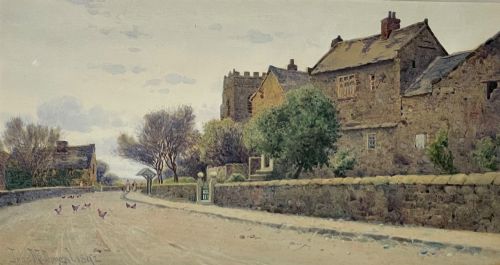
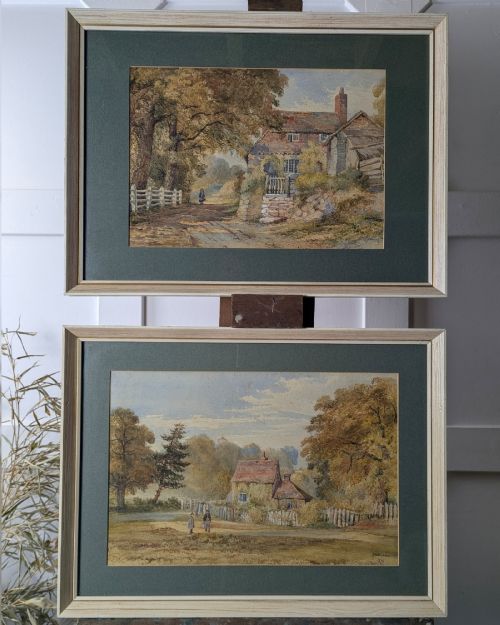
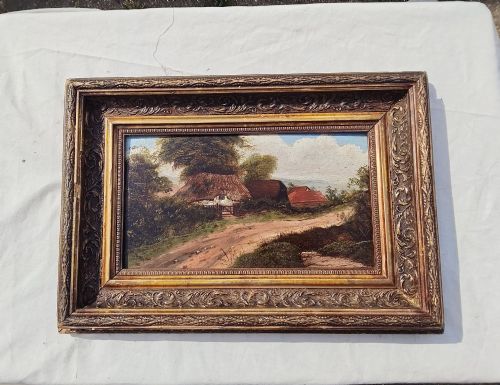
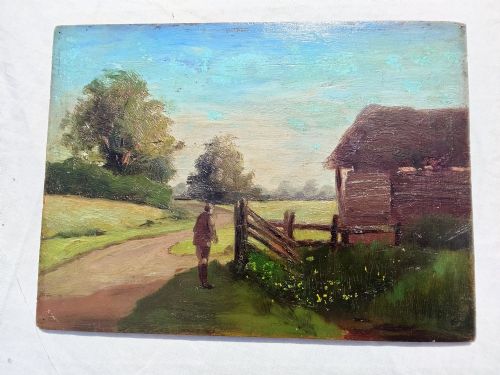
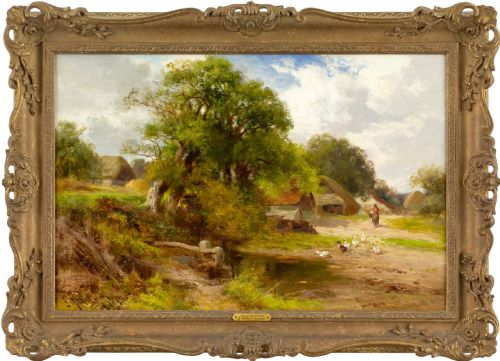
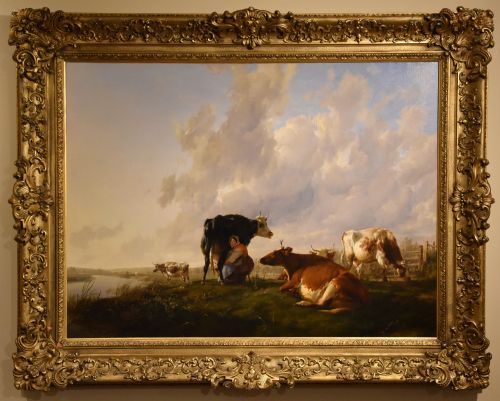
These English country scene painting examples capture rural life through pastoral landscapes, village views and farmyards.
What They Are
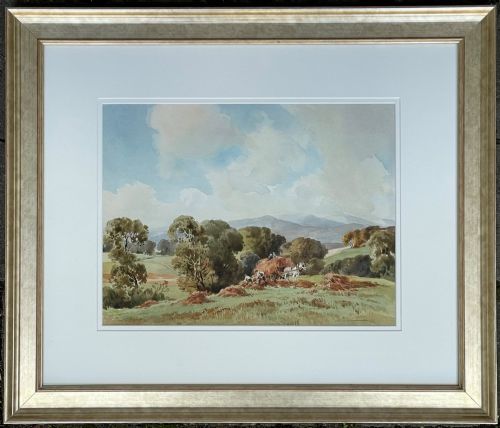
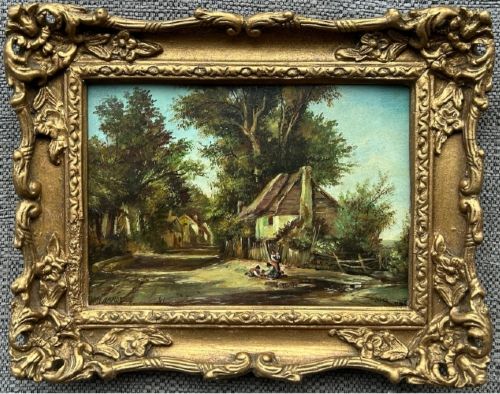
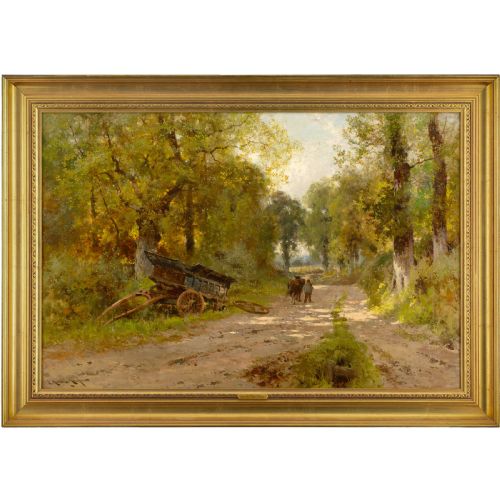
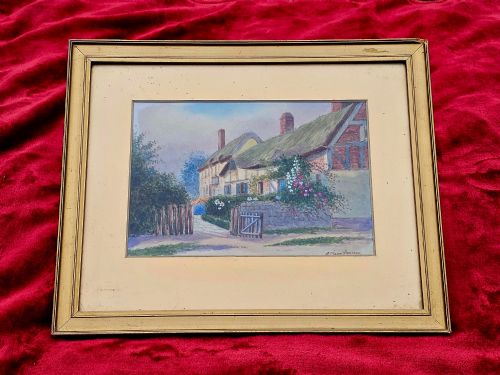
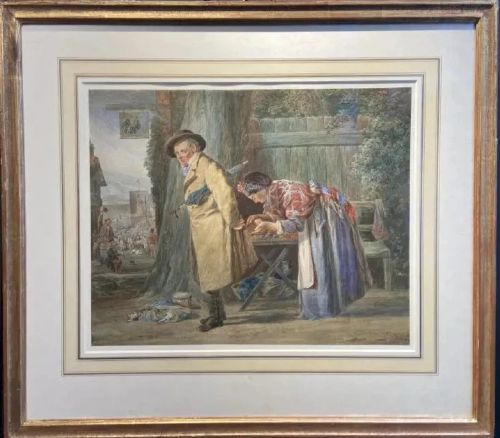
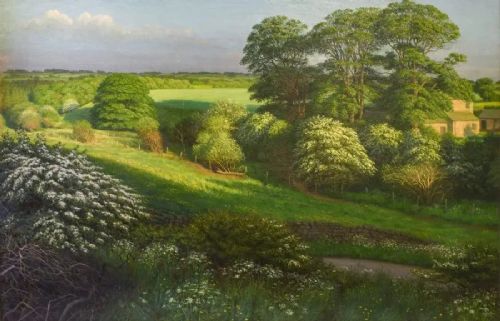
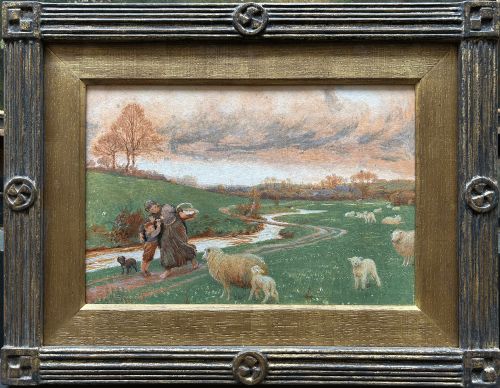
An English country scene painting depicts rural life, villages, agricultural settings and pastoral landscapes across various historic periods. The pieces appearing here span from the early nineteenth century through the Edwardian era and into the twentieth century, reflecting shifting tastes in British art.
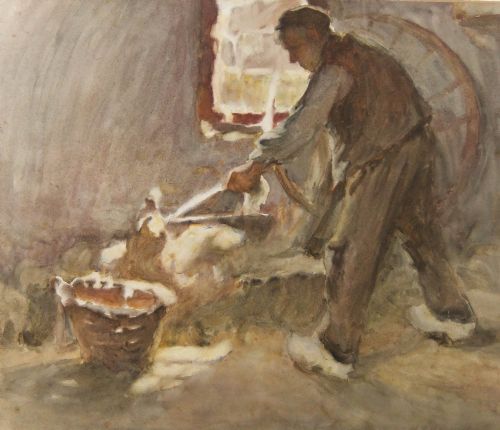
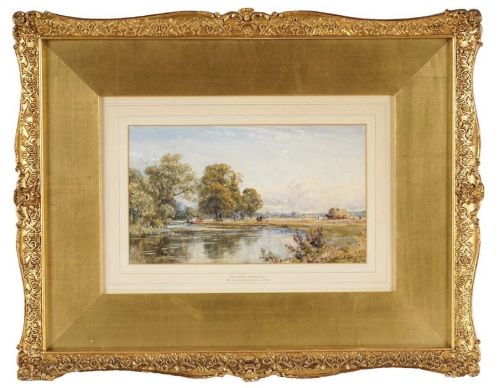
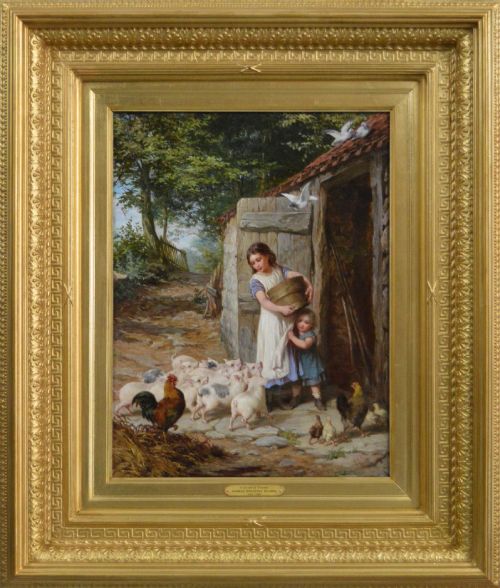
Most works take the form of framed oils or watercolours showing cottages, ponds, farmyards with livestock and figures working the land. These visual records preserve a vanished rural Britain through the eyes of academic painters, regional artists and naive practitioners alike.
How They Were Made
Makers applied oil or watercolour pigment to canvas, paper, wood panels or boards to construct these compositions. Many surviving examples retain their original gilt wood frames, which complement the traditional pastoral palettes.
Techniques range from detailed academic brushwork to naive application, depending on the artist and period. Pigments were layered to create depth in foliage, skies and historic rural architecture.
Retail Price Guide 2026
Typical UK retail prices for english country scene painting, calculated from the Sellingantiques database of over a million retail prices indexed since 2003. This retail price guide relies exclusively on Sellingantiques data; no external sources or auction records are used, so the figures do not describe the wider market.
Pigs occasionally photobomb the pastoral calm alongside horses and cattle.
What Varies in Quality
Quality rests in the handling of light, atmosphere and perspective within the rural composition. Finer works demonstrate a confident command of tonal balance in skies and foliage, whereas simpler naive pieces prioritize narrative charm over strict technical accuracy.
The preservation of the original support and frame also influences the overall standing of a piece. Works retaining clear signatures, legible location inscriptions and period frames tend to hold greater historical interest.
Raymond Booth·Henry Charles Fox·Thomas Nicholson Tyndale·John Vine of Colchester·J.D. Walker·William E Harris·Frederick Underhill·Edmund Bristow·Amy Antill·Henry Charles Woollett·Lewis Pinhorn Wood·Joseph Thors·Pamela Hughes
The English Country Scene Painting Glossary
- Oil painting
- A work created using pigments bound in a drying oil medium, typically applied to canvas, wood panel or board. This versatile medium allows for rich colour blending and textured brushwork.
- Watercolour
- A painting method where fine pigment is suspended in a water-based solution, usually applied to paper. It yields translucent washes of colour well suited to capturing atmospheric English skies and landscapes.
- Gilt wood
- Wood carved and coated with a thin layer of gold leaf or metallic gilt paint, frequently used for historic picture frames. These frames provide a decorative border that enhances the artwork.
- Naive school
- Art produced by self-taught or informally trained painters who employ flat perspectives and direct detailing. These works offer sincere documentation of everyday rural life and local architecture.
Frequently Asked Questions
What periods do these paintings date from?
The selection includes works from the early nineteenth century, the Victorian era, the Edwardian period and the early twentieth century. Each era brings distinct stylistic approaches to depicting the British countryside.
Collectors can trace the evolution of landscape art from early naive representations through to more formalized pastoral realism.
Are these paintings signed by the artists?
Many examples feature artist signatures, initials or attribution notes, while others record specific named locations such as villages in Somerset, Sussex and Yorkshire. Inscribed locations help anchor the historical context of the view.
Unsigned works often fall under regional or naive schools, reflecting anonymous local recording traditions.
What surfaces were used for these artworks?
Artists painted on stretched canvas, prepared wood panels, boards and heavy paper supports. The choice of medium typically aligns with whether the piece is an oil painting or a watercolour.
Canvas and panels suited heavier oil pigments, while paper accommodated the fluid washes of watercolour works.
How should I display an antique country painting?
These works suit traditional domestic interiors, especially when housed in their original gilt wood frames. Placement away from direct sunlight protects pigments and canvas from fading over time.
Matching the frame's finish to your room's decor helps integrate these historic rural scenes into modern living spaces.