



English Country Painted Bureau
An English country painted bureau brings domestic history straight into your room, offering hidden writing slopes and storage built from honest pine and timber.
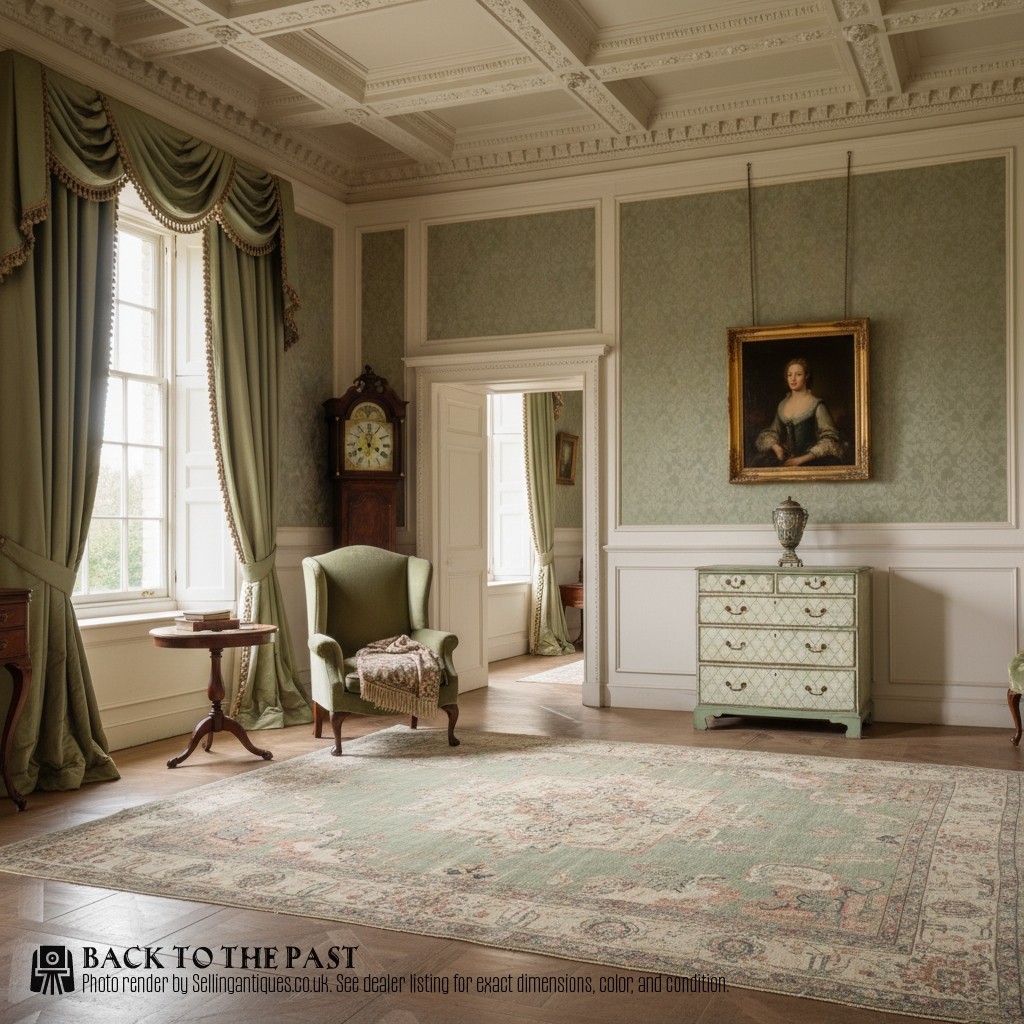
English Country Painted Bureau
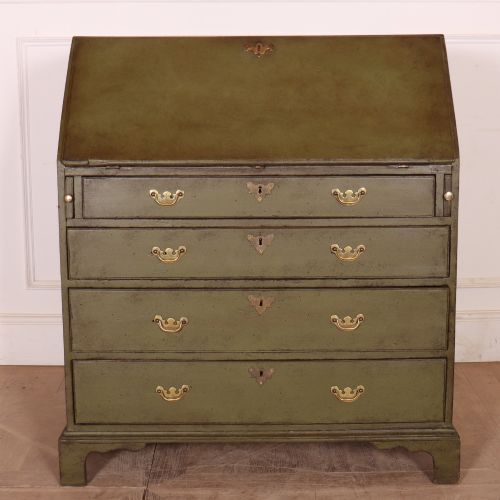
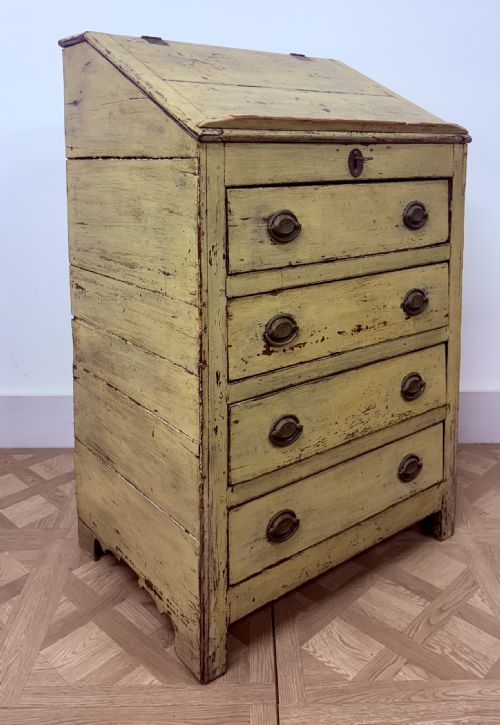
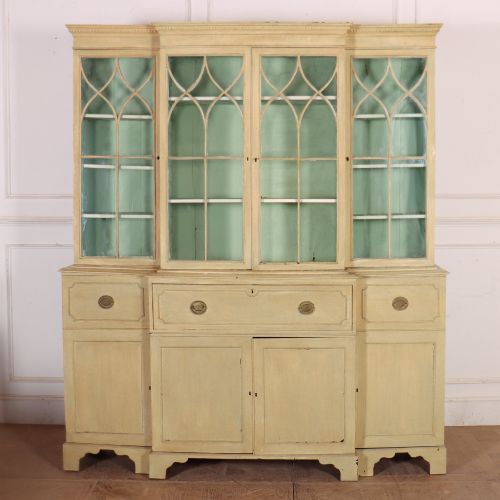
An English country painted bureau represents utilitarian furniture elevated by decorative pigment, appearing mostly as 18th century and Georgian examples on this page. These pieces combine a slanted writing flap with lower drawers, occasionally extending upwards into bookcase configurations.
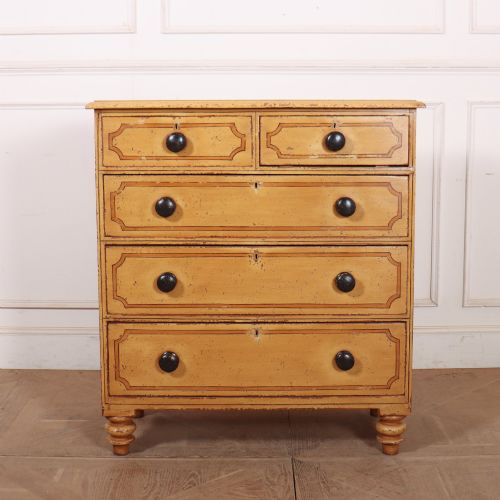
The provincial character marks each piece distinctly from urban London cabinet-making, showing the simpler tastes of rural households. Buyers frequently encounter regional chests of drawers with integrated writing slopes alongside traditional bureau bookcases.
Makers utilised pine and other native timbers, covering knots and grain with layers of paint that have weathered over decades of domestic service. The surviving items span Georgian elegance and Victorian utility.
How they were made
Carpenters constructed these items using solid pine and general wood, applying paint directly to timber surfaces to finish the exterior. Brass hardware such as handles and escutcheons secured drawers and added functional contrast to the painted bodies.
Construction techniques relied on straightforward joinery suited to provincial workshops, prioritising daily durability over elaborate veneering. Glass occasionally appears in upper bookcase doors, allowing the display of books alongside the concealed writing compartments.
English Country Painted Bureau Retail Price Guide 2026
Typical asking prices for english country painted bureau among the pieces listed under this phrase on Sellingantiques today, from the lower quarter to the upper quarter. They describe what is for sale here now, not the wider market.
Every painted surface hides decades of forgotten ink splatters and handwritten ledger fragments tucked behind secret pigeonholes.
What varies in quality
Quality rests in the integrity of the original paint surface and the stability of the writing slope mechanism. Pieces retaining honest, unstripped layers of historic pigment command greater appreciation among collectors than those with modern refinishing.
Proportional balance and the snug fit of interior pigeonholes distinguish superior rural cabinet-making from basic utilitarian boxes. The presence of untouched brass fittings further separates finer Georgian examples from later, simpler iterations.
The English Country Painted Bureau Glossary
- Bureau
- A desk featuring a sloping hinged lid that drops down to form a writing surface, often concealing small drawers and pigeonholes inside. This term forms the core of the English country painted bureau group.
- Secretaire
- A cabinet or chest incorporating a built-in writing drawer or compartment with a drop-front panel. It serves a similar function to the bureau whilst maintaining the outer profile of a standard chest.
- Georgian
- The period spanning the reigns of the first four Georges, known for proportion and classical restraint in furniture design. Pieces from this era frequently display refined construction despite provincial origins.
- Pine
- A softwood commonly used in British country furniture for its accessibility and ease of working. It provides the primary structural body beneath the painted finishes found on these items.
English Country Painted Bureau: Frequently Asked Questions
What is an English country painted bureau?
These items are practical writing desks featuring a sloping lid and drawers, constructed from timber and finished with paint.
Originating largely in the eighteenth and nineteenth centuries, they served as domestic administrative centres in rural homes.
How were these bureaus used historically?
Households utilised the sloping flap as a stable surface for writing letters and managing household accounts.
Internal compartments and lower drawers kept stationery, documents, and personal belongings organised securely out of sight.
How do I live with a painted bureau?
Place the bureau in a study, hallway, or living room where the drop-front can open comfortably for daily writing.
Keep the piece away from direct heat sources to protect the historic wood and painted surfaces from cracking.
How do I tell Georgian pieces from Victorian ones?
Georgian examples often show lighter proportions and earlier brass hardware styles, reflecting eighteenth-century design standards.
Late Victorian pieces, such as those from around nineteen hundred, typically present heavier pine construction and simpler utility.