

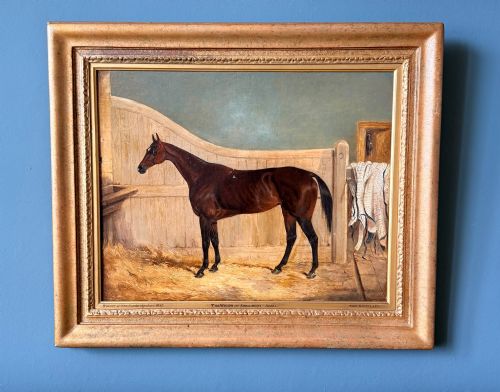


English Country Equestrian Painting
These English country equestrian painting works capture the long tradition of horses, hounds and rural estates through the brush of Victorian and Georgian artists.
English Country Equestrian Painting
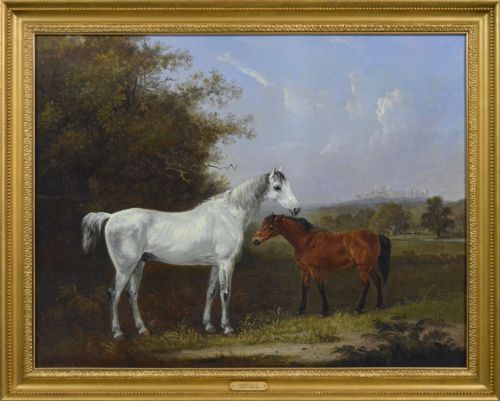
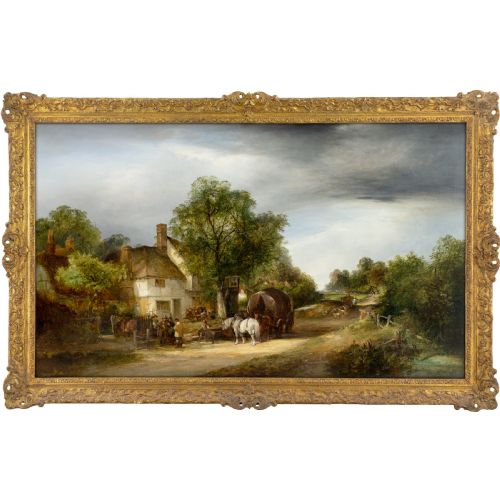
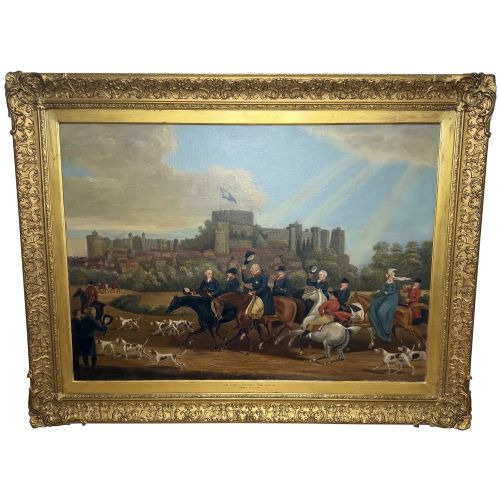
An english country equestrian painting depicts horses, hunting scenes, coaching journeys or rural farm animals across canvas, paper and board. These artworks typically date from the Georgian and Victorian periods, stretching from the early nineteenth century into the twentieth century.
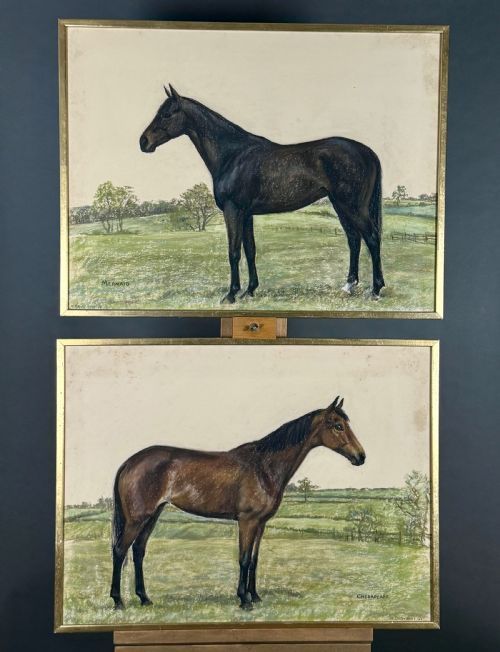
The subjects range from prized sporting portraits of named racehorses and hunters standing before parkland estates to dynamic coaching scenes navigating winter snow or rural lanes. Works on this page also include watercolours, pastels and framed oils recording country life with horses.
Buyers will encounter framed oils on canvas by regional artists alongside detailed watercolours depicting hunts and stableyards. The prevailing output reflects nineteenth-century British school traditions, combining landscape painting with equine portraiture.
How they were made
Artists painted these works primarily in oil paint on canvas or wooden board, utilising heavy giltwood frames to house the finished pieces. Watercolour and pastel on paper also appear frequently, often preserved behind glass.
The underlying construction relied on stretched canvas over wooden frames or sturdy boards, prepared with grounds that received layers of pigment. Framing utilised traditional joinery and gold leaf application characteristic of the period.
The listings span the Georgian period, the Victorian era and the twentieth century, utilising canvas, paper, gold leaf and oil paint.
What varies in quality
The distinction in quality rests on the anatomical accuracy of the horse, the depth of the landscape background and the handling of light. Master artists captured muscle tension, movement and specific equine conformation with precision.
Framing and signature provenance elevate certain works, as period giltwood frames complement the era of the painting while identified artists and named subjects provide historical weight to the piece.
Thomas Walker Bretland·George Morland·Samuel Spode·John Alfred Wheeler·Clifton Tomson·Henri Schouten·John Charles Maggs·John Vine of Colchester
The English Country Equestrian Painting Glossary
- Oil on Canvas
- Pigment mixed with drying oil applied to a woven fabric support. This material allowed artists to build rich layers of colour and texture.
- Giltwood
- Wood carved and coated with gold leaf or gold paint. Frames of this type defined Victorian and Georgian presentation standards.
- Sporting Art
- A genre depicting blood sports, racing, coaching and the countryside. These works recorded prized animals and rural pursuits.
- Watercolour
- Pigment suspended in a water-soluble binder applied to paper. This medium produced luminous, transparent washes of tone.
- Provenance
- The documented history of ownership of an artwork. Tracing this record confirms attribution and past exhibitions.
English Country Equestrian Painting: Frequently Asked Questions
What is an english country equestrian painting?
These works are historical artworks depicting horses, riders, hunts and rural coaching scenes across canvas, board and paper. They record the central role of horses in nineteenth-century country life.
Created mostly during the Georgian and Victorian eras, these paintings range from intimate watercolours to large oil portraits of named horses and estate owners.
How should I hang these paintings?
Hang these framed works on walls away from direct sunlight and damp conditions to protect the canvas, paper and giltwood frames. Stable indoor temperatures preserve the longevity of oil and watercolour mediums.
Pairing them with traditional period interiors or balanced lighting highlights the brushwork and detail of the landscape and animal subjects.
How can I tell the period of a painting?
Dating relies on the costume of figures, the style of the giltwood frame, and the canvas stretcher construction behind the work. Signatures and nineteenth-century painting conventions also offer clear chronological markers.
Artists working in the Victorian or Georgian periods utilised specific earth pigments and compositional layouts distinct from later twentieth-century styles.
Why do some paintings feature named horses?
Commissioned portraits recorded prize-winning racehorses, prized hunters and valued pets for country estates and stable owners. Owners documented these animals to celebrate victories and lineage.
Inscriptions on the canvas or frame often record the horse's name, the owner, or the hunt club associated with the estate.