


English Coal Bucket
An English coal bucket brings functional hearthside storage into a room, combining durable metal or timber with practical utility for fuel.
English Coal Bucket
When searching for an english coal bucket, buyers encounter various functional fireside forms including scuttles, bins, purdoniums, and lidded boxes. These items originated to hold coal, peat, or logs near a hearth, serving a central role in domestic heating.
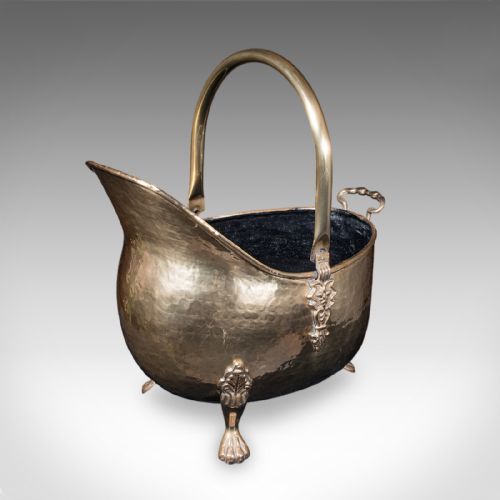
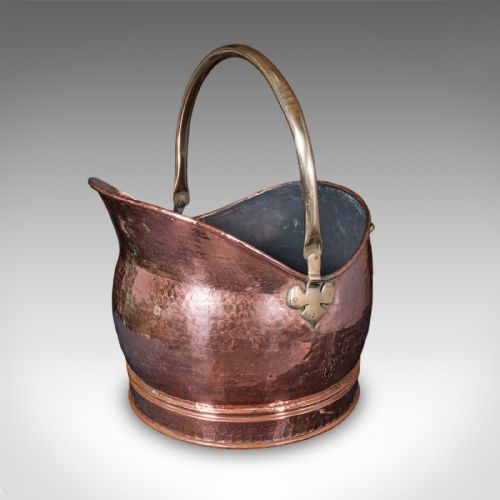
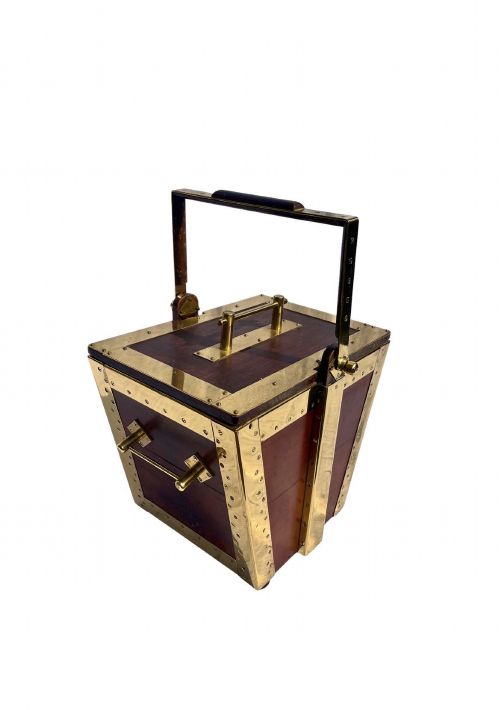
The most common versions met on this page date from the Victorian period, frequently shaped as helmet scuttles or cylindrical bins. Earlier Georgian and Regency examples often utilise timber construction with brass bands, while Edwardian and later pieces display Arts and Crafts or Art Nouveau influences.
Materials and Techniques
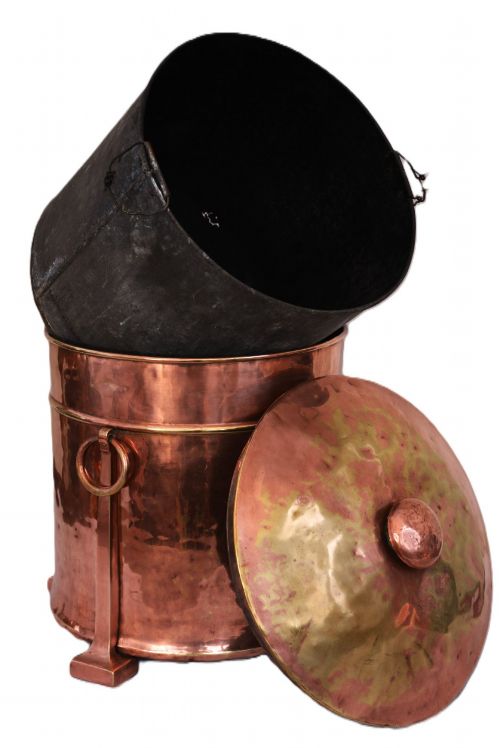
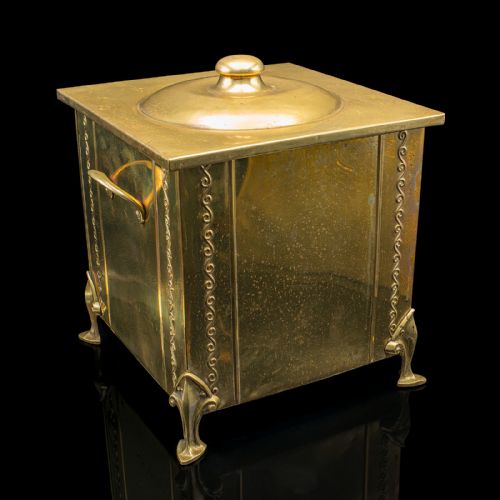
Metalwork dominates the construction of these items, with heavy use of sheet brass and copper formed into bodies, often enhanced by handbeaten details or cast brass fittings. Riveted seams, swing handles, and applied feet demonstrate traditional metalshaping methods used by period artisans.
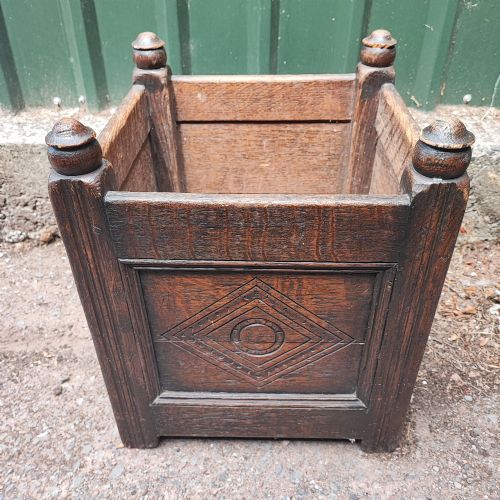
Timber examples rely on joinery traditions such as coopered staves bound with brass hoops, or cabinetmaking techniques seen in mahogany, oak, and walnut bodies. These wooden bins and peat buckets frequently incorporate metal liners to contain fuel debris safely.
The inventory records pieces spanning Georgian, Regency, Victorian, Edwardian, and early twentieth-century eras.
Assessing Quality
Quality in these pieces rests upon the integrity of the construction and the weight of the materials selected. Substantial gauge copper, robust brass mounts, and tight coopered staves distinguish heavier, enduring items from lighter domestic wares.
The sophistication of decorative execution separates standard utility items from finer examples. Handbeaten surface textures, well-cast handles, and refined dovetail or stave joints reflect superior craftsmanship during the period of manufacture.
Bamfords
The English Coal Bucket Glossary
- Coal scuttle
- A fireside container designed with a sloping mouth or a hinged lid for scooping and pouring fuel. Many feature a fixed handle at the top and a smaller grip underneath to aid tipping.
- Purdonium
- A specific type of coal box featuring a downward-hinging front flap and an internal metal liner. This Victorian form kept fuel neatly enclosed beside the hearth.
- Coopered
- A method of construction where tapered wooden staves are joined tightly together and secured with metal hoops. This technique is typical of traditional bucket and tub making.
- Helmet scuttle
- A metal bucket shaped with an upturned rim resembling a classical helmet. This form directs fuel cleanly into a fireplace opening.
- Peat bucket
- A vessel traditionally used for holding dried turf or peat blocks. These often appear in mahogany with brass banding and spindle galleries.
English Coal Bucket: Frequently Asked Questions
What periods do these coal buckets come from?
The pieces span from the Georgian and Regency eras through the Victorian and Edwardian periods up to the early twentieth century. Victorian designs appear most frequently in the listings.
Craftsmanship and material choices shifted across these decades, moving from timber coopered vessels to hammered copper and brass items.
How were these buckets used by the hearth?
They stored solid fuel such as coal, logs, or peat directly beside the fireplace for easy access during heating. Their construction kept hearth debris contained within the room.
Many included internal metal liners or shovels to facilitate transferring fuel into the grate without creating mess.
Are wooden and metal buckets cleaned differently?
Metal surfaces in brass and copper generally require gentle polishing to maintain their finish depending on personal preference for patina. Timber structures like mahogany and oak need conditioning appropriate for antique wood.
Harsh chemical agents should be avoided on all historic surfaces to preserve the original finish.
How do I identify a coal scuttle from a log bin?
Scuttles typically feature a slanted opening or a hinged helmet shape intended for pouring small fuel like coal. Log bins and buckets are usually cylindrical or oval with straight sides designed for stacked timber.
Proportions also vary, with scuttles often narrower at the base and equipped with dual handles for tipping.