
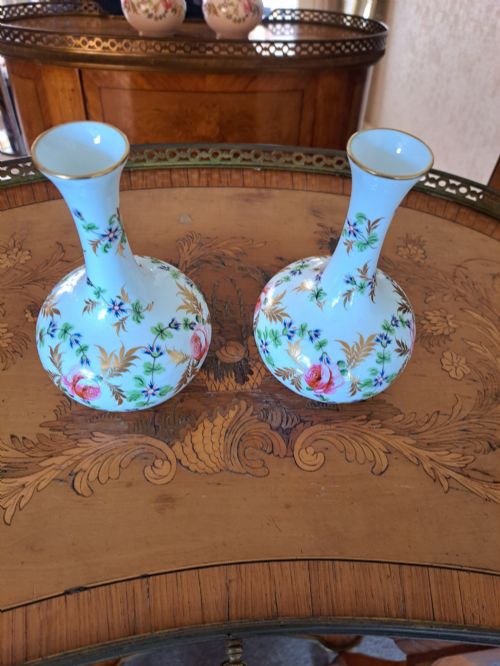
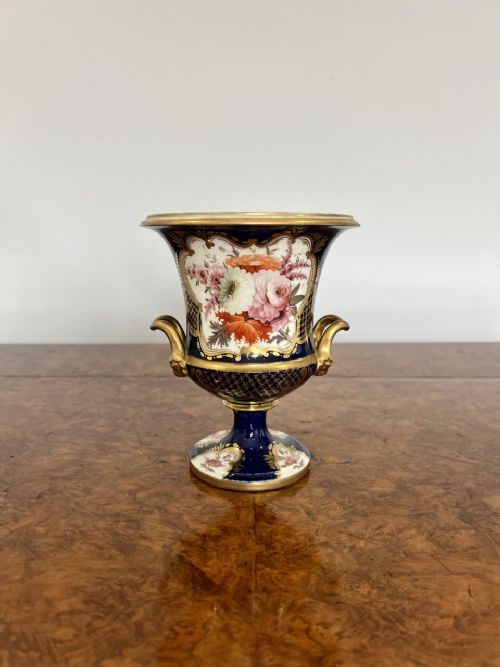
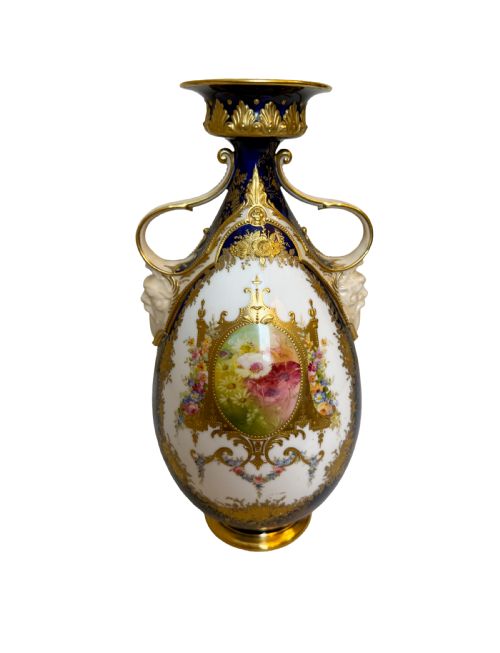
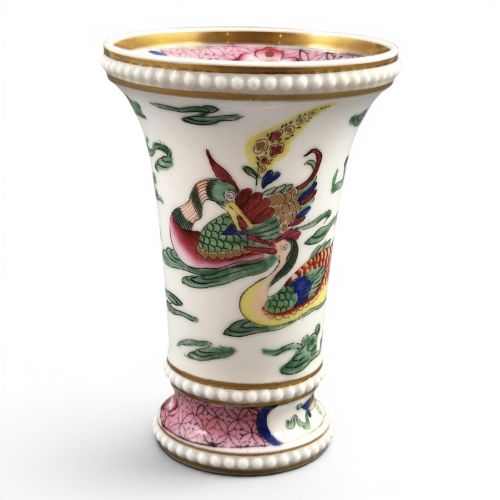

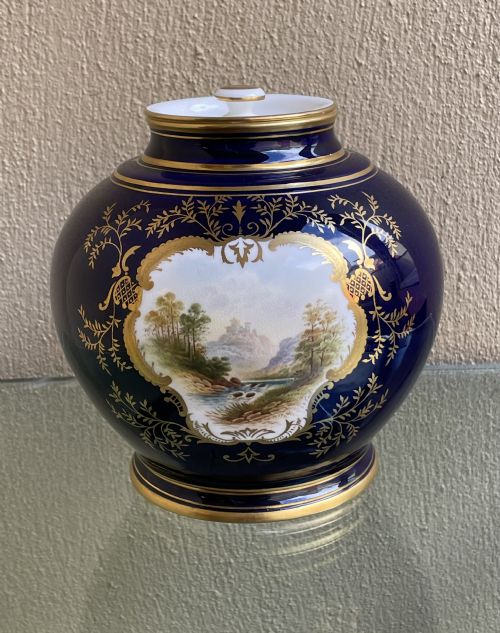


English China Vase
These pieces range from Regency spill vessels to mid-century ginger jars, spanning bone china, ironstone and porcelain.
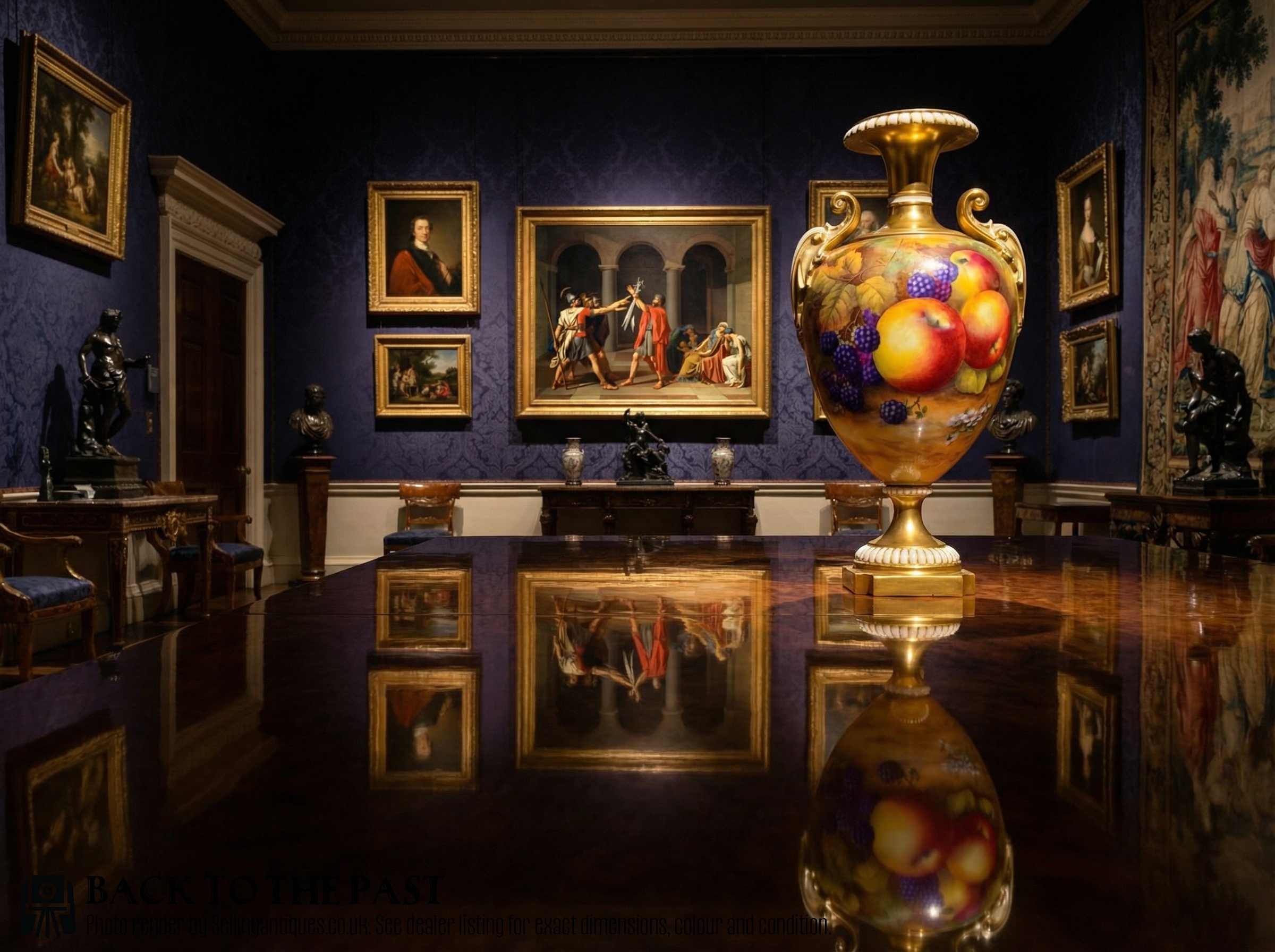
English China Vase
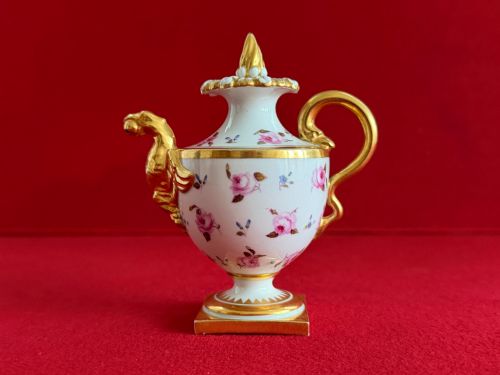
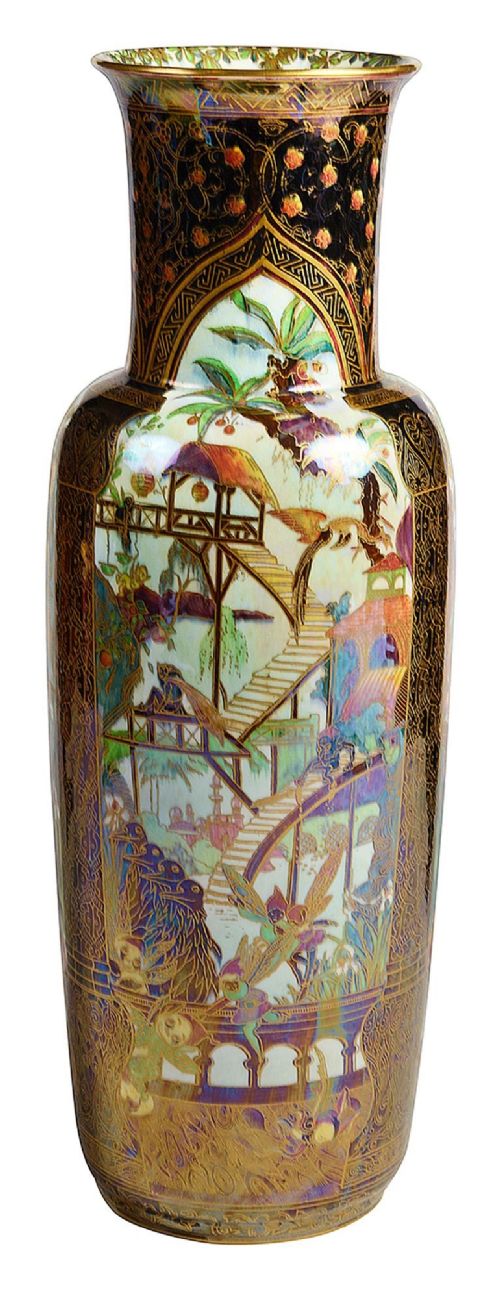
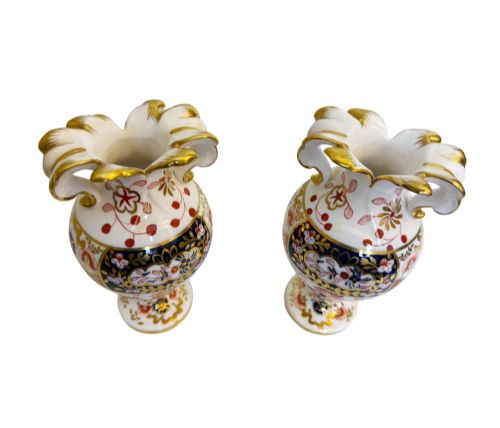
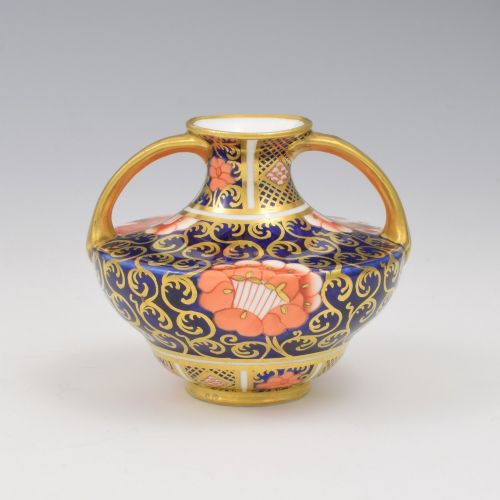
Buyers most frequently meet Edwardian and nineteenth-century examples alongside mid-century Royal Worcester painted fruit pieces. These decorative ceramics demonstrate styles ranging from traditional English porcelain and Imari patterns to Chinoiserie and Art Deco designs.
The category incorporates utilitarian spill vases alongside ornamental garnitures and miniature bud vases. Each object reflects the domestic decorative priorities of its period, utilising materials like enamel, gold leaf, and gilding to enhance porcelain bodies.
How they were made
Maker workshops shaped porcelain and bone china into vessels before applying hand-painted decorations and transfer prints. Many pieces integrate ironstone for durability, while others rely on delicate porcelain bodies suited for intricate hand-painted fruit, birds, and cattle scenes.
Craftsmen applied enamel colours and gilding, sometimes incorporating gold leaf accents onto the ceramic surface. Pot pourri jars and vases received covers, handles, and intricate patterns such as Imari or Chinoiserie before final firing.
Listings feature periods from the nineteenth century through the 1960s, encompassing bone china, porcelain, and ironstone.
What varies in quality
The standard of painting separates commercial production from the work of recognised artists who signed their fruit, bird, or landscape scenes. Precision in gilding, the crispness of enamel application, and the complexity of the porcelain body shape dictate the standing of individual pieces.
Early nineteenth-century pieces from factories like Spode or Flight, Barr & Barr display distinct throwing and moulding refinement compared to later mass-produced wares. The inclusion of matched covers on urns and ginger jars also influences the completeness and integrity of the vessel.
Flight, Barr and Barr·Wedgwood·Spode·Royal Crown Derby·Royal Doulton·Coalport·Stevenson and Hancock·Masons Ironstone·Royal Worcester·Minton
The English China Vase Glossary
- Spill vase
- A tall, narrow vessel designed to hold taper spills used for lighting fires and candles. These cylindrical objects frequently appear in nineteenth-century ceramic listings.
- Pot pourri vase
- A decorative container featuring a pierced cover intended to diffuse scented dried flowers into a room. These lidded vessels often display elaborate hand-painted fruit or landscape motifs.
- Gilding
- The application of gold leaf or gold paint to ceramic surfaces for decorative enrichment. This technique highlights handles, rims, and specific pattern details.
- Ironstone
- A heavy, durable type of earthenware patented in the nineteenth century to imitate Chinese porcelain. It provides a sturdy body for garnitures and posy vases.
- Imari
- A decorative style characterised by underglaze blue and overglaze red, green, and gold, originating in Japan and adopted by English potteries. Pieces featuring this palette often display traditional floral and panel motifs.
English China Vase: Frequently Asked Questions
What is a spill vase used for?
A spill vase held rolled paper spills or wooden tapers near a fireplace for lighting candles and lamps.
Over time, these tall, narrow vessels transitioned into purely decorative mantelpiece ornaments while retaining their traditional cylindrical form.
What is ironstone pottery?
Ironstone is a dense, robust ceramic material developed in the nineteenth century as a tough alternative to imported Chinese porcelain.
It allowed potteries to produce heavy garnitures and posy vases decorated with transfer prints and enamel colours.
How can I date an English ceramic vase?
Dating relies on factory marks stamped or painted on the base, stylistic indicators such as Art Deco or Regency forms, and the specific artist signatures recorded in the period.
Comparative analysis of material composition, such as bone china versus ironstone, also helps narrow the decade of production.