



English Castle Artwork
When you search for english castle artwork, you are looking at historical depictions of fortresses and ruins rendered in oil and watercolour across multiple centuries.
English Castle Artwork
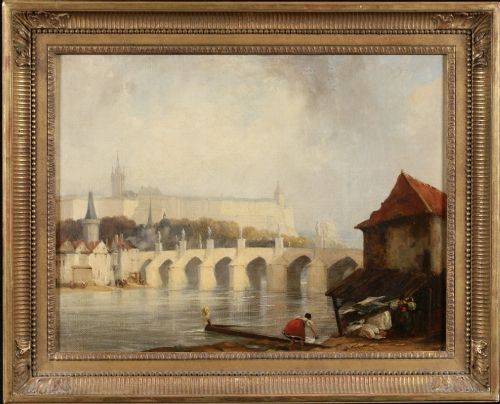
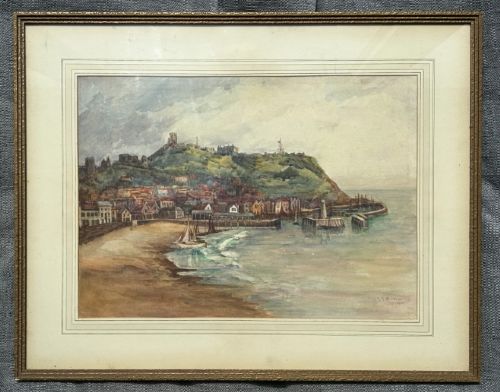
English castle artwork captures historic fortifications, royal residences, and crumbling medieval ruins across the British landscape. The pieces available here span from the eighteenth century through to the mid twentieth century, reflecting shifting artistic interpretations of national heritage.
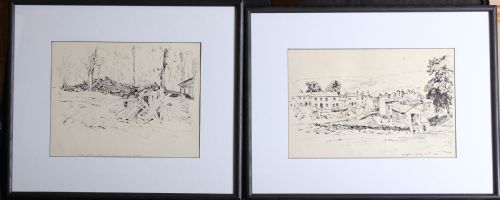
Watercolours and oil paintings dominate the selection, portraying specific sites such as Windsor, Arundel, and Bolton castles. These works range in scale from intimate ink and wash drawings to substantial framed canvases intended for country house display.
Materials and Technique
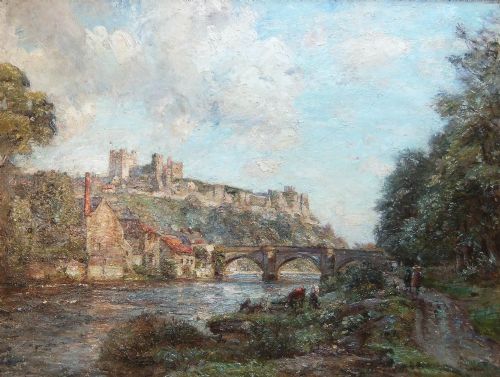
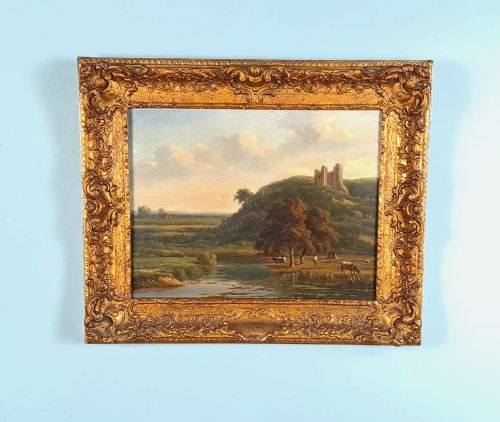
Artists relied primarily on oil paints applied to canvas, wood panels, or board, alongside watercolour pigments on paper. These traditional media allowed painters to capture atmospheric light, weather conditions, and the texture of ancient stonework.
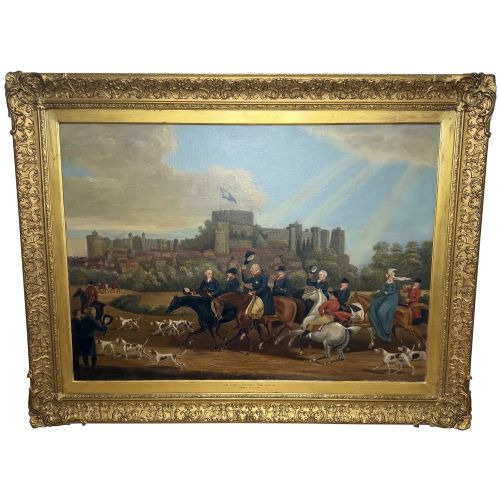
Framing forms an integral part of these pieces, with period giltwood and carved wooden frames often housing the paintings. Ink and sepia washes were frequently utilised for preparatory sketches or detailed topographical studies.
Depicted fortresses include royal residences and northern ruins set beside rivers such as the Thames, Eden, and Medway.
Distinctions in Quality
Quality rests on the precision of topographical observation and the confidence of the brushwork. Master painters handle light and architectural perspective with an assurance that brings ruinous stone and surrounding river landscapes to life.
The sophistication of the palette and the condition of the pigment further separate standard topographical records from exceptional artistic achievements. Strong provenance and attribution to recognised regional painters elevate certain pieces above anonymous works.
Alfred Young Nutt·Fred Lawson·Herbert Royle·Thomas Cooper Moore·James Orrock·David Cox Jnr·William Mellor·George Morland·William Wyld·Thomas Whittle the Younger·George Lambert·Frederick Tully Lott·George Willis Pryce·Owen Bowen·Charles Walter Radclyffe·George Graham·Henry Bright
The English Castle Artwork Glossary
- Topography
- The detailed mapping and accurate representation of specific physical locations. In these works, it ensures recognizable portraits of named castles and rivers.
- Giltwood
- Wood that has been coated with a thin layer of gold leaf. Period frames utilising this technique add considerable presence to eighteenth and nineteenth century canvases.
- Sepia
- A brown pigment derived from the ink sac of the cuttlefish. It appears frequently in monochromatic or toned landscape drawings of historic ruins.
- Canvas
- Heavy woven fabric stretched across a wooden frame to serve as a painting surface. Oil painters favoured this material for its durability and texture.
English Castle Artwork: Frequently Asked Questions
What periods do these castle paintings represent?
The works span from the eighteenth century up to the 1940s, capturing shifting artistic movements over two hundred years.
Victorian and Edwardian interpretations form a significant portion of the available pieces.
Are these works original or prints?
Every piece recorded here is an original hand-painted artwork, executed in oil, watercolour, or ink.
Artists painted directly onto canvas, wood panel, or paper rather than producing mechanical reproductions.
How do I identify the specific castle shown?
Many titles explicitly name the fortress, such as Windsor, Arundel, or Bolton, alongside the surrounding river or landscape.
Inscribed signatures or notes on the reverse often provide further geographical context.
How should I frame and display them?
Most works retain their period frames, which complement the age and style of the painting.
Display them away from direct sunlight to protect delicate watercolour pigments and historic oil canvases.